
Imagine delivering a carefully focused ultrasound pulse from outside the head and changing the activity of a selected group of neurons deep inside. The cells respond because researchers have given them a molecular tool that makes them more sensitive to ultrasound.
This is the premise of sonogenetics, an experimental approach that brings genetic targeting together with ultrasound neuromodulation. It has already changed neural activity and behaviour in research animals. Turning that capability into a safe human treatment remains a much larger task.


- Combines ultrasound with genetic targeting to influence selected neurons.
- Special proteins make targeted cells more responsive to sound.
- It remains experimental, with human treatment still unestablished.
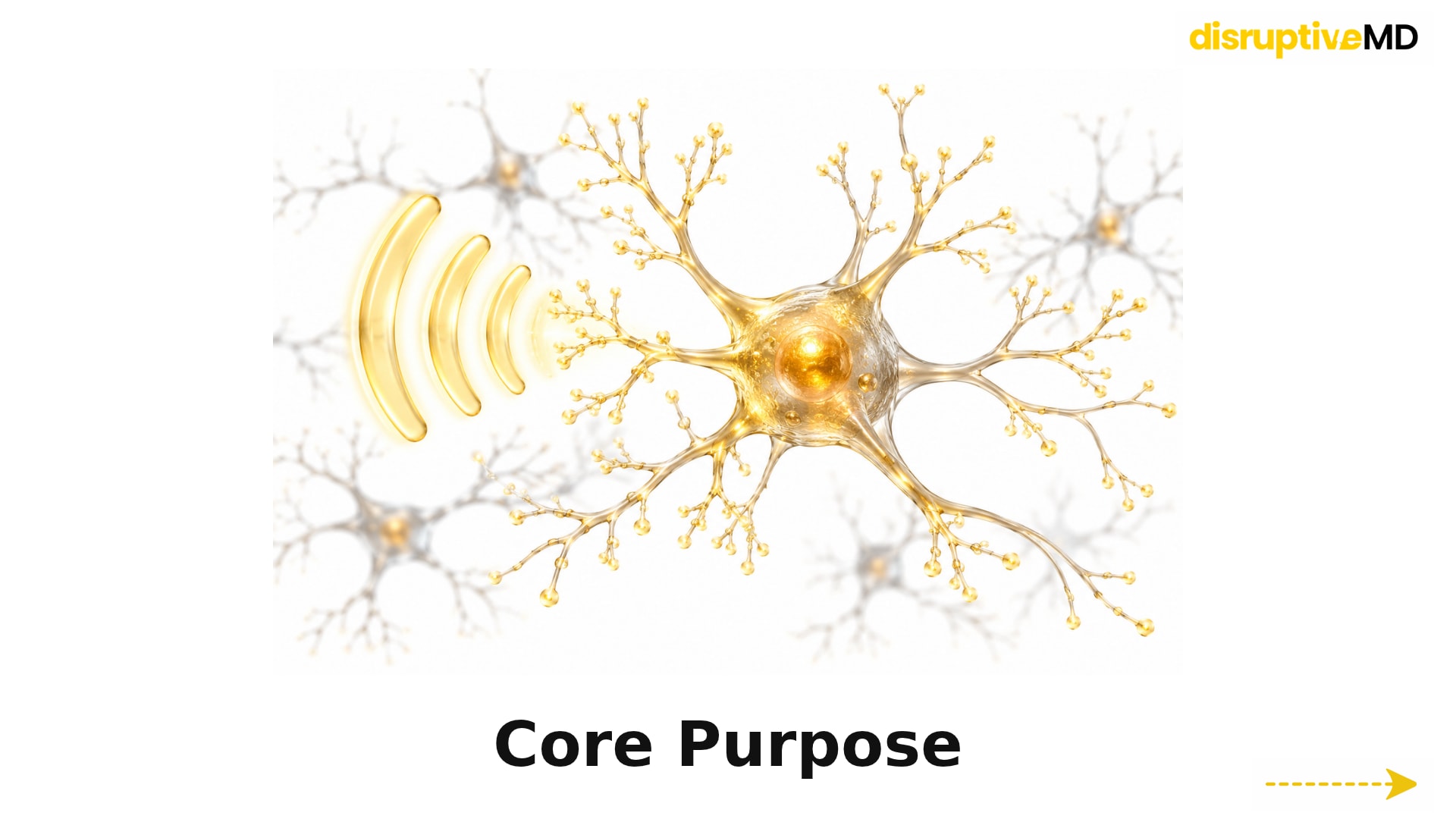
Core Purpose
Sonogenetics aims to control defined cells and circuits without placing stimulating electrodes directly into the brain. Its appeal lies in combining the reach of ultrasound with the selectivity of genetic tools.
That distinction matters. A brain region contains different kinds of neurons, often with opposing roles. Future treatments may need to influence a particular population within that region while preserving neighbouring functions.
Turning Sound Into a Neural Signal
Ultrasound consists of sound waves above the range of human hearing. Under suitable conditions, it can travel through tissue and be focused at depth, offering an advantage over conventional light delivery into the brain. Early sonogenetic experiments demonstrated genetically enhanced ultrasound responses in a tiny worm, establishing the basic principle.
The attraction becomes clearer alongside existing approaches. Deep brain stimulation reaches deep targets using implanted electrodes. Transcranial magnetic stimulation delivers stimulation externally but does not genetically select individual cell types. Optogenetics provides genetic specificity, although reaching deep targets with light often requires implanted optical hardware.
Sonogenetics seeks to combine external stimulation, access to deeper tissue and selective cellular responses. These are research goals with different levels of validation, rather than a claim that it already outperforms established treatments.
How Genes Give Sound a More Selective Target
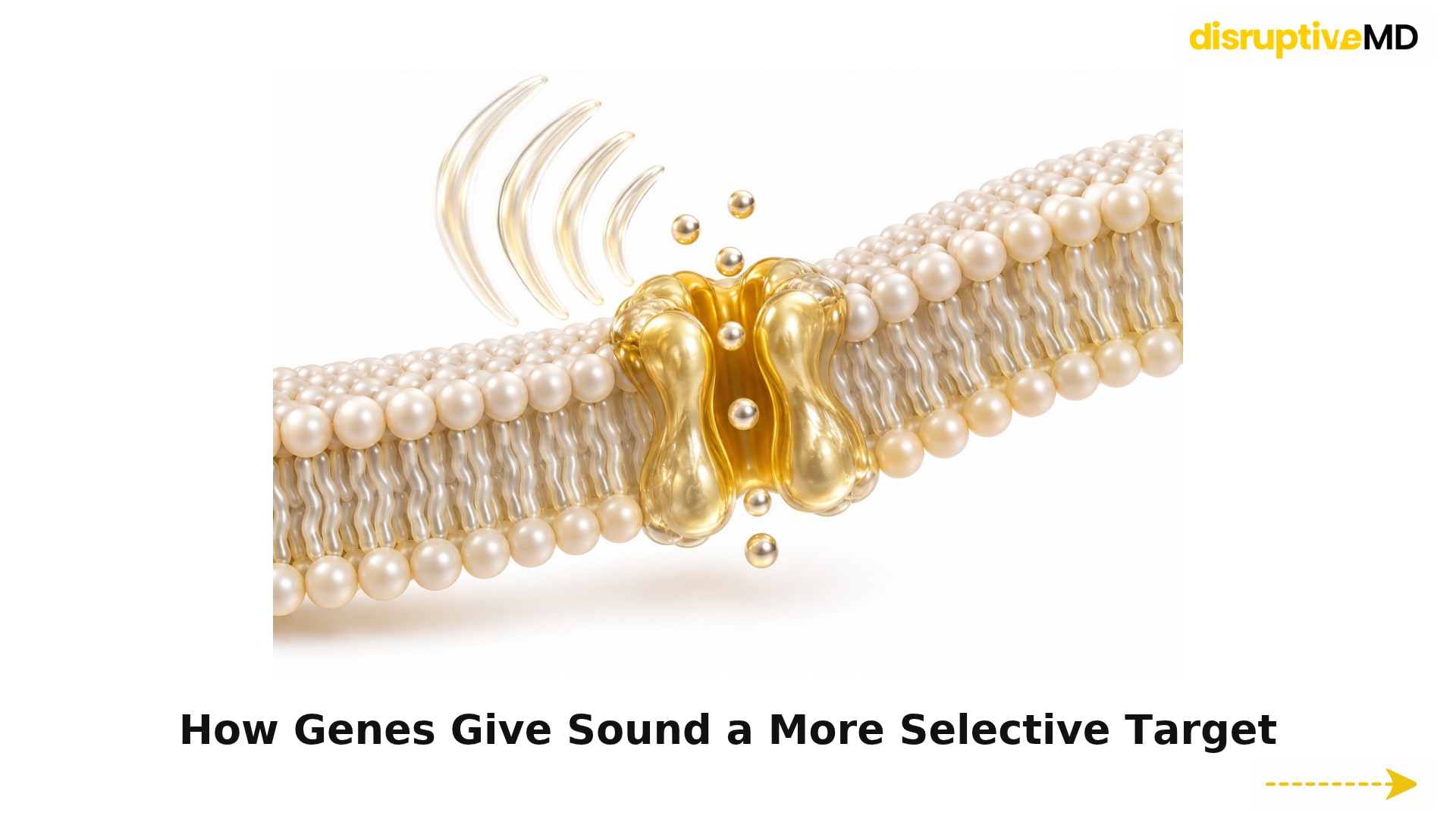
Ordinary ultrasound neuromodulation can influence cells without genetic modification. Sonogenetics adds a biological targeting step: selected cells are made to produce an ultrasound-responsive protein.
Many systems use mechanosensitive ion channels, tiny gateways in the cell membrane that respond to mechanical forces. Ultrasound produces physical effects in tissue and cell membranes. If the introduced channel responds, charged particles move across the membrane and alter the neuron's electrical activity.
One studied tool is MscL-G22S, an altered bacterial channel with increased mechanical sensitivity. Another is human TRPA1, which has enabled ultrasound-responsive neural activity in mammalian experiments. Using a human protein in mice does not make the experiment a human treatment.
Genetic targeting also does not guarantee that every neighbouring cell remains unaffected. The intended advantage is greater selectivity, which must be measured against appropriate controls.
What Switching Circuits On or Off Really Means
The phrase “brain switch” makes a complicated network sound deceptively simple.
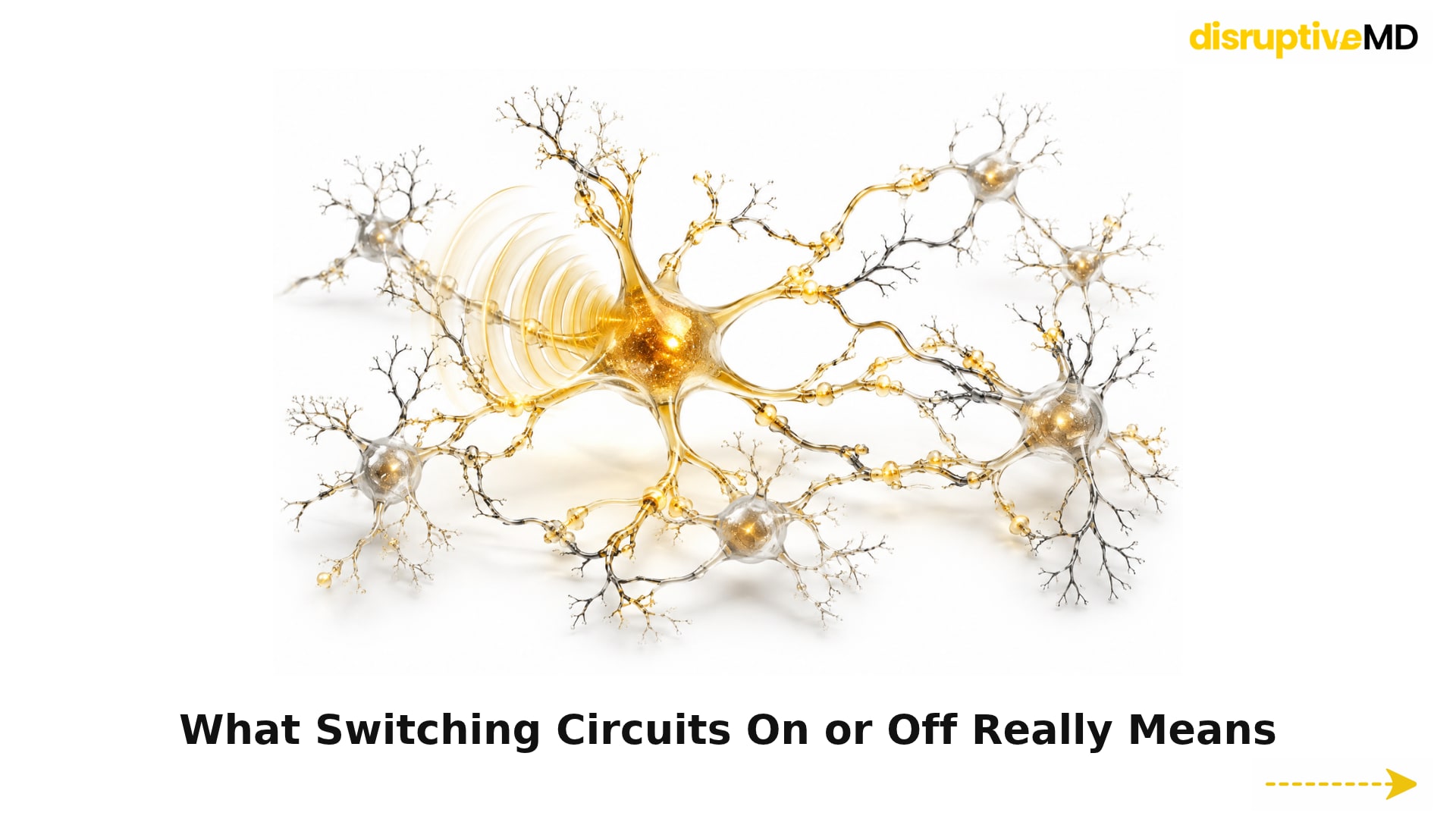
Activating an excitatory neuron can increase activity in its targets. Activating an inhibitory neuron can help reduce activity elsewhere. Consequently, stimulating one carefully chosen population may quiet a wider circuit.
Several experimental sonogenetic tools primarily activate the cells that express them. Suppressing a network by recruiting inhibitory neurons is different from directly silencing any neuron on demand. Reliable control in both directions remains an engineering and biological challenge.
A 2026 Depression Study Brings Circuit Targeting Into Focus
A study published in April 2026 targeted a pathway from the medial prefrontal cortex, involved in emotional and cognitive processing, to the dorsal raphe nucleus, an important source of serotonin.
Researchers used genetic tools to express MscL-G22S in selected neurons connecting these regions in stressed mice. Ultrasound stimulation increased downstream neural activity and serotonin release, alongside rapid improvements in behavioural tests described as measuring despair-like behaviour. Interfering with downstream serotonergic neurons removed the behavioural benefit, strengthening the proposed circuit explanation.
The result offers a promising research direction, with a clear limit: changes in mouse stress-coping tests do not establish recovery from human depression. The study also used invasive genetic delivery, despite delivering the stimulation externally.
Why This Could Matter for Psychiatry
The scientific opportunity is to test cause and effect within circuits. If changing a defined pathway changes a particular behaviour, researchers gain a more precise target for further investigation.
This could help distinguish circuits involved in different symptoms, rather than assuming that one pathway explains an entire psychiatric diagnosis. Mood, motivation, memory and addiction-related behaviour are possible areas of investigation. Each would require its own experiments and clinical validation.
For now, sonogenetics is best understood as a tool for asking more exact questions about the brain, with treatment development as a longer-term possibility.
Movement Circuits and Parkinson Disease
Movement disorders offer another setting in which circuit specificity could be valuable. In a 2023 mouse study, sonogenetic stimulation of the subthalamic nuclei improved motor coordination and time spent moving in a Parkinson-like disease model. The same paper demonstrated manipulation of other deep pathways, including dopamine release and movement-related behaviour.
These findings support further work on how particular circuits influence movement. They do not establish that sonogenetics can replace deep brain stimulation in people or stop the underlying degeneration in Parkinson disease.
Any future alternative would need to show sustained benefit and acceptable risk, including the consequences of introducing a genetic tool.
Pain Pathways as a Future Target
Pain-related signalling passes through peripheral nerves, the spinal cord and brain networks. A future sonogenetic treatment might adjust selected parts of this system while preserving protective sensation and other nerve functions.
Achieving that selectivity is the central challenge. Turning down one signal could have consequences elsewhere in the network, and chronic pain differs substantially between patients.
Pain and nerve dysfunction are credible research directions, while clinical effectiveness remains unresolved.
Epilepsy Shows Why the Exact Cell Type Matters
Seizure networks provide a particularly clear example of the importance of choosing the right neurons.
In a 2024 mouse study of prolonged seizures, sonogenetic activation of one inhibitory cell population, parvalbumin interneurons in the hippocampus, improved seizure-related outcomes. Activating another inhibitory population, somatostatin interneurons, did not produce the same benefit.
A separate study published in 2025 used an engineered ultrasound-sensitive protein called mPrestin to activate inhibitory neurons in a rat model of acute seizures.
These experiments suggest that recruiting specific inhibitory circuits can influence abnormal firing. They also show why “stimulate inhibitory neurons” is not a sufficiently precise treatment plan. Results from induced animal seizures cannot establish effectiveness across human epilepsy syndromes.
The Gene Delivery Challenge
Before sound can selectively influence the intended cells, the genetic instructions must reach them.
Many animal experiments use adeno-associated viral vectors, delivery vehicles that carry genetic instructions into cells. Direct brain injection can provide local delivery, but introduces an invasive step. Researchers must also control which cells express the protein, how much they produce and how long expression lasts.
Other delivery strategies are being investigated. Focused ultrasound with microbubbles has enabled targeted gene delivery across the blood-brain barrier in related animal neuromodulation research. In those experiments, subsequent circuit control used a drug-responsive system, so the delivery result should not be mistaken for a complete sonogenetic treatment.
Nonviral carriers, including lipid nanoparticles, are another possible development route. Their safe, selective delivery to the required human brain circuits cannot be assumed.
External ultrasound stimulation does not automatically make the entire treatment non-invasive.
Safety Must Include Both Sound and Genetics
A sonogenetic treatment would need assessment as a combined system.
On the ultrasound side, researchers must establish safe exposure conditions, including pressure, pulse timing, heating and potentially harmful cavitation, the formation and motion of gas bubbles. On the genetic side, questions include immune responses, unintended expression, changes to normal cellular behaviour and the effects of long-lasting channel production.
Stopping ultrasound would stop the applied stimulus, but would not necessarily remove the introduced genetic material. Reversibility of stimulation and reversibility of the biological intervention are separate requirements.
Short animal experiments cannot settle safety over years. Repeated exposure, cognition, behaviour and tissue health would all need careful evaluation before long-term clinical use.
Precision in a Human Brain Is a Harder Problem
The system must align three things: the cells expressing the tool, the ultrasound focus and the timing of stimulation.
Human skulls alter ultrasound transmission, and differences in skull anatomy complicate the delivery of a consistent dose to a deep target. Individual imaging and acoustic modelling may therefore be important. A small-animal result does not automatically scale to a human head.
Researchers must also separate direct neural effects from indirect sensory responses. Human ultrasound experiments have demonstrated that participants can hear sounds associated with stimulation through skull conduction. Such effects can influence experimental measurements and require suitable masking and control conditions.
Precision means proving that the intended mechanism caused the observed change.
Could AI Help Build a Responsive Treatment
A possible future system would measure brain activity, identify an abnormal pattern, deliver targeted ultrasound and then assess the response.
AI could help analyse signals, model ultrasound propagation or adjust stimulation within predefined limits. For epilepsy, the ambition might be to respond to emerging abnormal activity. For movement disorders, it could be to adapt treatment as the patient's state changes.
This is a proposed direction, not a demonstrated general-purpose sonogenetic therapy. It would require dependable biomarkers, safe genetic targeting and evidence that automated adjustments improve outcomes. Recording a deep circuit may itself require invasive equipment, so the complete system would need scrutiny.
What Is Real Today
- Genetically selected cells can be made more responsive to ultrasound in experimental systems.
- Animal studies have influenced defined deep circuits, neurotransmitter release and behaviour.
- Movement and seizure models have produced findings worth pursuing.
What Is Not Fully Real Yet
As of October 2026, sonogenetics remains an experimental approach. Routine treatment of depression, Parkinson disease, epilepsy or chronic pain with genetically targeted ultrasound has not been established.
Safe delivery to the required human cells, dependable long-term control and meaningful clinical benefit remain unresolved. The research discussed here does not establish approved treatment for these conditions, replacement of deep brain stimulation, perfect targeting or a fully remote-controlled brain therapy.
Key Takeaway
Sonogenetics offers a way to combine the physical reach of ultrasound with biological targeting. Its strongest current contribution is helping researchers test how specific cells and pathways influence function. Its clinical promise depends on solving gene delivery, safety and precision together.
Sonogenetics may not be brain remote control yet. But it points toward a future where sound, genes, and neural circuits combine to treat disease with extraordinary precision.
FACT BASE
- Foundational demonstration: A 2015 study established genetically enhanced ultrasound responses in Caenorhabditis elegans. This was an animal proof of concept.
- Mammalian targeting: Human TRPA1 expression enabled ultrasound-responsive activity in mouse neurons, including responses through an intact skull.
- Deep circuits: A 2023 study used MscL-G22S to modulate deep mouse pathways and reported motor improvements in a Parkinson-like model.
- Depression-related research: The 2026 mPFC-to-DRN study reported serotonin and behavioural changes in stressed mice. It did not test clinical depression treatment in people.
- Seizure research: Experimental benefit depended on the targeted inhibitory population; the 2024 study found different outcomes for two interneuron types.
- Translation limits: Genetic delivery, repeated exposure and long-term outcomes require further validation. External stimulation alone does not resolve these challenges.
REFERENCES
- Ibsen S, et al. Sonogenetics is a non-invasive approach to activating neurons in Caenorhabditis elegans. Nature Communications. 2015;6:8264. https://doi.org/10.1038/ncomms9264
- Duque M, et al. Sonogenetic control of mammalian cells using exogenous Transient Receptor Potential A1 channels. Nature Communications. 2022;13:600. https://doi.org/10.1038/s41467-022-28205-y
- Xian Q, et al. Modulation of deep neural circuits with sonogenetics. PNAS. 2023;120(22):e2220575120. https://doi.org/10.1073/pnas.2220575120
- Lei T, et al. Rapid rescue of despair behaviors by sonogenetic neuromodulation of the mPFC-DRN pathway. Molecular Psychiatry. 2026;31:5279-5292. Published online 17 April 2026. https://doi.org/10.1038/s41380-026-03616-1
- Xu T, et al. Targeted sonogenetic modulation of GABAergic interneurons in the hippocampal CA1 region in status epilepticus. Theranostics. 2024;14(16):6373-6391. https://doi.org/10.7150/thno.96598
- Phan TN, et al. Modulation of GABAergic neurons in acute epilepsy using sonogenetics. Journal of Controlled Release. 2025;377:341-353. https://doi.org/10.1016/j.jconrel.2024.11.029
- Szablowski JO, et al. Acoustically targeted chemogenetics for the non-invasive control of neural circuits. Nature Biomedical Engineering. 2018;2:475-484. https://doi.org/10.1038/s41551-018-0258-2
- Braun V, et al. Transcranial ultrasound stimulation in humans is associated with an auditory confound that can be effectively masked. Brain Stimulation. 2020;13(6):1527-1534. https://doi.org/10.1016/j.brs.2020.08.014


