
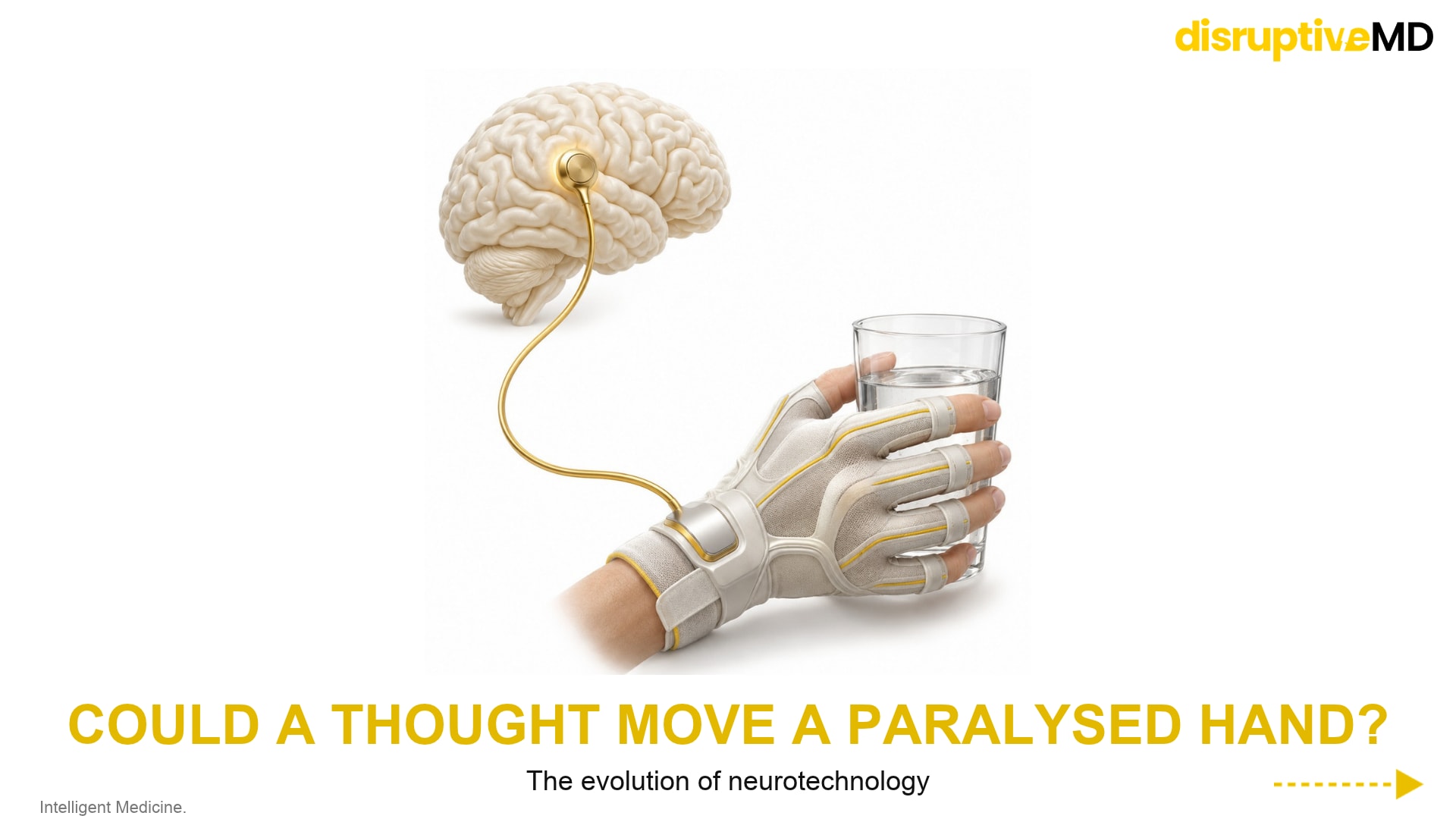
For someone who cannot grasp a cup or speak a sentence, that question is practical. Neurotechnology is creating new ways to connect the nervous system with the outside world. Some devices already help people hear or manage movement symptoms. Others are being tested to turn attempted movement and speech into useful actions.
The recent attention around China's NEO system and Elon Musk's Neuralink captures one part of this story. The wider field has developed over decades, with progress coming from better electrodes, more capable software and increasingly useful feedback. Its most meaningful advances are measured in everyday independence.
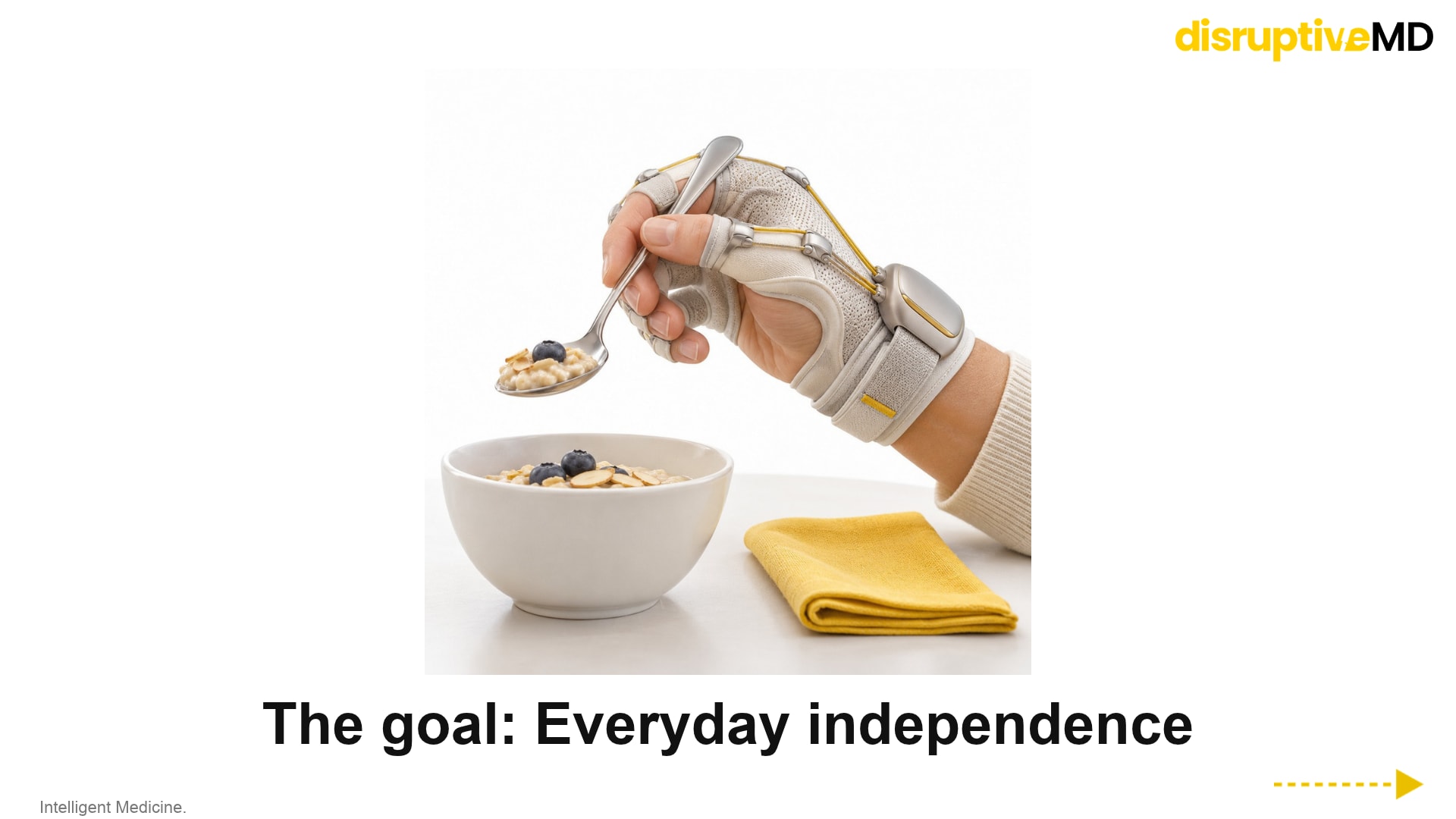
- Neurotechnology connects devices with the brain, spinal cord or peripheral nerves.
- Interfaces can record activity, deliver stimulation or combine both.
- Five overlapping stages trace its development towards useful function.
Core idea
Neurotechnology brings engineering into direct interaction with the brain, spinal cord or peripheral nerves. A device may record neural activity, stimulate a circuit, or combine both. A brain-computer interface, or BCI, is one branch of this field: it translates selected patterns of brain activity into commands for a computer or another device.
These technologies serve different purposes. Cochlear implants provide an electrical representation of sound. Deep brain stimulation changes activity in selected brain circuits to reduce symptoms. A motor BCI can decode an intention to grasp and use it to operate an assistive glove. None of these functions should automatically be described as repairing the underlying disease or injury.
Why this feels futuristic
A useful movement signal can remain in the brain even when paralysis prevents the body from carrying out the action. Researchers can capture that signal upstream of the damaged pathway and translate it into a command elsewhere. The result may be a moving cursor, a robotic hand or stimulation that helps the person's own muscles act.
The challenge is making that translation dependable outside a carefully controlled demonstration. An effective system must distinguish intention from background activity, respond quickly, remain stable and fit into daily life. Modern neurotechnology is advancing on each of those fronts, although progress differs substantially between devices.
Five generations of progress
These generations are an explanatory framework, not an official classification. They overlap: recording, stimulation and decoding developed along different paths, and an older approach can remain the best tool for a particular clinical problem.
Generation 1: Recording neural activity
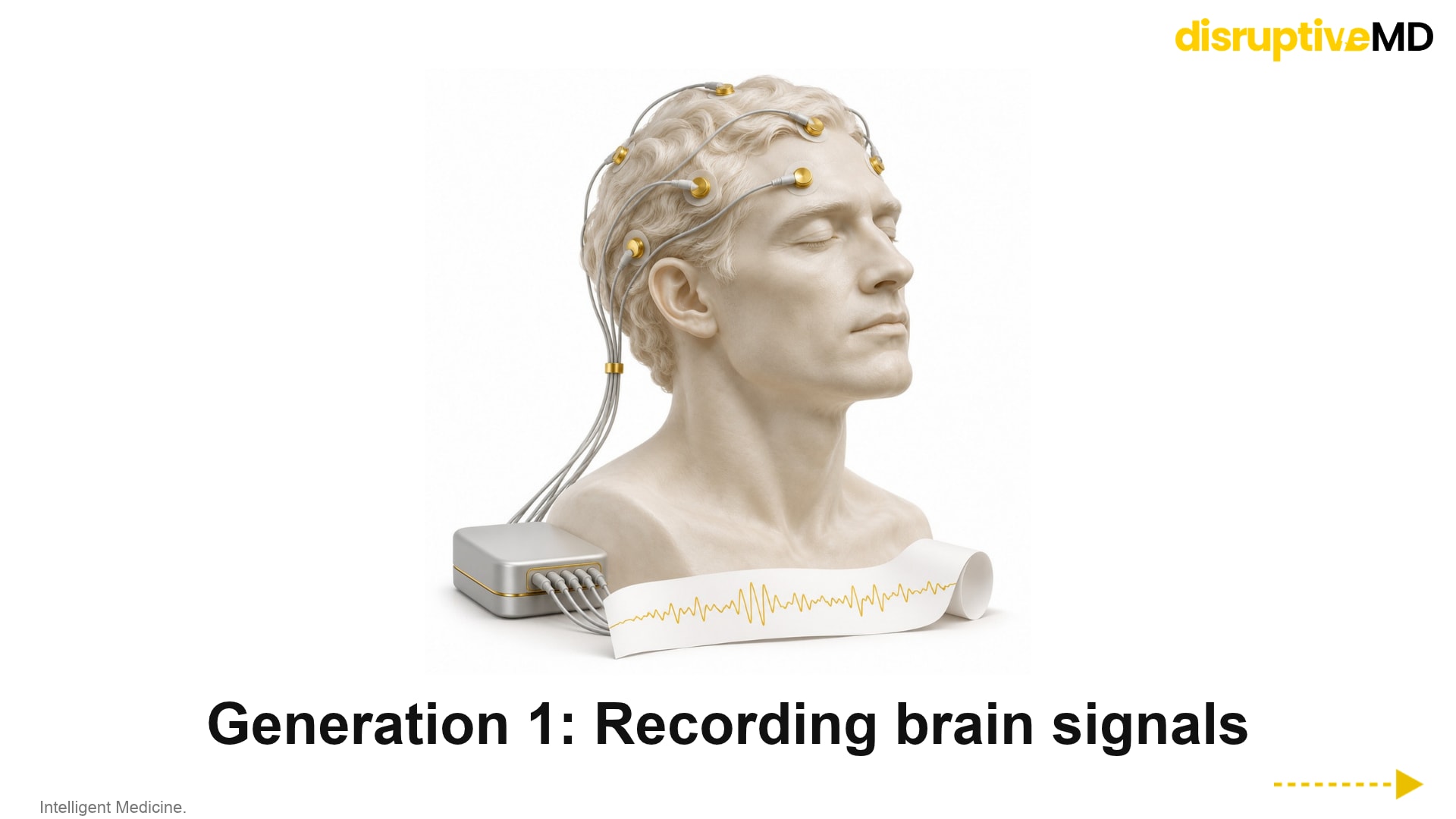
Hans Berger recorded the first human electroencephalograms in 1924. EEG made electrical brain activity observable through recordings that could be studied and compared. Clinical EEG laboratories subsequently developed in the 1930s and 1940s, helping establish brain recording as a medical tool.
The central achievement was measurement. Seeing a pattern of brain activity is different from reliably extracting a person's intended action. Later interfaces would need to add that decoding step.
Generation 2: Delivering useful stimulation
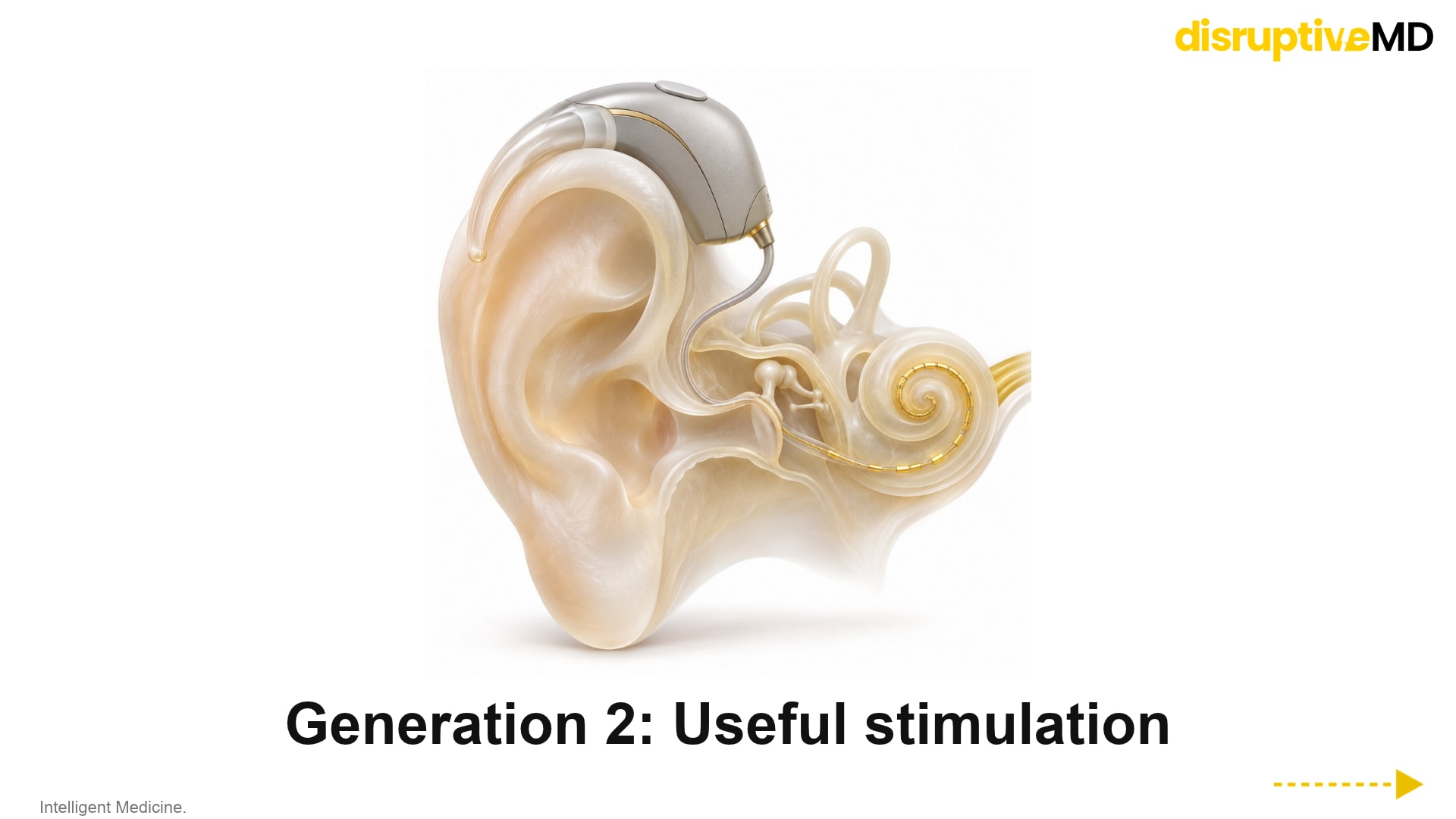
Electrical interfaces also developed in the opposite direction, delivering signals to the nervous system. Cochlear implants, first approved by the US FDA in the mid-1980s, bypass damaged portions of the ear and stimulate the auditory nerve. They can provide useful access to sound and speech, although the experience differs from normal hearing and requires learning.
Deep brain stimulation, first FDA-approved in 1997, established another clinical route. Surgically placed electrodes deliver stimulation to selected brain regions to help control symptoms of conditions such as Parkinson's disease and essential tremor. The therapeutic effect comes from modifying circuit activity; it does not establish that the underlying disorder has been cured.
This generation showed that an electronic interface could provide meaningful clinical benefit. It also made programming, rehabilitation and long-term device care part of the treatment.
Generation 3: Turning intention into action
A landmark 2006 BrainGate study showed that a person with tetraplegia could use signals recorded from a 96-electrode array in the motor cortex to control a computer cursor and perform basic actions with external devices. Movement-related signals were still usable years after spinal cord injury.
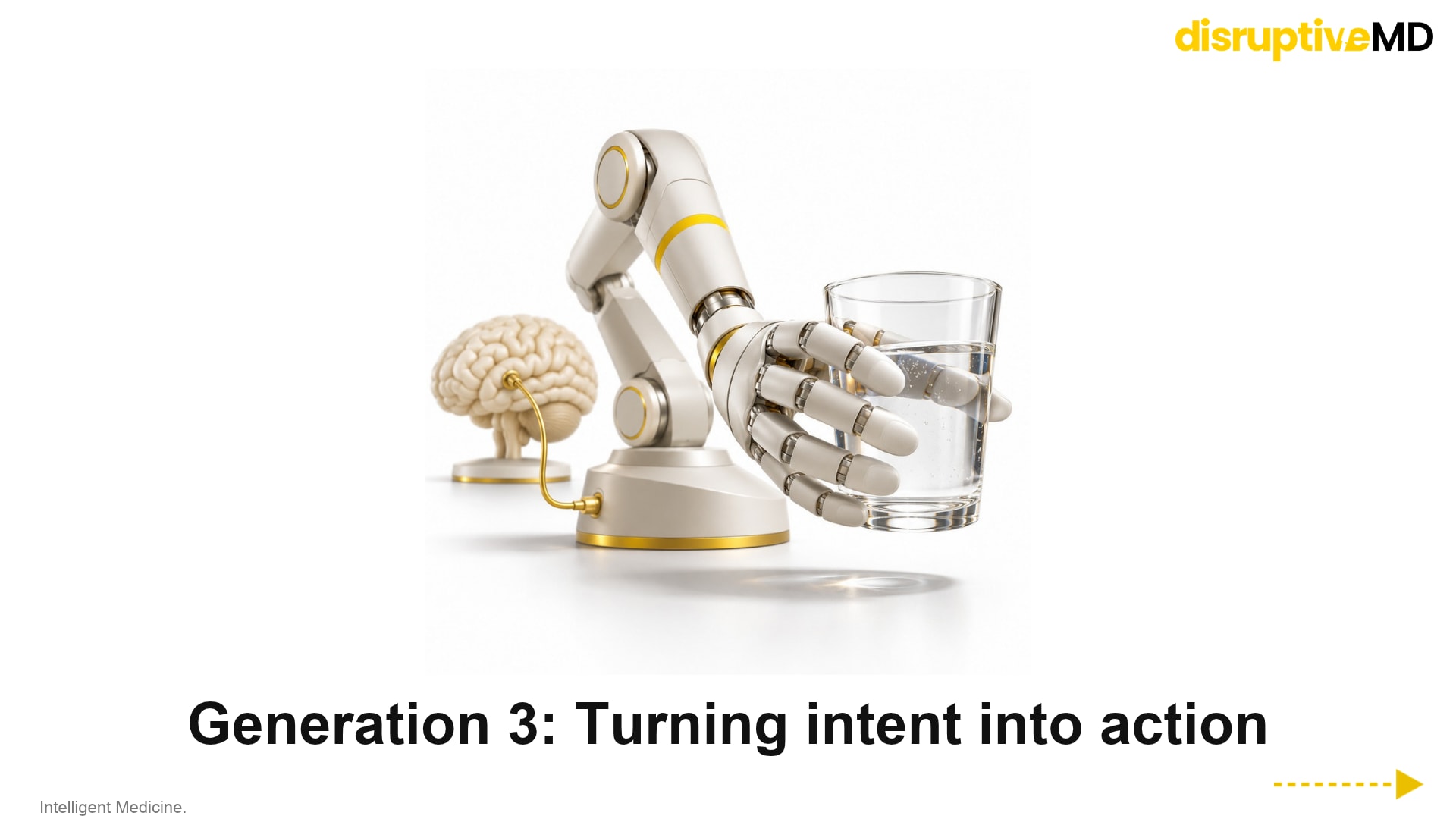
In 2012, researchers reported that two people with tetraplegia could control robotic arms for three-dimensional reaching and grasping. One participant used the arm to bring a drink to her mouth. Performance remained slower and less accurate than ordinary human movement, but the task demonstrated useful control beyond a computer screen.
The major upgrade was decoding: software connected patterns of neural activity to a specific intended action. This work also places today's headlines in context. Human brain-controlled devices were demonstrated well before Neuralink's first participant.
Generation 4: Making interfaces more practical
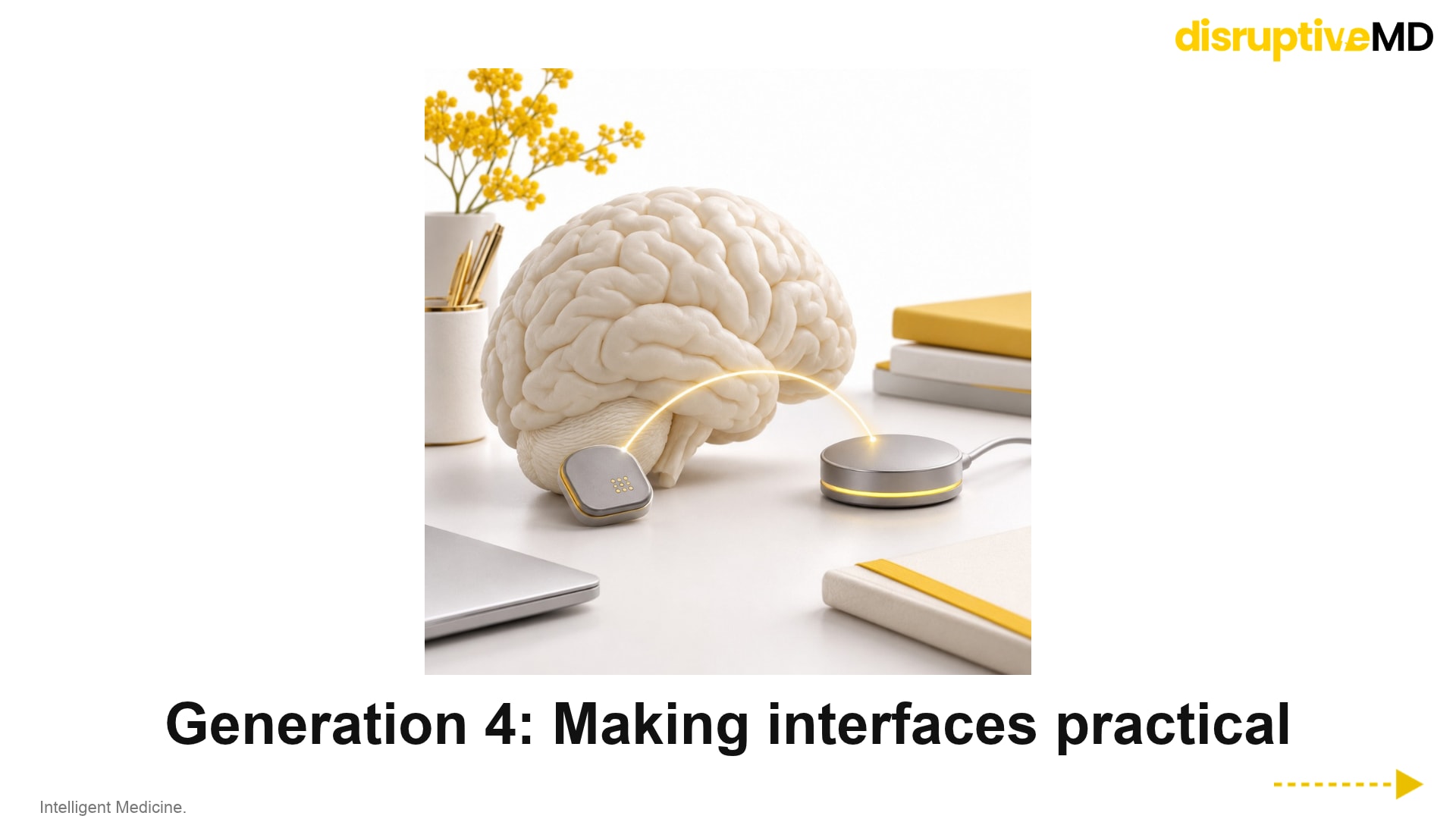
Recent systems address questions that determine whether an interface can become a usable medical product. How will it receive power? How will signals leave the body? Where should the electrodes sit? Can the patient use it at home? Different developers are pursuing different answers.
Neuralink uses flexible electrode threads inserted into the brain and a fully implanted device with wireless data transmission and rechargeable power. Its trials investigate control of external devices, including computers and robotic arms. As checked in November 2026, Neuralink's own clinical-trials page states that its devices remain investigational and are not approved by the FDA or other regulatory authorities for commercial use.
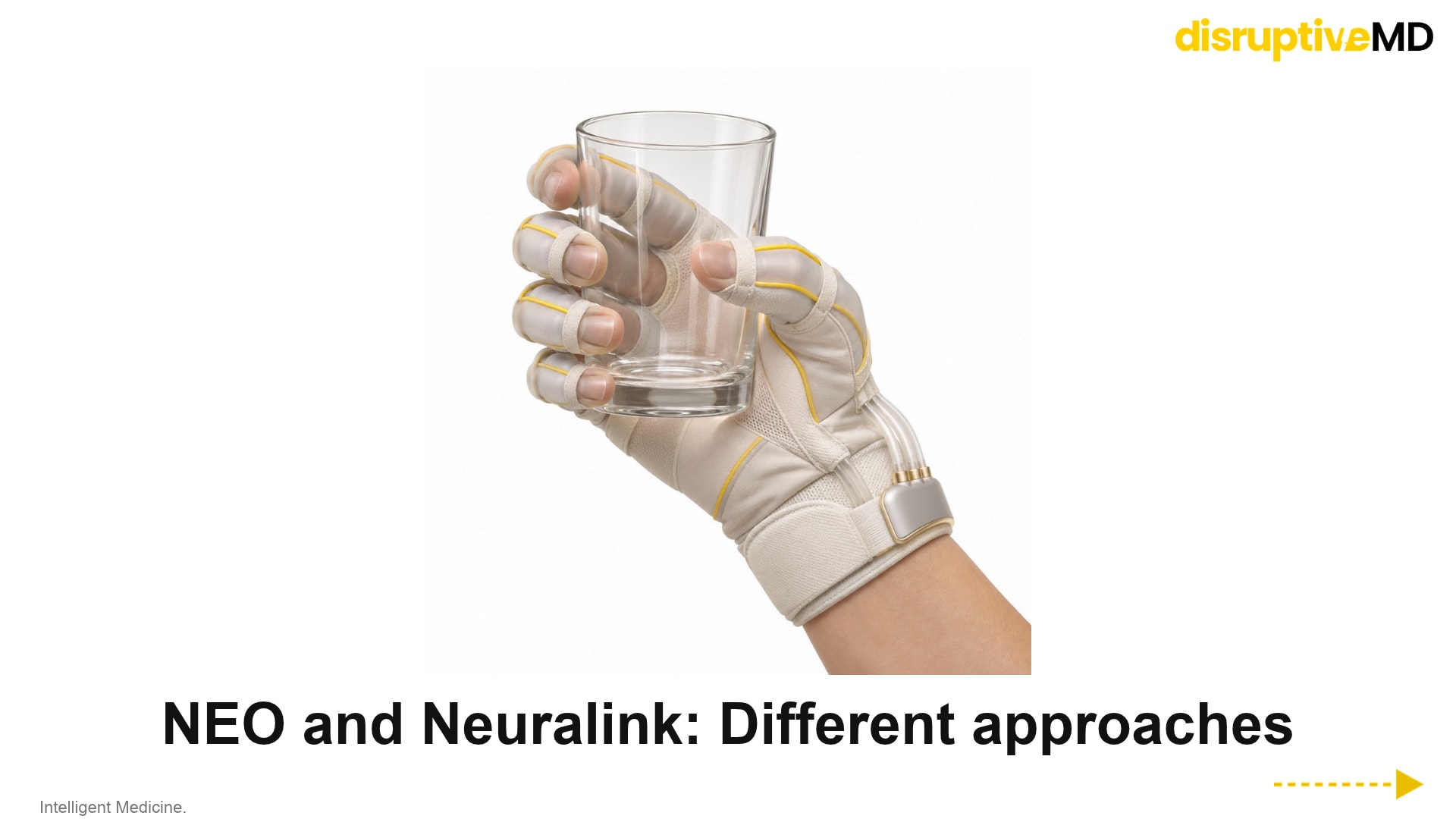
NEO, developed by Neuracle with Tsinghua University, uses electrodes outside the dura, the protective membrane covering the brain. Recorded intentions can control a pneumatic glove that assists grasping. China's regulator announced approval on 13 March 2026 for a defined group with tetraplegia caused by cervical spinal cord injury. The indication includes adults aged 18 to 60 with C2 to C6 injuries classified A to C, chronic stable impairment, inability to grasp and some remaining upper-arm function.
NEO's epidural placement avoids penetrating brain tissue, but implantation still requires surgery. Its approved role is hand-function compensation using a glove. The approval does not establish a cure for paralysis, universal eligibility or availability in other countries.
A third approach records from inside a blood vessel near the brain. In the published SWITCH study, four implanted participants used an endovascular BCI for computer tasks, commonly alongside eye tracking. No device-related serious adverse event causing death or permanent increased disability occurred during 12-month follow-up. That small study supports feasibility; it cannot establish lifetime safety or broad effectiveness.
| Approach | Recording location | Main purpose discussed here |
|---|---|---|
| Neuralink | Threads within brain tissue | Investigational control of computers and other devices |
| NEO | Outside the dura | Approved assisted hand grasping in selected patients in China |
| Endovascular BCI | Within a cerebral blood vessel | Computer control demonstrated in an early clinical study |
These are alternative engineering routes, not successive versions of one product. A regulatory milestone, electrode count or demonstration video cannot establish which approach produces the best overall outcome. That requires comparable evidence on function, safety and practical use.
Generation 5: Adding adaptation and feedback
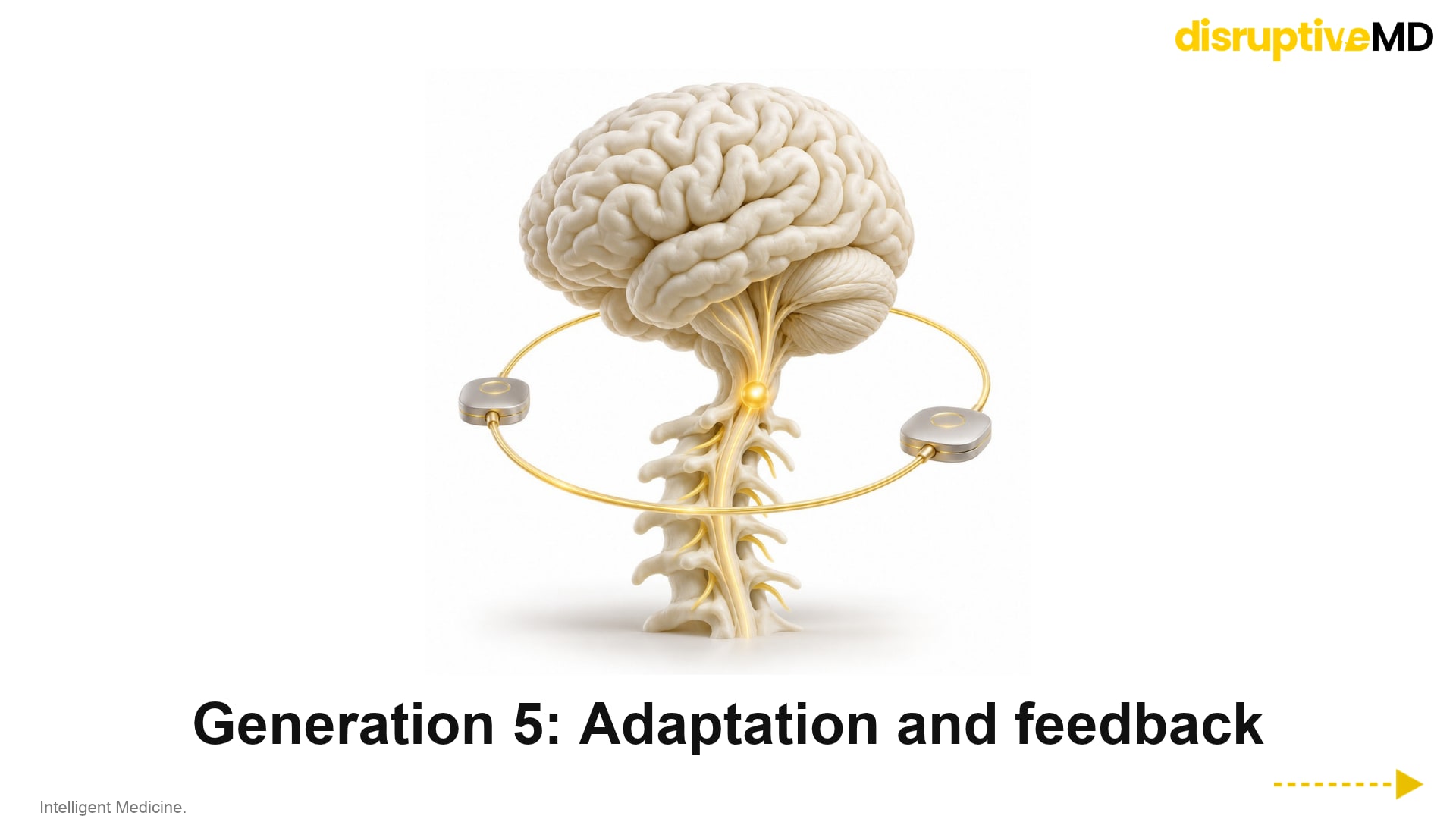
A device becomes more responsive when it can measure what is happening and adjust its output. Adaptive deep brain stimulation applies this principle to treatment. The FDA approved an optional adaptive DBS programming feature for a Medtronic system on 20 February 2025 for eligible people with Parkinson's disease. Instead of relying only on fixed stimulation settings, the system can adjust stimulation in response to recorded brain signals.
Communication interfaces are also becoming more natural. A 2025 study used recordings from the brain surface to produce continuously streaming speech in one participant with severe paralysis. A separate 2025 study used 256 implanted microelectrodes in a man with ALS to synthesize voice with audible feedback. He could change intonation and produce short melodies. These studies moved beyond selecting letters toward more expressive communication, while remaining individual-participant demonstrations.
Movement research is connecting recording and stimulation across the nervous system. A 2023 brain-spine interface linked cortical signals to spinal stimulation in one person with an incomplete cervical spinal cord injury, enabling standing and walking with support. Reliability was maintained over a year, including home use. The participant also improved after rehabilitation, but this result cannot be generalised to every spinal injury.
A 2026 Nature Medicine study extended the idea to movement and sensation. In one participant with complete tetraplegia, a hybrid system combined an intracortical BCI, assisted movement and targeted spinal and cortical neuromodulation. The researchers reported functional gains such as self-feeding, alongside persistent improvements in elbow movement and wrist touch sensation. The study suggests a route toward combining immediate assistance with rehabilitation, but larger trials are needed.
What the upgrades actually change
Better hardware matters when it records useful signals consistently or reduces the burden of wearing and powering equipment. Better decoding matters when an intended command is recognised reliably and quickly. Wireless operation can simplify use, while feedback can help a person correct an action or allow a stimulator to adapt to changing activity.
Artificial intelligence supports some of these advances by learning relationships between neural patterns and actions or speech. Performance remains tied to the task, the available signals and the participant's training data. Demonstrating attempted-speech decoding is not proof that a device can freely read every private thought.
For patients, the useful questions are concrete. Can the person communicate more easily, grasp an object more reliably or complete a task with less assistance? Does the improvement last? Those outcomes are more informative than treating electrode numbers or the word wireless as a measure of clinical success.
Challenges and limits
Implantation and long-term use carry device-specific risks. Surgical complications, tissue responses, hardware failure and changes in recording quality require careful evaluation. A less invasive placement can change the risk profile without eliminating risk. FDA guidance therefore addresses both nonclinical testing and the design of clinical studies for implanted interfaces.
Evidence also varies in strength. A successful single-participant experiment can establish that a technique is possible. It cannot tell clinicians how often it will work across different injuries, ages and abilities. Trials need meaningful measures of daily function, adequate follow-up and transparent reporting of failures as well as successes.
Assistance and recovery must be measured separately. Moving a hand while a powered glove is operating demonstrates assisted function. Improved movement after the system is switched off is a different outcome. Neither observation, by itself, proves that severed spinal pathways have regenerated.
Access depends on more than the implant. Training, specialist programming, maintenance, caregiver support and the cost of continued care can determine whether a technically successful system is practical. Long-term support deserves attention alongside the initial procedure.
Neural data also require careful protection. Patients need understandable consent, control over how their information is used and safeguards against unauthorised access. UNESCO's 2025 Recommendation on the Ethics of Neurotechnology reflects the growing importance of privacy, autonomy and equitable access as the field expands.
Fact Base
- Human EEG dates to 1924. Clinical neurotechnology therefore has a history much longer than the recent interest in implanted BCIs.
- Cochlear implants and DBS are established medical technologies for defined indications. Their clinical maturity should not be transferred automatically to experimental movement or speech interfaces.
- The 2012 robotic-arm study involved two people; the 2023 brain-spine demonstration involved one. Sample size is essential context for interpreting these achievements.
- NEO's March 2026 approval in China concerns assisted grasping in selected patients. A Tsinghua-hosted report describes 32 implants across 11 hospitals and reports that all participants achieved brain-controlled grasping.
- The same institutional report states that 22 of those 32 participants improved voluntary hand motor scores after six months of training. This is a reported rehabilitation observation, not proof of spinal cord regeneration or a guarantee of recovery.
- Neuralink remains investigational according to its current trial information. Approval to conduct a trial is different from permission to market a device for routine treatment.
- Adaptive DBS received a US regulatory approval in 2025 for a specified system and Parkinson's indication. The speech and hybrid movement examples discussed here remain research demonstrations.
Key Takeaway
Neurotechnology has expanded from measuring electrical activity to providing useful stimulation, decoding intentions and building systems that respond to feedback. NEO and Neuralink belong within that broader evolution, alongside decades of work on hearing, movement and communication.
The strongest reason to follow this field is its capacity to return specific abilities to people who have lost them. The next meaningful upgrade will be one that delivers sustained independence safely, with reliable support and access beyond a small group of research participants.
References
Primary research, regulator announcements and institutional sources. Links accessed 8 November 2026.
-
American Epilepsy Society. A Brief History of EEG. In Electroencephalography: An Introductory Text and Atlas. 2016. NCBI Bookshelf
-
National Institute on Deafness and Other Communication Disorders. Cochlear Implants. Updated 13 June 2024. NIDCD overview
-
National Institute of Neurological Disorders and Stroke. Deep Brain Stimulation. Clinical overview and adaptive stimulation discussion. NINDS overview
-
Hochberg LR et al. Neuronal ensemble control of prosthetic devices by a human with tetraplegia. Nature. 2006;442:164-171. doi:10.1038/nature04970
-
Hochberg LR et al. Reach and grasp by people with tetraplegia using a neurally controlled robotic arm. Nature. 2012;485:372-375. doi:10.1038/nature11076
-
Neuralink. Technology. Manufacturer description of implant, wireless power, signal transmission and electrode threads. Technology page
-
Neuralink. Clinical Trials. Current investigational status and intended research applications. Clinical-trials page
-
National Medical Products Administration of China. First invasive BCI medical device approved for marketing. 13 March 2026. Chinese-language regulatory announcement; English title translated. NMPA announcement
-
Tsinghua University. NEO system market approval and brain-controlled function. Xinhua report hosted by Tsinghua, March 2026. Includes institutional reports of the 32-patient programme and rehabilitation outcomes. Tsinghua report in Chinese
-
Mitchell P et al. Assessment of Safety of a Fully Implanted Endovascular Brain-Computer Interface for Severe Paralysis in 4 Patients: The SWITCH Study. JAMA Neurology. 2023;80:270-278. doi:10.1001/jamaneurol.2022.4847
-
US Food and Drug Administration. PMA supplement P960009/S478. Adaptive DBS programming feature for the Activa, Percept and SenSight system. Decision date 20 February 2025. FDA approval record
-
A streaming brain-to-voice neuroprosthesis to restore naturalistic communication. Nature Neuroscience. Published 31 March 2025. doi:10.1038/s41593-025-01905-6
-
An instantaneous voice-synthesis neuroprosthesis. Nature. Published 12 June 2025. doi:10.1038/s41586-025-09127-3
-
Lorach H et al. Walking naturally after spinal cord injury using a brain-spine interface. Nature. 2023;618:126-133. doi:10.1038/s41586-023-06094-5
-
A neuroprosthesis for restoring hand movement and sensation in a person with complete tetraplegia. Nature Medicine. 2026;32:2591-2601. Published 16 July 2026. doi:10.1038/s41591-026-04498-0
-
US Food and Drug Administration. Implanted Brain-Computer Interface Devices for Patients with Paralysis or Amputation: Non-clinical Testing and Clinical Considerations. Guidance, May 2021. FDA guidance
-
UNESCO. Ethics of neurotechnology: UNESCO adopts the first global standard in the cutting-edge technology. 5 November 2025, updated 8 November 2025. UNESCO announcement


