
What if your fracture screw disappeared after doing its job?
A broken bone sometimes needs metal to heal.
A plate bridges the fracture. A screw compresses bone fragments. An anchor secures soft tissue. A pin or rod keeps everything aligned while biology does the slower work of rebuilding the skeleton.
And when the bone has healed?
The implant usually stays.
For many patients, that is completely acceptable. Modern titanium and stainless-steel implants are strong, reliable, and central to orthopaedic surgery. But permanent hardware can also create problems in selected situations: irritation beneath thin soft tissues, imaging artefact, stress shielding, infection-related concerns, interference with a growing skeleton, or the need for another operation if symptomatic hardware has to be removed.
So researchers are working on a very different idea:
What if the implant was designed not to last forever?
Instead of placing permanent metal into the body, a surgeon could use a screw engineered to provide stability during the critical months of healing and then gradually degrade as the bone becomes strong enough to carry the load itself.
The implant would not suddenly dissolve or vanish overnight. It would progressively corrode and transform into degradation products that can be processed, incorporated, or cleared by the body.
The ultimate goal is deceptively simple:
Give bone the mechanical support it needs during healing, without leaving unnecessary permanent hardware behind.
That idea is driving the development of a new generation of biodegradable metals, particularly magnesium, alongside emerging zinc- and iron-based systems.
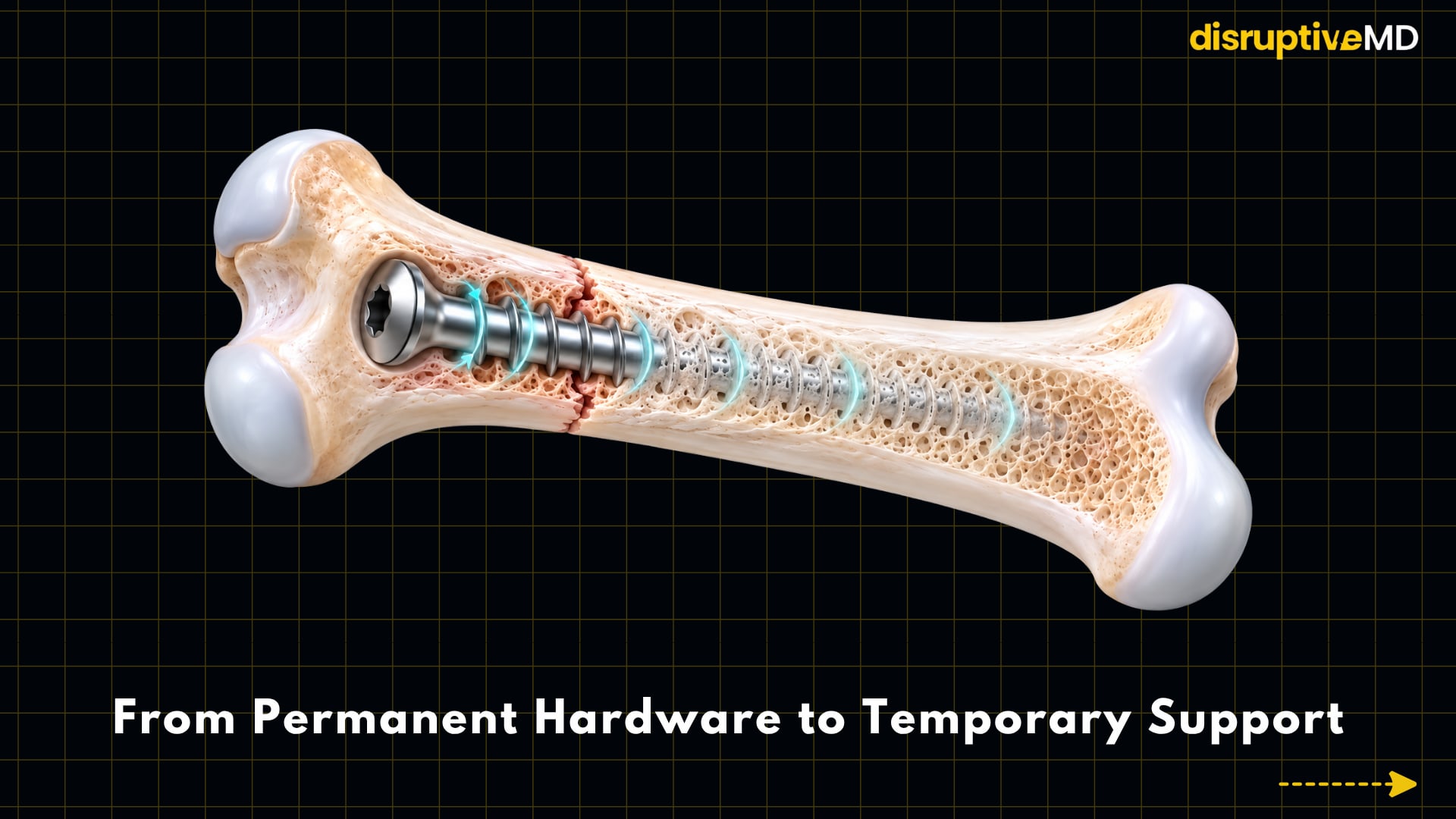
- Immediately after surgery, the implant may carry a substantial part of the mechanical load.
- As healing progresses, newly formed bone gradually becomes stronger.
- Later, as the bone becomes stronger, the implant should gradually lose mechanical dominance and allow more load to return to the recovering skeleton.
From Permanent Hardware to Temporary Support
Traditional orthopaedic implants are built around durability.
That makes sense. A fracture fixation device must survive considerable mechanical forces without bending, breaking, loosening, or failing before the bone has united.
But the biological requirement changes over time.
Immediately after surgery, the implant may carry a substantial part of the mechanical load.
As healing progresses, newly formed bone gradually becomes stronger.
Eventually, the bone should once again become the main load-bearing structure.
A permanent implant does not participate in this biological timeline. It continues existing long after its original mechanical mission has ended.
A biodegradable implant attempts to behave differently.
Its job is not simply to be strong.
Its job is to be strong at the right time.
Early in healing, the implant must maintain fixation.
Later, as the bone becomes stronger, the implant should gradually lose mechanical dominance and allow more load to return to the recovering skeleton.
Eventually, the fixation material itself could largely disappear.
This creates an unusual engineering challenge:
The implant is being asked to fail - but only at exactly the right rate.
Why Permanent Metal Is Not Always Ideal
Permanent metallic implants remain indispensable and, in many situations, there is no clinical reason to remove them.
But permanence is not automatically an advantage.
Hardware positioned close to the skin can sometimes become prominent or uncomfortable. This can be particularly noticeable around areas such as the ankle, foot, hand, clavicle, or other regions with limited soft-tissue coverage.
Some patients eventually undergo a second operation specifically to remove symptomatic implants. That exposes the patient to another surgical procedure, recovery period, anaesthetic exposure, and the complications associated with another operation.
Very stiff fixation systems can also alter the way forces are distributed through bone. When the implant carries disproportionately high loads, the surrounding skeleton may experience less mechanical stimulation, the principle behind stress shielding.
Metal can additionally interfere with some forms of medical imaging, although the magnitude varies greatly depending on the metal, implant geometry, imaging technique, and sequence used.
Children create another challenge. An implant placed into a growing skeleton must coexist with bones that are still changing in size and shape.
None of these problems means permanent implants are inherently bad.
It means that permanence itself is not always therapeutically necessary.
If a device is only needed temporarily, researchers are asking whether the material should also be temporary.
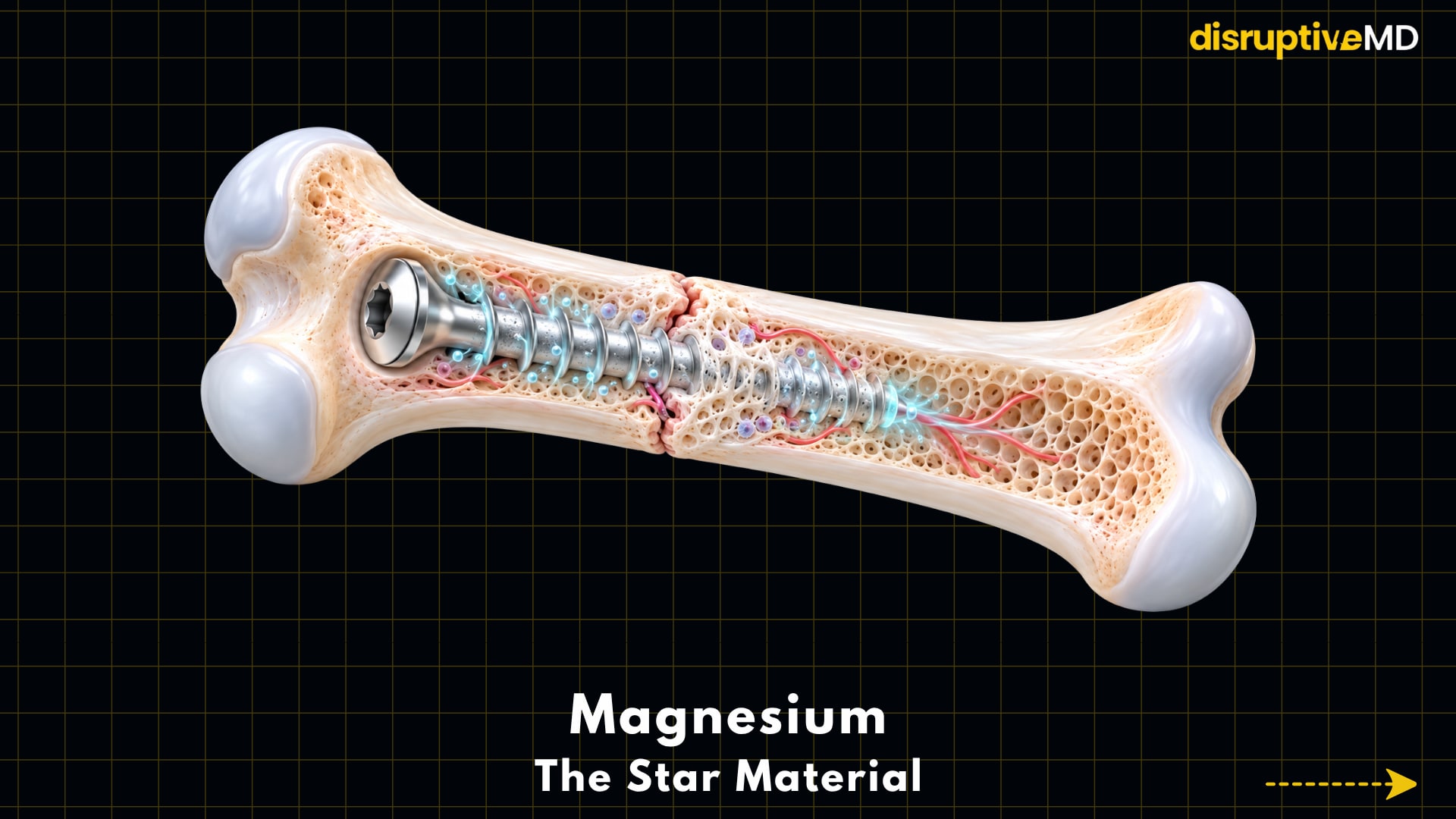
Magnesium: The Star Material
Among biodegradable metals, magnesium has attracted exceptional interest.
There is a good reason.
Magnesium combines something polymers often struggle to provide: metal-like mechanical fixation with biodegradability.
Its mechanical behaviour is also closer to bone than many conventional permanent metallic implant materials, potentially reducing some of the stiffness mismatch associated with traditional fixation systems.
But magnesium has another intriguing property.
It is not simply an inert material waiting to disappear.
As a magnesium implant degrades, magnesium ions enter the local biological environment. Laboratory and animal studies suggest these degradation products may interact with processes involved in osteoblast activity, bone formation, angiogenesis, immune signalling, osteoclast regulation, and bone remodelling.
That has created one of the most interesting ideas in modern biomaterials:
A future implant may not merely hold bone together. It could actively influence the biology of healing.
The distinction matters.
A conventional screw is principally a mechanical device.
A biodegradable magnesium screw could potentially become both a mechanical fixation device and a temporary biological participant in bone repair.
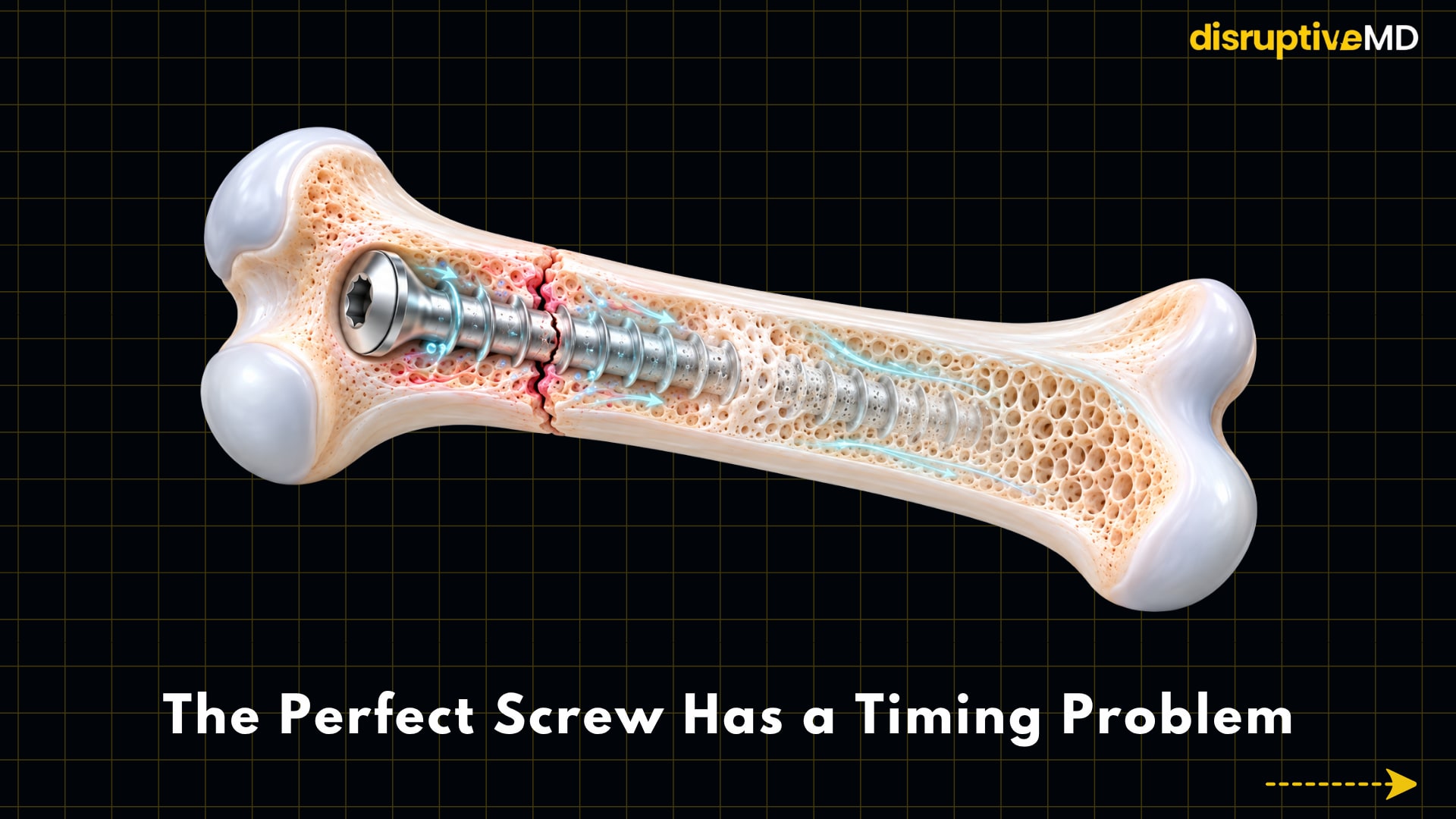
The Perfect Screw Has a Timing Problem
The biggest challenge is not making magnesium disappear.
Magnesium already wants to degrade in the physiological environment.
The challenge is making it disappear slowly enough.
Imagine a fracture fixed with a biodegradable screw.
During the first phase of healing, the screw must retain enough strength to resist movement.
If it loses structural integrity too quickly, fixation could weaken before the fracture has become mechanically stable.
But if degradation is made excessively slow, much of the advantage of a temporary implant begins to disappear.
The ideal relationship would look something like this:
**High implant strength → progressive bone healing → controlled implant weakening → increasing bone load → eventual implant resorption. ** Mechanical support and biological healing would effectively pass responsibility from one to the other.
That synchronized handover is one of the central goals of biodegradable implant design.
And it is far more difficult than simply manufacturing a strong screw.
The Corrosion Problem
Magnesium biodegrades primarily through corrosion.
Inside the body, water and electrolytes interact with the metal and gradually transform it.
One consequence of this reaction can be the formation of hydrogen gas around the implant.
Small amounts may resolve over time, but rapid corrosion can produce visible gas collections and can also cause the implant to lose mechanical integrity too early.
A recent randomized clinical study comparing magnesium and titanium screws in selected foot surgery illustrates both sides of the technology. Magnesium fixation produced clinical and radiographic outcomes comparable to titanium in the relatively small study, while temporary gas formation was visible on early postoperative imaging and subsequently resolved.
This is why the key question is no longer:
Can magnesium degrade?
It clearly can.
The real question is:
Can engineers control exactly how it degrades inside a moving, healing human body?
The rate can be influenced by alloy composition, surface condition, implant geometry, local biology, loading, blood supply, surrounding tissue, and the chemical environment around the implant.
The screw therefore has to remain mechanically predictable while it is simultaneously undergoing a chemical transformation.
That is an extraordinary materials-science problem.
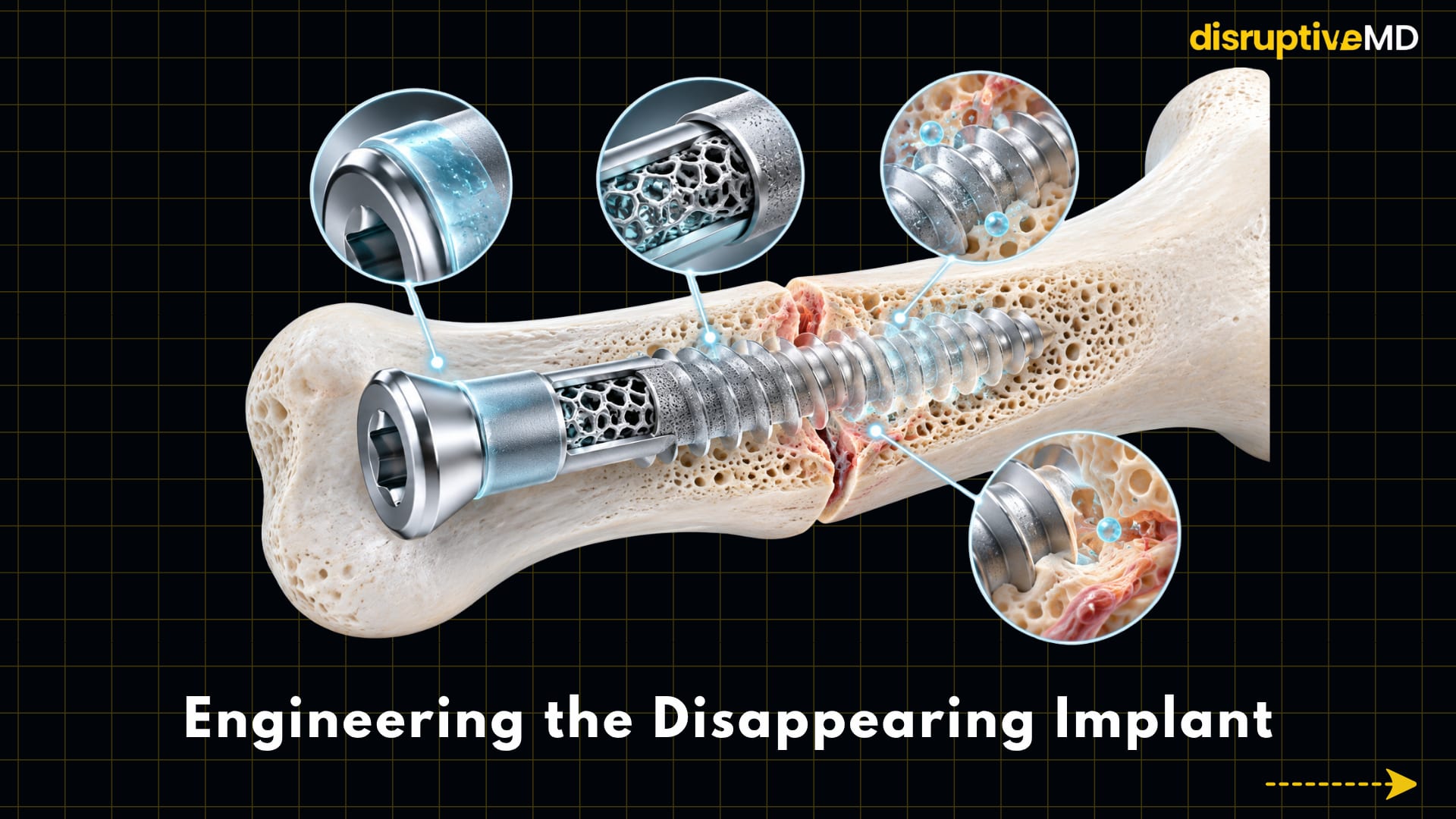
Engineering the Disappearing Implant
The future of biodegradable fixation will probably depend less on finding one perfect metal and more on engineering the behaviour of the material.
Researchers are exploring magnesium alloys, zinc alloys, iron-based systems, ceramic surface layers, polymer coatings, calcium-phosphate surfaces, nanostructured interfaces, porous architectures, and combinations of these strategies.
Each approach attempts to tune a different part of the equation:
Strength.
Corrosion rate.
Bone integration.
Biocompatibility.
Surface activity.
Mechanical load transfer.
A coating, for example, can temporarily shield magnesium from the surrounding environment and slow early degradation.
As the coating gradually changes, the underlying implant can begin degrading more substantially.
Alloying can alter both mechanical behaviour and corrosion characteristics.
Surface modification can influence how cells and tissues interact with the implant.
Instead of treating corrosion as an unavoidable defect, engineers are increasingly trying to turn degradation into a programmable material property.
Magnesium Is Not the Only Candidate
Magnesium currently has some of the strongest clinical momentum among biodegradable orthopaedic metals, but it is not alone.
Zinc
Zinc sits in an interesting position.
Magnesium can degrade too rapidly.
Iron can degrade too slowly.
Zinc-based materials potentially occupy a useful middle ground.
But pure zinc does not automatically possess the ideal strength and ductility needed for every orthopaedic application, so researchers are investigating alloys containing elements such as magnesium, manganese, lithium, and others.
As of 2026, zinc-based biodegradable orthopaedic implants remain predominantly within the translational and preclinical development pipeline rather than being an established substitute for conventional fixation.
Iron
Iron has almost the opposite problem to magnesium.
It can provide considerable mechanical strength, which is attractive for load-bearing fixation.
But physiological degradation can be extremely slow.
That has driven research into alloy design, porous architectures, manufacturing techniques, and other strategies intended to accelerate and control its breakdown.
The result may ultimately be a family of biodegradable metals rather than one universal material:
Magnesium when faster resorption and biological activity are useful.
Zinc where a more intermediate degradation profile can be engineered.
Iron-based systems where greater mechanical strength is required but degradation must be accelerated.
Bone Healing - Not Just Bone Fixation
This may eventually become the most disruptive part of the technology.
Orthopaedic hardware has traditionally been judged mainly by mechanical questions:
Will the screw hold?
Will the plate break?
Will the fracture remain aligned?
Biodegradable metals introduce another question:
What is the implant doing to the biology around it while it is there?
Magnesium degradation products have been investigated for effects on bone-forming cells, blood-vessel formation, immune signalling, osteoclast activity, and the mechanical signalling pathways involved in bone adaptation.
The science is complex and many mechanisms remain under investigation.
But the direction is important.
The implant of the future could potentially be designed not only around the forces it needs to withstand, but around the biological response it should create while healing occurs.
That changes the philosophy of fixation.
The screw stops being a passive piece of hardware.
It becomes a temporary healing environment.
Why Children Could Be an Important Future Use Case
Paediatric orthopaedics is one of the most intuitive areas for temporary fixation.
Children do something adult implants do not:
They keep growing.
Whenever fixation is placed in a developing skeleton, surgeons must consider growth, implant position, future anatomy, and whether removal may eventually become appropriate.
A device that maintains stability while a fracture or osteotomy heals and subsequently resorbs could therefore be particularly attractive in carefully selected paediatric situations.
Biodegradable polymers already have a history in some paediatric and lower-load fixation applications, while biodegradable metals could potentially offer greater mechanical capability for future indications.
But the concept requires especially careful validation.
A disappearing implant is only useful if its degradation behaviour is predictable throughout the period in which the growing bone depends on it.
Sports Orthopaedics Could Be Another Frontier
Sports surgery relies heavily on temporary fixation concepts.
Ligaments are attached to bone.
Tendons heal into tunnels.
Small bone fragments are stabilized.
Cartilage and osteochondral fragments may require fixation.
Reconstructive procedures can involve screws, anchors, buttons, and other devices that perform their most important role during the healing phase.
That makes biodegradable fixation conceptually attractive for procedures involving:
- Ligament fixation
- Tendon-to-bone healing
- Osteochondral fixation
- Small fractures
- Selected ankle procedures
- Selected shoulder-stabilisation procedures
- ACL-related fixation
- Cartilage-repair constructs
But this is where enthusiasm needs restraint.
Elite sport and high-load reconstruction place enormous repetitive forces through fixation devices.
A material that works well in a small, relatively low-load bone cannot automatically be assumed to work safely in every ligament reconstruction or major fracture.
For high-load sports applications, mechanical reliability and long-term clinical evidence must come before biodegradability.
Small Bones May Lead Before Big Bones
The earliest major opportunities may therefore not involve replacing every plate and rod used in trauma surgery.
They may be more selective.
Foot, ankle, hand, wrist, and other small-bone procedures are particularly interesting because implants can sometimes become prominent or symptomatic in these anatomically compact areas.
Magnesium screws already have human clinical evidence in selected foot procedures.
In a 2026 prospective randomized study, magnesium screws used for hallux valgus fixation produced outcomes that were not significantly different from titanium fixation at medium-term follow-up. The magnesium implants had resorbed on later imaging, while early gas formation resolved.
That does not prove magnesium can replace titanium throughout orthopaedics.
But it demonstrates something important:
The disappearing orthopaedic screw is no longer purely science fiction.
3D Printing Could Make Degradation Personalised
Now imagine taking the concept further.
A conventional screw is manufactured to a standardized geometry.
A future biodegradable implant might be designed around:
- The patient’s fracture shape
- Local bone quality
- Expected mechanical load
- Desired stiffness
- Healing time
- Bone defect geometry
- Required degradation profile
Additive manufacturing, including metal 3D printing, could make that increasingly possible.
Instead of producing a completely solid implant, engineers can create complex porous structures.
Porosity changes weight.
It changes stiffness.
It changes the surface available for tissue interaction.
And critically for biodegradable metals, it can change how quickly the material degrades.
This raises a fascinating possibility:
Future implant geometry could help determine not only how strong the implant is, but also how long it survives.
Research into additively manufactured porous magnesium is already exploring personalised geometries, lattice structures, surface functionalisation, mechanical behaviour, and degradation control. It remains an emerging engineering field rather than routine clinical fracture fixation.
Hybrid Implants: Why Everything May Not Need to Disappear
There is another possibility.
Perhaps the future implant does not need to be completely biodegradable.
A hybrid device could combine materials with different roles.
A stronger permanent component could provide the mechanical safety required for high-load fixation, while a magnesium component could provide temporary support or influence the surrounding biological environment.
That approach may offer a way around one of magnesium’s biggest limitations: maintaining dependable strength in demanding load-bearing situations while the material is degrading.
Instead of asking:
Permanent or biodegradable?
Future implant design may ask:
Which parts should remain, which should disappear, and when?
Hybrid magnesium-containing systems are already being explored as one strategy for balancing mechanical support with the potential biological advantages of degradable magnesium.
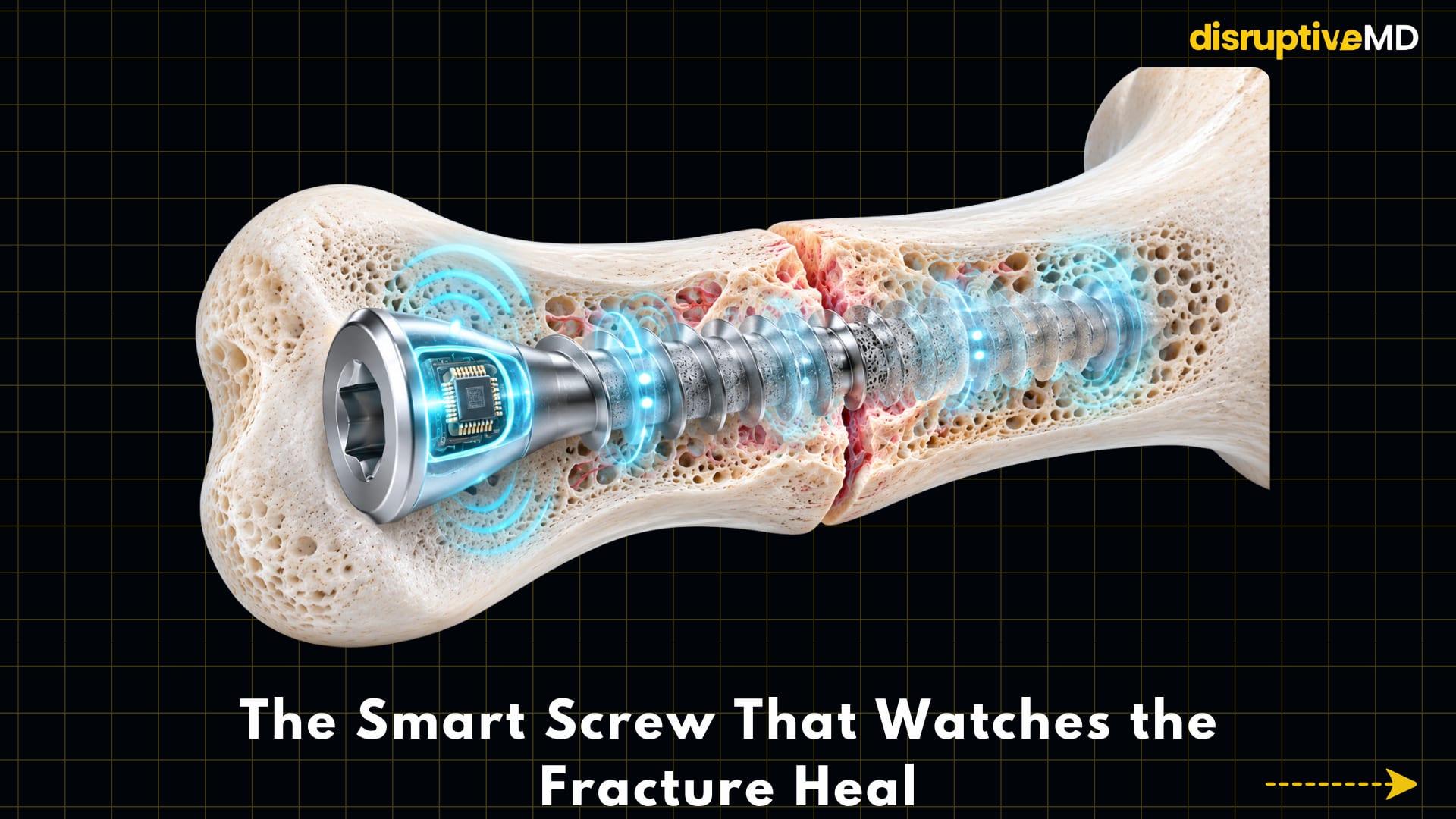
The Smart Screw That Watches the Fracture Heal
And then the idea becomes even more futuristic.
Today, fracture healing is usually assessed intermittently.
A patient returns to clinic.
An X-ray is taken.
Symptoms are examined.
Weight-bearing is progressed based on the combined clinical and imaging picture.
But healing is a continuous biological process.
What if the implant could measure it continuously?
Orthopaedic sensor research is already investigating implant-integrated technologies capable of measuring variables such as load, strain, pressure, temperature, and other signals associated with healing or implant performance.
Changes in implant loading may be particularly informative because as a fracture becomes stiffer, the distribution of mechanical forces between the implant and the healing bone changes.
A future biodegradable fixation system could theoretically combine:
Mechanical Fixation + Controlled Degradation + Biological activity + Sensing.
The screw might stabilize the fracture.
A sensor could monitor how load is transferring through the healing construct.
Software could analyse the trend.
Rehabilitation or weight-bearing could eventually be adjusted using more objective information.
And after the fracture had healed?
The fixation — and perhaps eventually parts of the sensing system itself could disappear.
Research published in 2026 describes implant load sensing as one of the more translationally advanced approaches to continuous fracture monitoring, while fully biodegradable implantable biosensors remain much earlier in development.
This is not routine clinical orthopaedics.
But it shows where two major fields are beginning to converge:
Smart implants and biodegradable implants.
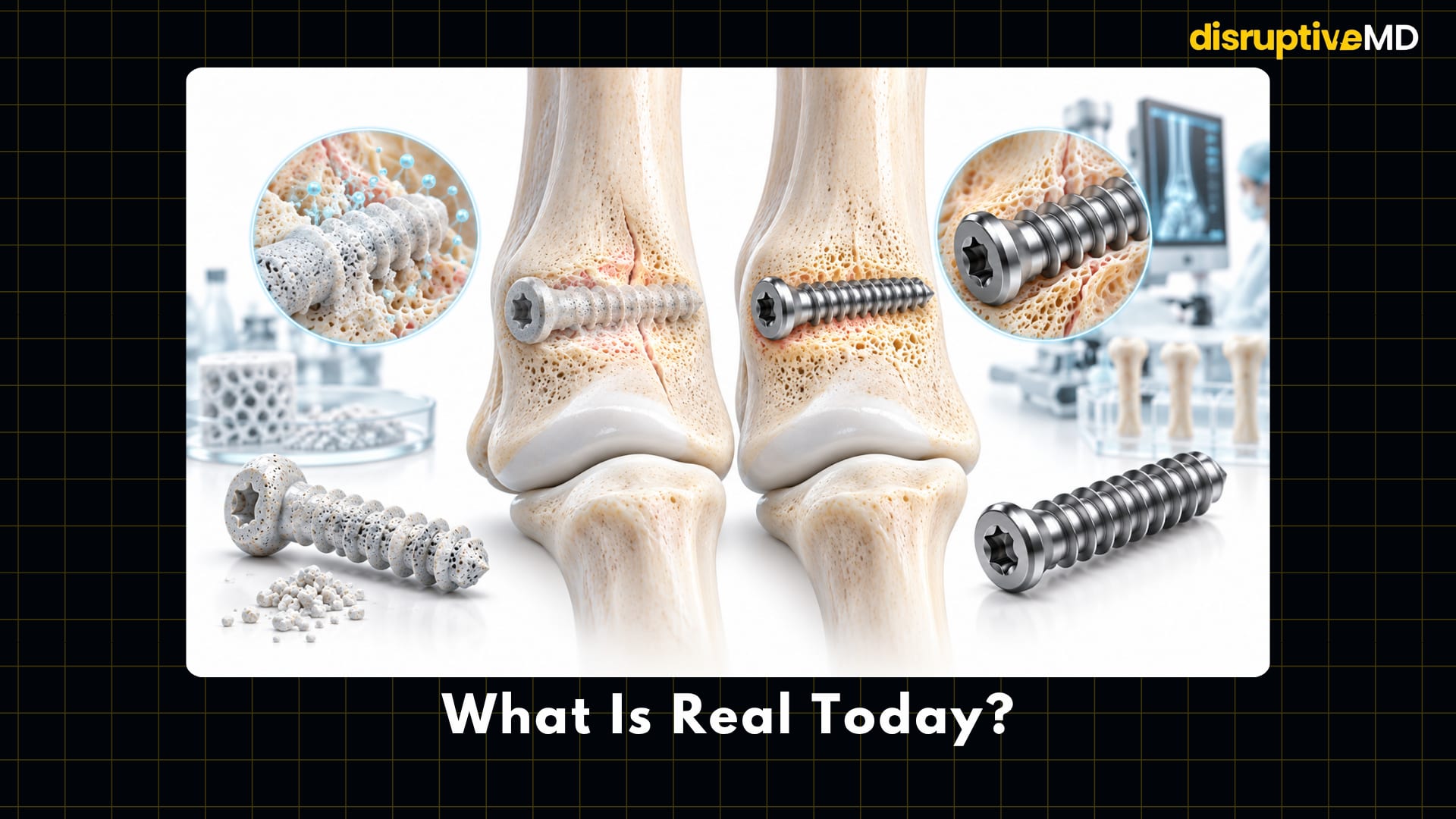
What Is Real Today?
The disappearing screw is not merely a laboratory concept anymore.
Biodegradable magnesium screws have already been used clinically in selected orthopaedic procedures.
Human clinical studies exist, particularly in areas such as foot and small-bone fixation.
Recent randomized data continue to show that selected magnesium screw applications can achieve outcomes comparable with conventional titanium fixation, although study sizes and indications remain limited.
Magnesium alloys remain a major focus of orthopaedic biomaterials research, with active work on corrosion control, mechanical stability, biological effects, surface treatments, and porous structures.
Biodegradable zinc and iron alloys are also advancing, but they are considerably less established clinically as routine orthopaedic fixation materials.
The scientific challenges are also very real:
- Degradation must remain predictable
- Mechanical strength must survive the critical healing period
- Excessive or localized corrosion must be avoided
- Magnesium-related gas formation must be controlled
- Degradation products must remain biologically acceptable
- Performance must remain reliable under repeated mechanical loading
So the future is not simply about inventing a metal that disappears.
It is about designing an implant whose mechanical lifetime matches the biological timeline of healing.
What Is Not Fully Real Yet?
We are not yet at a point where every titanium plate or stainless-steel screw can simply be replaced with a biodegradable version.
Routine biodegradable fixation for every fracture is not established.
Universal use in major high-load bones is not established.
Perfectly predictable degradation in every patient is not established.
A plate that disappears with zero complications is not established.
A screw that knows the exact moment a fracture has healed and then automatically dissolves is not established.
Fully integrated biodegradable fixation systems containing clinically validated sensors and real-time healing intelligence are also not routine reality.
These are destinations, not current standards of care.
And conventional permanent implants remain essential because reliable fixation is more important than making hardware disappear.
The disappearing implant only wins if it can provide both.
Key Takeaway
The real innovation in biodegradable orthopaedics is not simply creating a screw that dissolves.
It is creating an implant whose entire lifespan is engineered around healing.
Early on, it must behave like strong metal.
During recovery, it must maintain fixation while bone becomes stronger.
Later, it may progressively surrender mechanical load back to the skeleton.
Its surface and degradation products may potentially influence local bone biology.
Future versions could be personalised through additive manufacturing, combined with other materials, or even connected to sensors capable of monitoring healing.
The question therefore changes from:
How long can we make an implant last?
to:
How long does the patient actually need it?
The future of orthopaedic implants may not be permanent strength.
It may be temporary intelligence.
The best orthopaedic implant of the future may be the one that knows when to leave.
FACT BASE
Clinically demonstrated: Biodegradable magnesium screws have been used in selected human orthopaedic applications. Recent randomized medium-term data in hallux valgus surgery found no statistically significant outcome difference compared with titanium fixation in a small cohort, with eventual magnesium resorption observed radiographically.
Supported but still developing: Magnesium-based implants have mechanical characteristics closer to bone than many conventional metallic systems, and experimental evidence supports interactions between magnesium degradation products and osteogenesis, angiogenesis, bone remodelling, and mechanobiology. The magnitude and clinical importance of these biological effects depend on implant design and context.
Major engineering challenge: Magnesium can corrode too rapidly. Controlling loss of mechanical integrity, local degradation behaviour, and hydrogen generation remains central to development.
Emerging technologies: Coatings, alloy engineering, porous architectures, surface functionalisation, hybrid systems, and additive manufacturing are being investigated to tune strength, corrosion, bone integration, and degradation.
Earlier-stage alternatives: Zinc- and iron-based biodegradable metals are promising but currently face different limitations — including mechanical optimisation for zinc and slow degradation for iron — and are not equivalent in clinical maturity to magnesium fixation.
Future rather than routine care: Sensor-enabled fracture monitoring is advancing rapidly, including implant-load sensing, but a clinically routine biodegradable screw that simultaneously fixes bone, monitors healing, and completely resorbs remains a future concept.
REFERENCES
- Saragas NP, de Buys M, Ferrao PNF. Magnesium Bioabsorbable vs Titanium Screws in Hallux Valgus Surgery: A Prospective, Randomized Medium-term Trial. Foot & Ankle Orthopaedics. 2026;11(1). DOI: 10.1177/24730114251408829.
- Kotteda AK, Saikumar T, Shreegan AA. Advancements in Biodegradable Orthopaedic Implants: A Literature Review. Indian Journal of Orthopaedics. 2025;59(8):1090–1100. DOI: 10.1007/s43465-025-01445-y.
- Wen Z, Lei L, Zhang H, et al. Magnesium-containing implants enhance bone healing: A mechanobiological perspective. Mechanobiology in Medicine. 2025;3(4):100161. DOI: 10.1016/j.mbm.2025.100161
- Shan Z, Xie X, Wu X, et al. Development of degradable magnesium-based metal implants and their function in promoting bone metabolism: A review. Journal of Orthopaedic Translation. 2022. DOI: 10.1016/j.jot.2022.09.013.
- Hashemi TS, Jaiswal S, McCarthy HO, Levingstone TJ, Dunne NJ. Biofunctionalisation of porous additively manufactured magnesium-based alloys for Orthopaedic applications: A review. Biomaterials Advances. 2025;169:214170. DOI: 10.1016/j.bioadv.2024.214170.
- Zhao P, Wang Z, Yang H, et al. Biodegradable Zn-Based Implants: Progress, Challenges, and Pathways toward Clinical Translation. Advanced Science. 2026;13(39):e76066. DOI: 10.1002/advs.76066
- Al-Smadi F, Lin Z, Li N, et al. From episodic imaging to real-time sensor monitoring: translational advances in assessing fracture healing dynamics. Journal of Orthopaedic Translation. 2026;59:101172. DOI: 10.1016/j.jot.2026.101172.
- Recent Progress and Challenges of Implantable Biodegradable Biosensors. 2024. Review of biodegradable sensor design, power, wireless communication, degradation, and translational challenges.
- Luo Y, Wang J, Ong MTY, et al. Update on the research and development of magnesium-based biodegradable implants and their clinical translation in orthopaedics. Biomaterials Translational. 2021;2(3):188–196. DOI: 10.12336/biomatertransl.2021.03.003.
- Synergistic Effects of Magnesium Ions and Hydrogen Gas in Biodegradable Mg Implants: Mechanisms, Therapeutic Windows, and Translational Perspectives. 2026. DOI: 10.1007/s10439-026-04001-3