
What if your rehab plan changed every day based on how your body actually performed?
Rehabilitation has always been personal in principle. A physiotherapist watches how a patient walks, tests strength, asks about pain, corrects technique, and decides what should happen next. The limitation is not the clinical idea. It is the amount of information available between appointments.
Most recovery plans still use a mixture of postoperative timelines, symptom reports, strength testing, functional milestones, and clinician judgment. These safeguards matter, especially while repaired tissue is healing. Yet two people with the same operation can reach the same week with very different capabilities. One may move confidently and load the injured side well. Another may avoid it without realizing. A third may look controlled when fresh but lose that control with fatigue.
Adaptive rehabilitation adds a continuous feedback layer. It combines movement sensors, muscle signals, force measurements, wearable activity, pain and swelling reports, video analysis, and digital platforms. Algorithms can organize those signals and identify patterns, while the clinician decides what they mean. The goal is to move from a fixed programme that mainly follows the calendar to a personalised recovery system that learns from the patient.
- It cannot see whether the person is shifting weight away from one leg during a squat, failing to activate a muscle, or performing fewer exercises at home than intended.
- Biological healing still sets boundaries that performance data cannot override.
- Time becomes one input among several, rather than the only signal that advances the programme.
The Protocol Cannot See the Patient
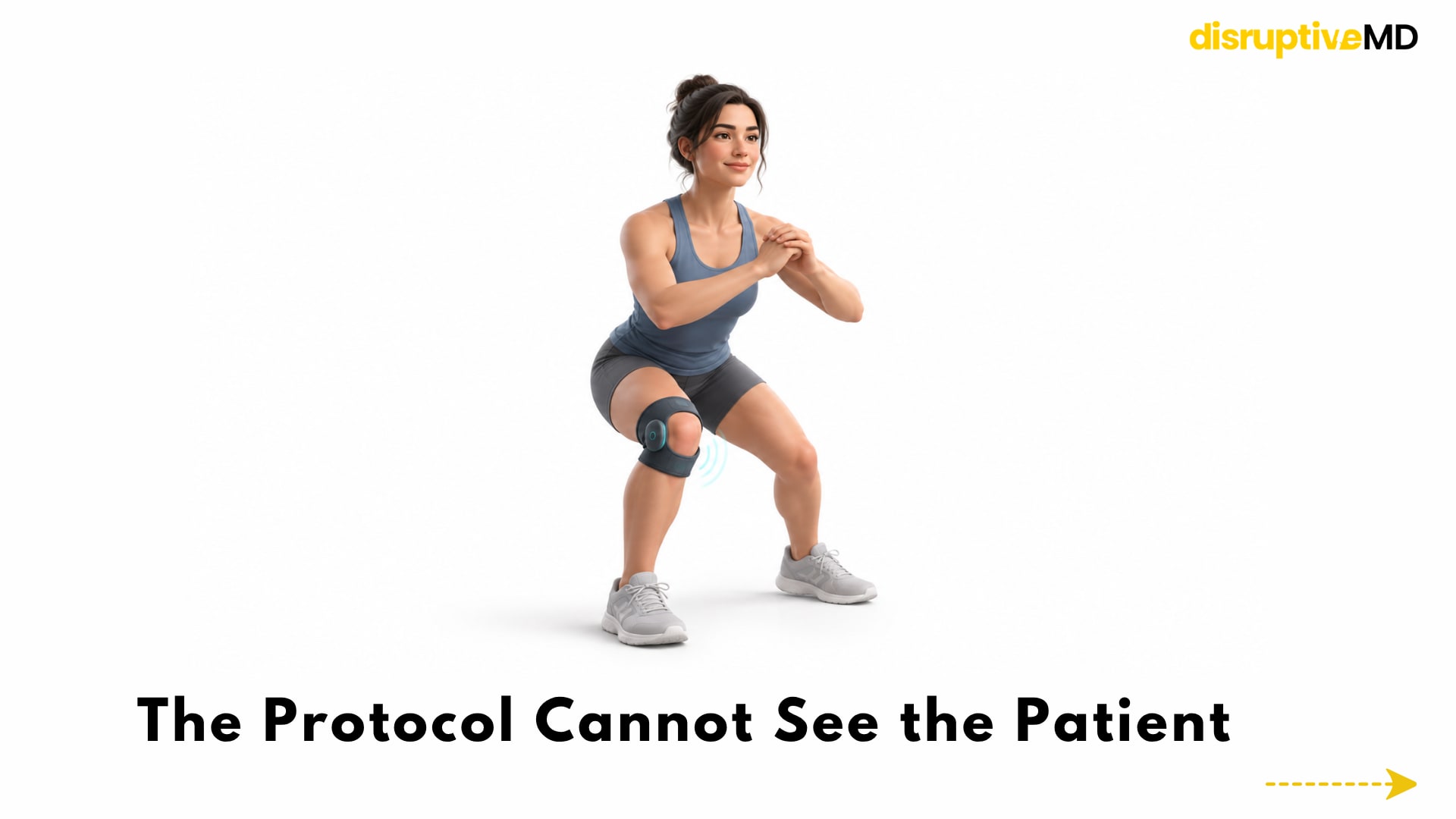
A protocol can describe when a graft, tendon, bone, or repaired joint is expected to enter a new stage of healing. It cannot see whether the person is shifting weight away from one leg during a squat, failing to activate a muscle, or performing fewer exercises at home than intended. It also cannot know whether a workload that was manageable three days ago is now producing increasing pain, swelling, or fatigue.
This is the gap adaptive rehabilitation tries to close. It does not discard protocols. Biological healing still sets boundaries that performance data cannot override. Instead, the system asks whether the patient is ready to progress within those boundaries. Time becomes one input among several, rather than the only signal that advances the programme.
From Time Based to Readiness Based Rehabilitation
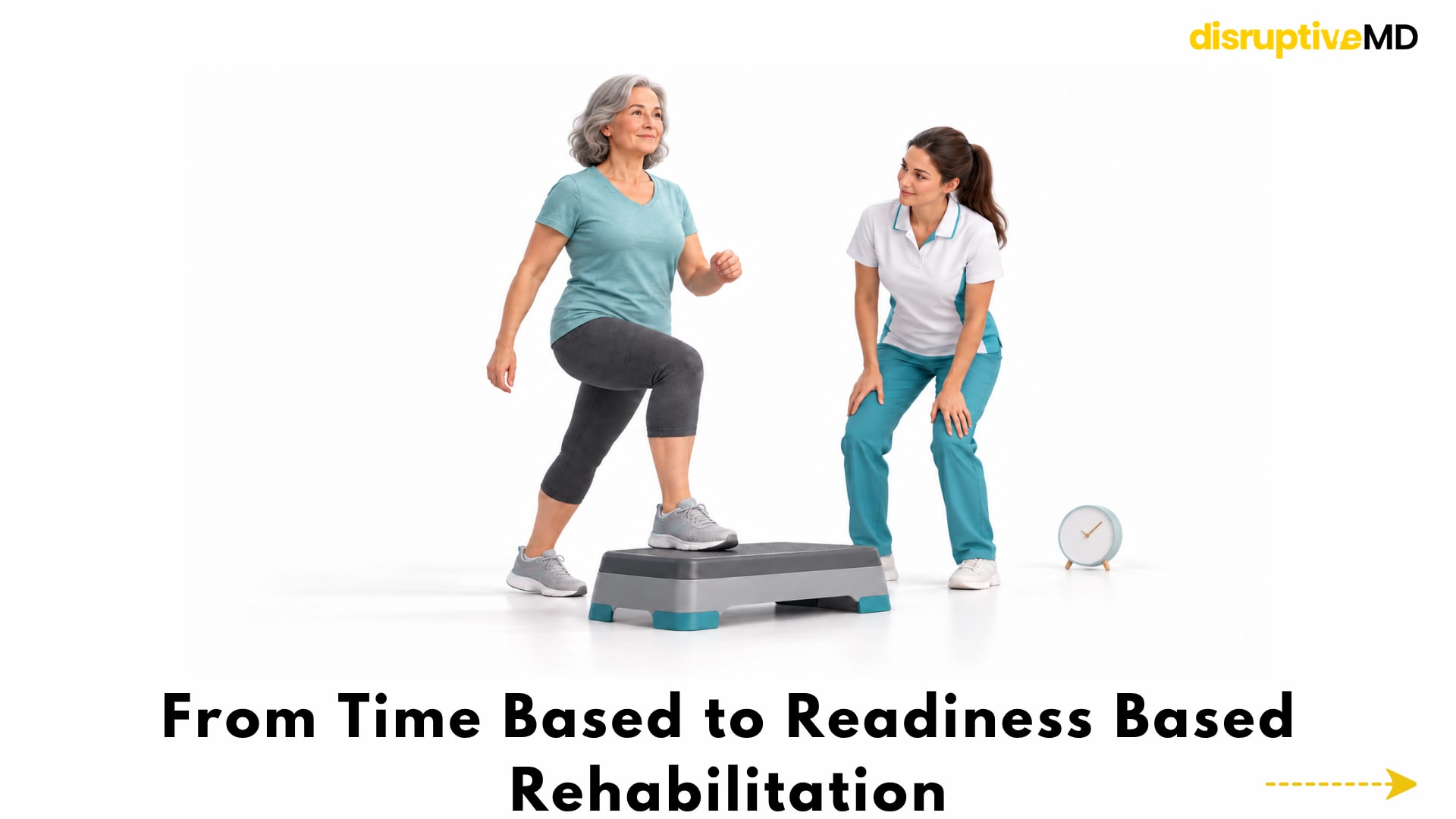
A time-based plan might say that a particular exercise begins at week six. A readiness-based plan asks whether the patient can perform the movement with sufficient strength, control, range, load tolerance, and confidence. It also asks how the movement changes when repetitions accumulate.
- The decision may include questions such as:
- Is strength improving at the expected rate?
- Is movement becoming more symmetrical, or is the uninjured side doing most of the work?
- Does pain settle after exercise, or is the response worsening across several days?
- Does technique remain controlled when the patient is tired?
- Is the patient performing the prescribed exercise correctly and often enough?
- Is the next task safe for the healing tissue and appropriate for the person's goals?
This does not produce a single universal readiness score. Readiness is specific to the injury, operation, activity, and person. The useful shift is from assuming that elapsed time equals recovery to testing what the body can actually do.
The Signals an Adaptive System Can Read
Motion Sensors
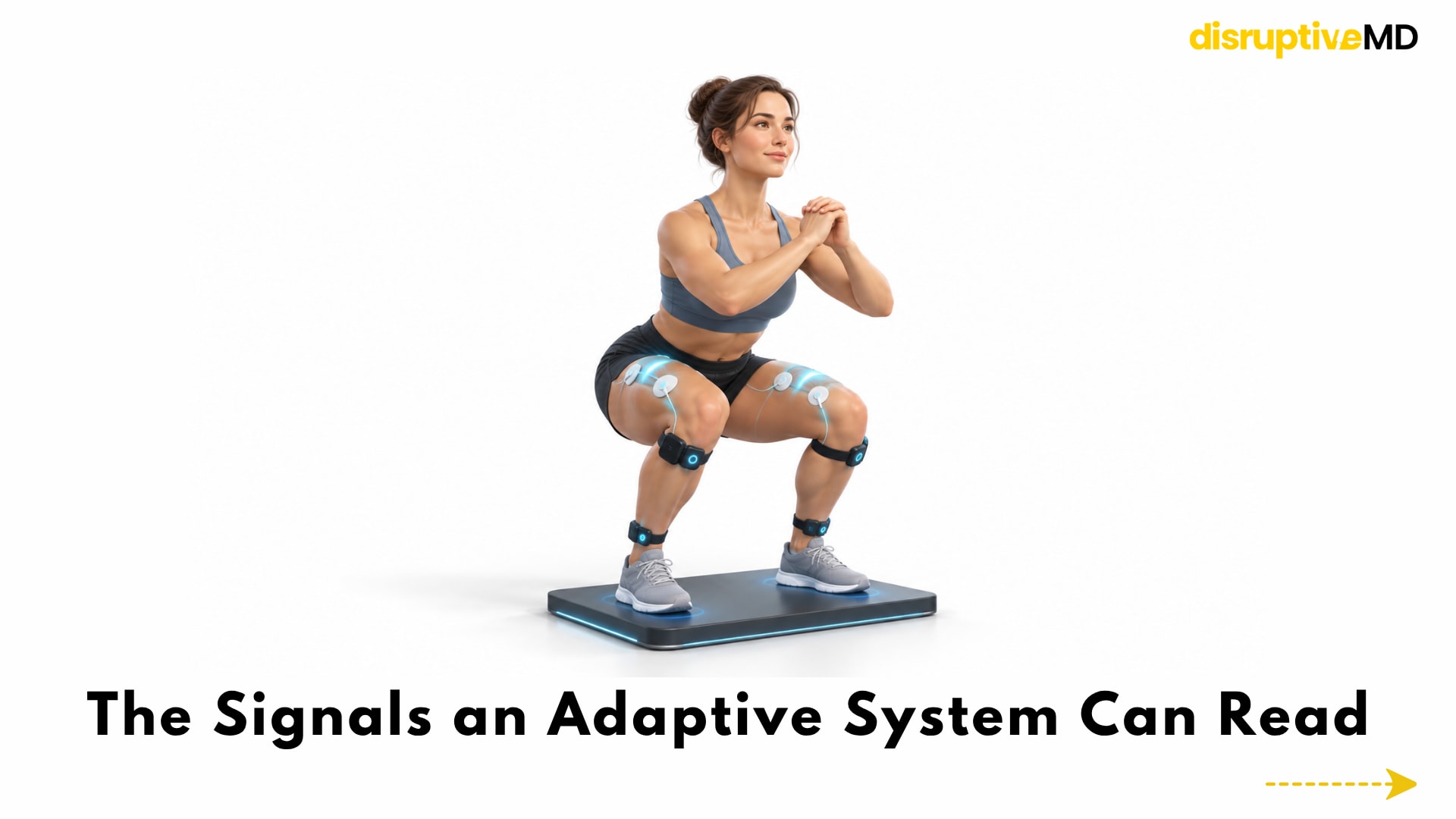
Small inertial sensors containing accelerometers and gyroscopes can estimate movement, speed, orientation, repetitions, and parts of joint motion. Depending on their placement and validation, they may help track walking patterns, range of motion, exercise quality, step count, asymmetry, compensations, and workload outside the clinic. Machine-learning models have already been used to distinguish prescribed shoulder exercises from other movement, although performance fell when the model was tested on people it had not seen during training. That difference is a reminder that laboratory accuracy does not automatically become real-world reliability.
The clinical value is continuity. A ten-minute assessment may look good, while the patient's movement across an entire day tells a different story. Wearable data can reveal whether the person is gradually resuming activity, remaining unusually inactive, or accumulating more load than the plan intended.
Muscle Signals
Surface electromyography, usually shortened to EMG, records electrical activity from muscles through electrodes on the skin. It can show whether a target muscle is being recruited and can turn that signal into visual or auditory biofeedback. This is useful when the patient feels that the correct muscle is working but another muscle is compensating.
After anterior cruciate ligament reconstruction, for example, quadriceps inhibition can persist even when the patient is trying hard to contract the muscle. Small randomized studies have reported improvements in quadriceps activation, strength, or knee extension when EMG biofeedback was added to conventional rehabilitation. Similar principles can be applied to gluteal activation in hip rehabilitation, scapular control in shoulder rehabilitation, calf activation after Achilles injury, hamstring recruitment after strain, or forearm activity after tendon injury.
EMG is informative, but it is not a direct measure of strength or tissue healing. Electrode placement, skin movement, sweating, signal cross-talk, body composition, and fatigue can all affect the recording. The signal needs clinical context.
Force Plates and Smart Insoles
A patient can complete a squat, jump, landing, or stair task while quietly protecting the injured side. The movement may look acceptable, yet the force distribution can remain uneven. Force plates quantify how the body pushes against the ground. Pressure or force-sensing insoles can extend part of that measurement into walking and field-based tasks.
These systems can expose hidden unloading during walking, squatting, jumping, landing, cutting, or return-to-sport drills. They can also show that an apparently symmetrical result hides a different strategy. Two legs may produce similar jump height, for example, while the recovering knee contributes less and the hip or ankle contributes more.
Force data should still be interpreted carefully. External force is not the same as force inside a healing tendon, graft, cartilage surface, or bone. It helps estimate how the body is loading, but it does not directly measure tissue integrity.
Symptoms Activity and Recovery Context
Not every important signal comes from hardware. Pain, swelling, sleep, fatigue, confidence, perceived exertion, and exercise adherence can change the meaning of sensor data. A technically clean movement performed once may not justify progression if symptoms are escalating afterward. Conversely, a cautious patient may need reassurance and graded exposure even when physical capacity is improving.
The strongest adaptive system would therefore combine objective measurements with the patient's own experience and the clinician's examination. More data are useful only when they improve a decision.
When AI Becomes a Movement Analyst
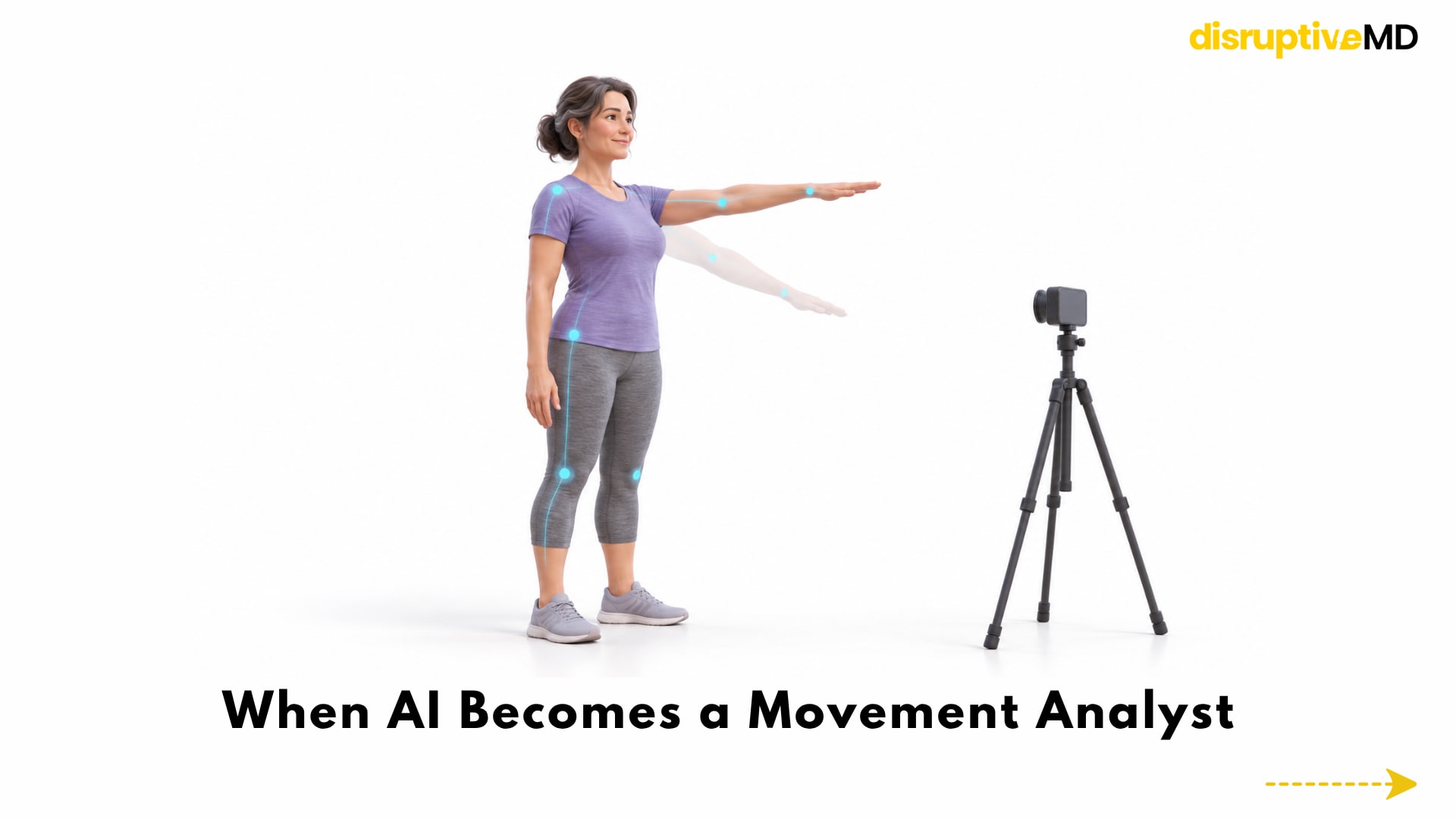
Computer vision can identify body landmarks from ordinary video and estimate joint positions, gait variables, or movement patterns. Multi-camera smartphone systems can now calculate three-dimensional kinematics and model aspects of musculoskeletal loading. Simpler video workflows have also been validated for clinically relevant gait measurements in people after stroke and in people with Parkinson's disease.
This could make movement analysis more accessible. A camera may help a clinician quantify knee flexion during a landing, step-length asymmetry during gait, or loss of trunk control during repeated exercise. The same system could compare today's performance with the patient's own previous sessions rather than with a generic ideal.
However, AI does not understand a movement in the same way a clinician does. Camera angle, clothing, lighting, occlusion, task speed, body shape, assistive devices, and the population used to train the model can change accuracy. Some systems estimate only visible joint geometry; they cannot detect pain, apprehension, neurological tone, surgical precautions, or tissue quality from pixels alone. AI can make assessment more consistent and scalable, but its output is a measurement to interpret, not a diagnosis or clearance decision.
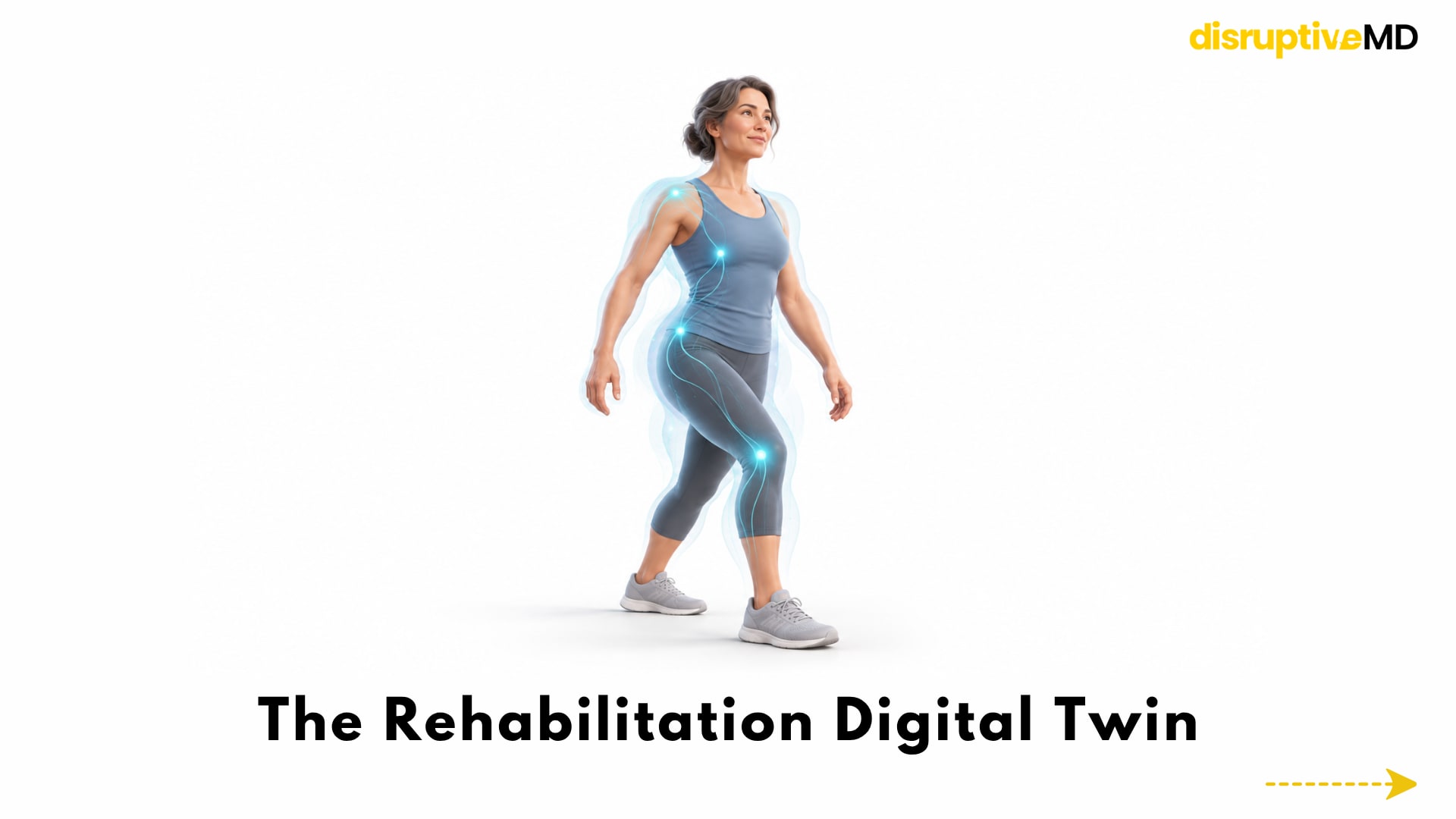
The Rehabilitation Digital Twin
The most ambitious version of adaptive rehabilitation is a digital twin: a continuously updated virtual model of the patient's recovery. It could combine the injury and operation, strength tests, movement data, muscle activation, symptoms, swelling, activity, tissue-loading constraints, and progress over time. The model could then estimate how the person is recovering and simulate which progression might be appropriate next.
A useful rehabilitation twin would not be a static avatar. It would change as new information arrives. If walking volume rises but movement quality deteriorates, the projected plan may change. If strength improves while landing control remains poor, the next step may focus on coordination rather than heavier loading. If a patient repeatedly reports a delayed pain flare after a particular exercise dose, the system may flag the pattern for review.
The concept is credible enough to support research frameworks in neuromusculoskeletal care, but it is not yet a routinely validated clinical product that can predict an individual's recovery with high confidence. A true twin would need reliable data, transparent models, repeated calibration, and evidence that its recommendations improve outcomes. At present, most systems capture fragments of the patient rather than a complete living model.
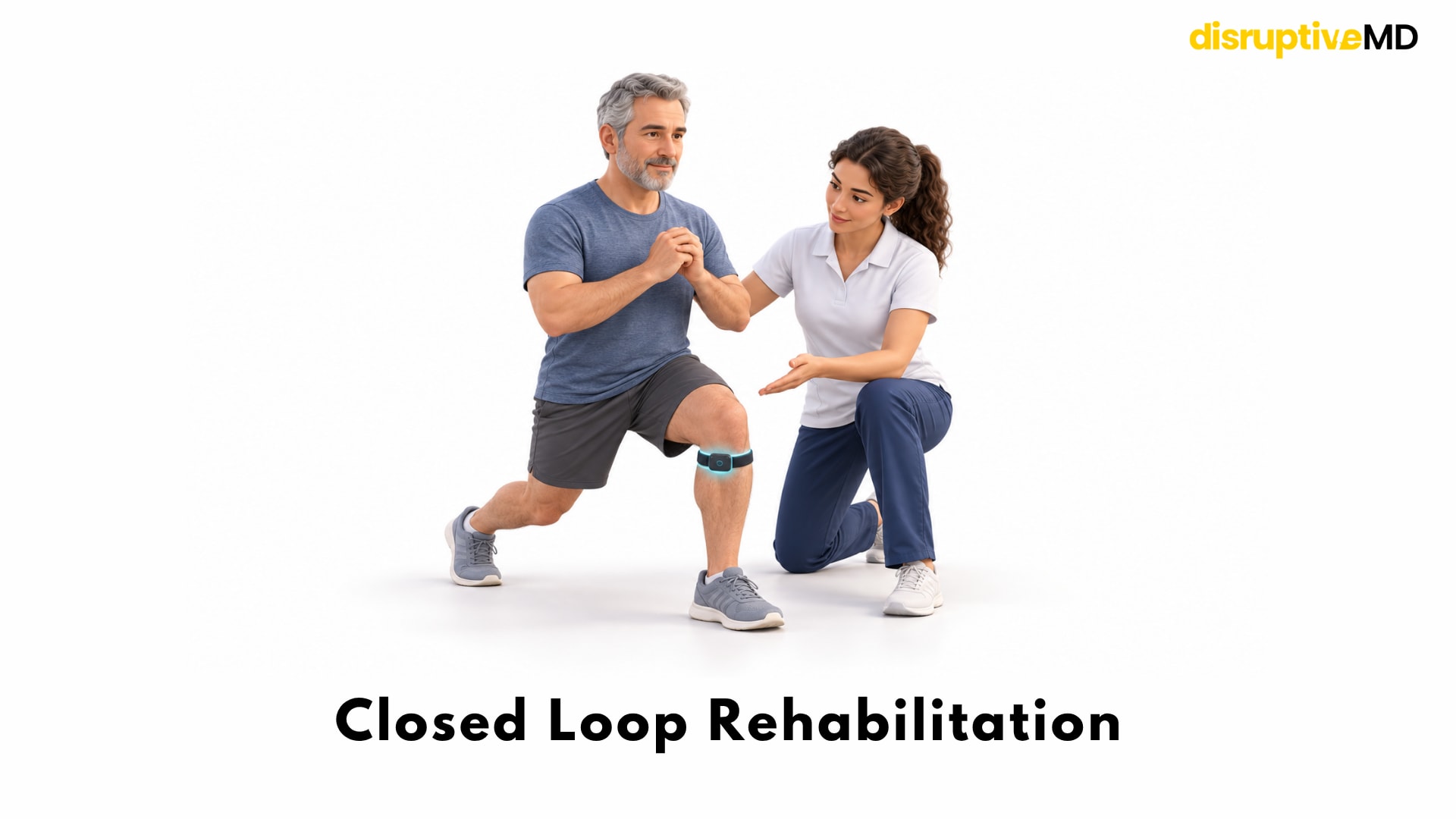
Closed Loop Rehabilitation
Adaptive rehabilitation becomes closed loop when measurement changes what happens next. The system observes performance, compares it with defined limits, and modifies feedback, assistance, exercise dose, or progression. A simple loop might work like this:
- Increasing pain or swelling triggers review and may reduce the planned load.
- Good control across repeated sets allows a carefully defined progression.
- Low target-muscle activation adds biofeedback or changes the exercise setup.
- Persistent landing asymmetry delays higher-risk sport exposure.
- Low daily activity leads to smaller, achievable movement goals rather than a harder clinic session.
The safest near-term model is not an algorithm freely rewriting treatment. It is a clinician-approved decision system with predefined guardrails. Some changes may be automated within a narrow range, such as adjusting repetitions or real-time cues. Higher-stakes decisions, including loading a repaired structure, changing precautions, or clearing sport, should remain under clinical oversight.
Rehabilitation Beyond the Clinic
Most recovery happens away from the physiotherapy room. A wearable or camera system can guide an exercise, count repetitions, check whether the movement resembles the prescribed version, and transmit a summary to the clinician. The clinician can then review trends rather than relying only on memory or a paper exercise diary.
Randomized trials in selected postoperative populations have shown that digitally supported home rehabilitation can be feasible and can produce outcomes comparable with, or in some measures better than, conventional home programmes. That does not mean every patient benefits equally. Access to technology, digital confidence, home space, cognitive function, language, symptoms, and the need for hands-on assessment all influence suitability.
The strongest model is likely hybrid care: technology maintains contact between appointments, while the physiotherapist examines, interprets, reassures, changes strategy, and intervenes when the data do not fit the patient.
Where Adaptive Rehabilitation Could Matter Most
Recovery After Surgery and Injury
Adaptive monitoring may be useful after anterior cruciate ligament reconstruction, meniscus repair, rotator cuff repair, Achilles tendon repair, joint replacement, fracture fixation, cartilage procedures, spine surgery, tendon transfer, and complex sports reconstruction. Each condition has different biological precautions, but all can produce gaps between apparent function and actual loading or control.
The system's role is not to accelerate everyone. For one patient, adaptation may mean progression. For another, it may detect overload early and hold the programme steady. Personalisation includes knowing when not to advance.
Neurological Rehabilitation
In stroke, spinal cord injury, Parkinson's disease, cerebral palsy, peripheral nerve injury, balance disorders, and gait retraining, the target is often repeated, task-specific motor practice. Adaptive systems can change assistance, feedback, or stimulation according to the person's movement. A robotic device may contribute more support when a step cannot be completed, then reduce assistance as control improves. Functional electrical stimulation can be timed to a self-initiated movement rather than delivered on a fixed schedule. Pilot work has demonstrated closed-loop stimulation linked to voluntary reach-to-grasp attempts after stroke or spinal cord injury.
This is a different kind of learning loop. The technology does not simply record recovery; it becomes part of the practice that may help drive it.
When Measurement Connects to Treatment
The next generation of systems may connect measurement with neuromuscular electrical stimulation, functional electrical stimulation, biofeedback, robotic exoskeletons, virtual reality, balance platforms, smart braces, and carefully controlled blood-flow-restriction training. The important feature is not the number of devices. It is whether the intervention responds to a relevant signal.
A brace might change support during a specific phase of gait. An exoskeleton might reduce assistance when the patient contributes more effort. A virtual task might become harder only when accuracy remains stable. Stimulation might be delivered at the moment the patient initiates a movement. In each case, the system measures, responds, and measures again.
This creates powerful possibilities, but also new safety responsibilities. An inaccurate sensor or poorly chosen threshold could progress the wrong exercise, reinforce a compensation, or deliver assistance at the wrong time. Closed-loop rehabilitation needs conservative limits, fault detection, and a clear way for both patient and clinician to override the system.
A Better Return to Sport Decision
Return to sport is often treated as a date. In reality, it is a risk-management decision involving tissue healing, strength, movement quality, sport-specific capacity, workload tolerance, symptoms, confidence, and exposure to fatigue. Research after anterior cruciate ligament reconstruction has shown that time and objective function both matter, while force-plate studies have found residual asymmetries even in athletes who have reached return-to-sport testing.
Adaptive rehabilitation could build a richer picture by tracking strength symmetry, landing mechanics, cutting control, fatigue response, recent workload, confidence, and sport-specific movement over time. A single good test would no longer carry the whole decision. The system could look for consistent readiness across repeated sessions and realistic conditions.
Even then, an app should not issue universal clearance. Many proposed re-injury markers are associations, not precise individual predictions. The final decision still requires the clinical story, the demands of the sport, shared decision-making, and an understanding of what the available tests cannot measure.
What Is Real Today
- Wearable inertial sensors can measure activity and defined movement variables, and some can classify prescribed exercises.
- Surface EMG can measure muscle electrical activity and provide biofeedback during rehabilitation.
- Force plates and pressure or force-sensing insoles can quantify external loading and reveal asymmetry.
- Video-based pose estimation can measure selected gait and movement variables with useful accuracy when the setup and task are appropriate.
- Digital and remote rehabilitation platforms can guide home exercise, collect outcomes, and support clinician review.
- Closed-loop stimulation and robotic assistance exist in research and selected rehabilitation systems.
- Digital-twin frameworks for neuromusculoskeletal care are being developed, but clinical use remains early.
What Is Not Fully Real Yet
- An AI system that can replace a physiotherapist's examination, reasoning, communication, and safeguarding.
- A digital twin that can reliably predict the recovery of every patient.
- Fully automated exercise progression that is safe across different injuries, operations, and medical conditions.
- One wearable that accurately measures movement, muscle function, tissue healing, symptoms, and readiness at the same time.
- Universal return-to-sport clearance generated by an app.
- Equal access, interoperability, and clinical validation across all rehabilitation settings.
The Hard Problems Technology Cannot Ignore
Adaptive rehabilitation depends on data quality. A model trained on controlled exercises may fail in a crowded home. A sensor may drift. A camera may lose a limb behind clothing or furniture. A patient may change the way a device is worn. If the system does not recognize uncertainty, it can turn noisy data into false precision.
Clinical validation must therefore be specific. A device validated for walking speed is not automatically valid for cutting mechanics. A model tested in healthy adults is not automatically reliable after stroke, joint replacement, or limb reconstruction. Systems must also protect sensitive movement and health data and avoid excluding patients whose bodies, environments, or disabilities were poorly represented during development.
Finally, adherence cannot be reduced to compliance with an algorithm. Pain, fear, motivation, work, sleep, transport, family support, and access to care all shape recovery. The patient is more than the data stream.
The Bigger Shift
Adaptive rehabilitation changes the role of technology in recovery. The aim is not simply to count steps or display more graphs. It is to learn how the patient moves, loads, compensates, fatigues, improves, and responds to treatment, then place that information in the hands of a clinician who can act on it.
The future physiotherapist may not be replaced by AI - but may be supported by a system that learns the patient's body every day.
References
- Uhlrich SD, Falisse A, Kidzinski L, et al. OpenCap: Human movement dynamics from smartphone videos. PLoS Computational Biology. 2023;19(10):e1011462. DOI or article link
- Bavan L, Surmacz K, Beard D, Mellon S, Rees J. Adherence monitoring of rehabilitation exercise with inertial sensors: A clinical validation study. Gait and Posture. 2019;70:211-217. DOI or article link
- Christanell F, Hoser C, Huber R, Fink C, Luomajoki H. The influence of electromyographic biofeedback therapy on knee extension following anterior cruciate ligament reconstruction: A randomized controlled trial. Sports Medicine Arthroscopy Rehabilitation Therapy and Technology. 2012;4:41. DOI or article link
- Norozian B, Arabi S, Marashipour SM, et al. Recovery of quadriceps strength and knee function using adjuvant EMG-BF after primary ACL reconstruction. Journal of Lasers in Medical Sciences. 2023;14:e6. DOI or article link
- Cherelstein RE, Kuenze C, Harkey MS, et al. Evaluating gait with force sensing insoles 6 months after anterior cruciate ligament reconstruction: An autograft comparison. Medicine and Science in Sports and Exercise. 2025;57(1):210-216. DOI or article link
- Kotsifaki R, Sideris V, King E, Bahr R, Whiteley R. Performance and symmetry measures during vertical jump testing at return to sport after ACL reconstruction. British Journal of Sports Medicine. 2023;57(20):1304-1310. DOI or article link
- Stenum J, Hsu MM, Pantelyat AY, Roemmich RT. Clinical gait analysis using video-based pose estimation: Multiple perspectives, clinical populations, and measuring change. PLOS Digital Health. 2024;3(3):e0000467. DOI or article link
- Shim GY, Kim EH, Baek YJ, et al. A randomized controlled trial of postoperative rehabilitation using a digital healthcare system after rotator cuff repair. npj Digital Medicine. 2023;6:95. DOI or article link
- Grindem H, Snyder-Mackler L, Moksnes H, Engebretsen L, Risberg MA. Simple decision rules can reduce reinjury risk by 84% after ACL reconstruction: The Delaware-Oslo ACL cohort study. British Journal of Sports Medicine. 2016;50(13):804-808. DOI or article link
- Saxby DJ, Pizzolato C, Diamond LE. A digital twin framework for precision neuromusculoskeletal health care: Extension upon industrial standards. Journal of Applied Biomechanics. 2023;39(5):347-354. DOI or article link
- Hodkin EF, Lei Y, Humby J, et al. Automated FES for upper limb rehabilitation following stroke and spinal cord injury. IEEE Transactions on Neural Systems and Rehabilitation Engineering. 2018;26(5):1067-1074. DOI or article link