
Introduction
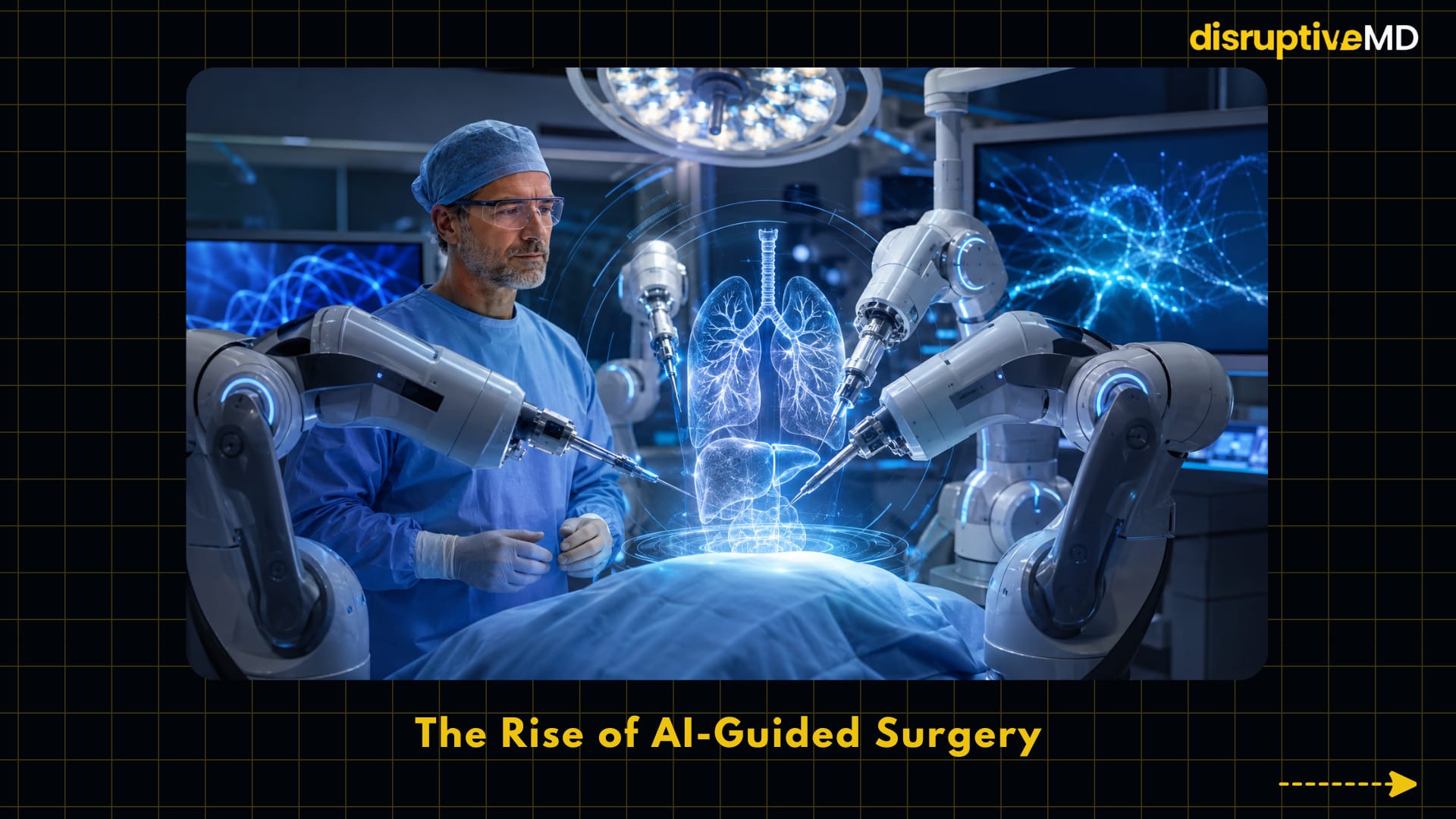
Autonomous AI robotic surgery is a paradigm change from robotic instruments operated by surgeons to systems that can plan, guide, or perform specific surgical procedures using artificial intelligence, images, sensors, and robotic motion control. The question is not whether robots will “replace surgeons,” but whether careful supervision of automation may make certain phases of surgery more precise, reproducible, and less dependent on individual hand action alone. It’s important because surgery is a highly skilled task. Suturing, cutting, dissecting and navigating around fragile tissues all demand accurate perception, steady movement and constant judgment. The most plausible future is not a totally independent robot working alone, but a human-led operating room with AI helping with certain jobs, alerting about risk and perhaps in the future performing narrow, well-validated processes, under clinical supervision.
Why Surgery Is Difficult to Automate
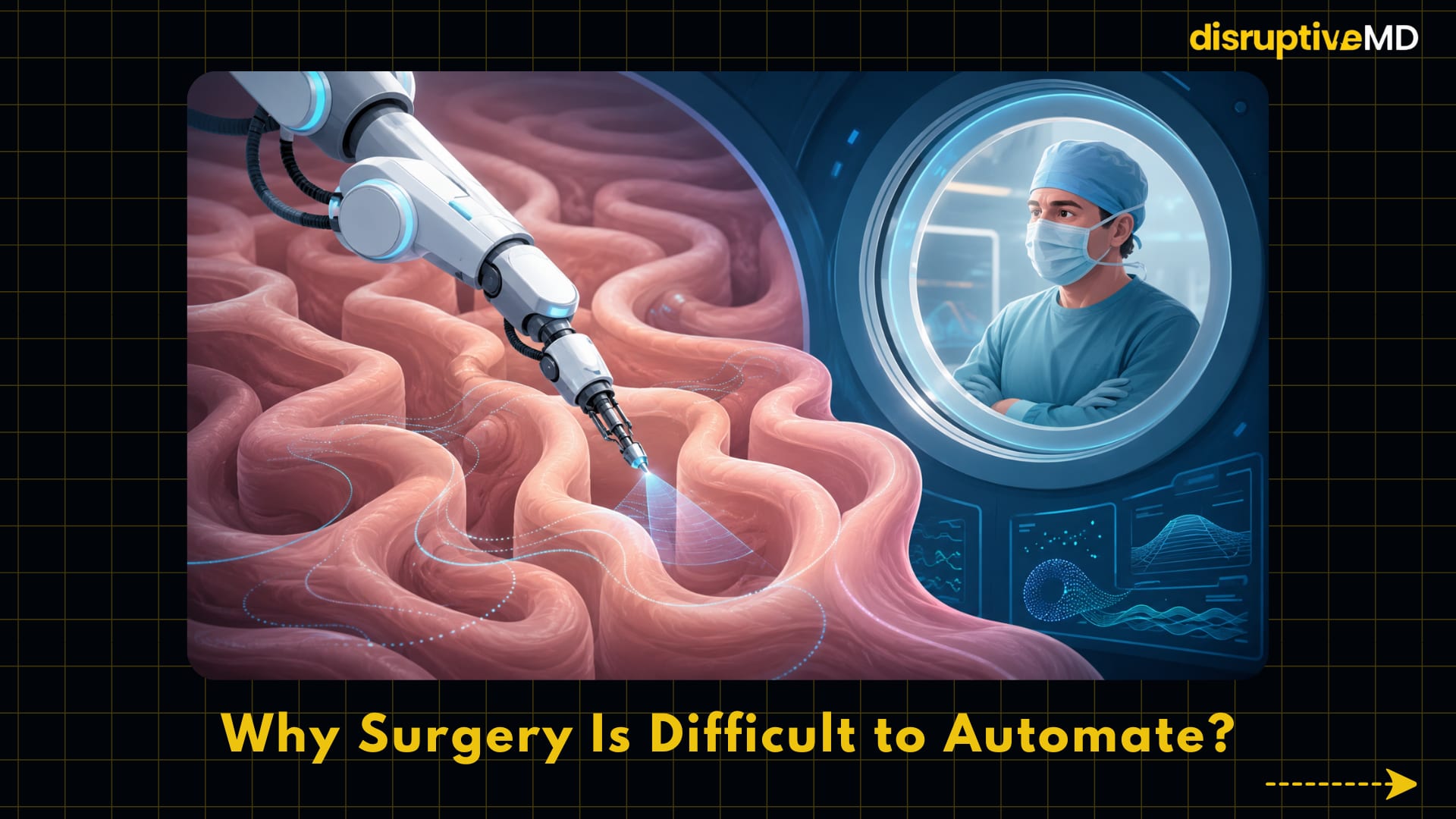
The realm of surgery is active, malleable and unpredictable. AI struggles with surgery. Unlike industrial robots that manufacture rigid things in fixed positions, surgical robots must deal with delicate tissue that can move with breathing, bleeding, swelling, traction or instrument pressure. This is particularly difficult in minimally invasive surgery because the instruments are inserted through small incisions and the surgeon works through a camera image, rather than direct hand touch. While current robotically assisted surgical devices enable surgeons to manoeuvre tools via narrow ports and perhaps enhance dexterity in tight quarters, the FDA says that these systems are not really autonomous because they cannot do surgery on their own without direct human guidance. Surgical autonomy is not an all-or-nothing proposition. It is a spectrum. The Levels of Autonomy in Surgical Robotics framework was used in a 2024 systematic review in npj Digital Medicine, with Level 1 being robot assistance, where the surgeon controls the robot continuously, to Level 5 full autonomy, where the system could theoretically perform a procedure independently. In that assessment, researchers reviewed FDA databases until December 2023, identifying 49 surgical robots. Of those robots, 86% were Level 1, 8% were Level 2 task-autonomy systems, 6% achieved Level 3 conditional autonomy, and no FDA-cleared systems achieved Level 4 or Level 5 autonomy. This is important because the language used in the public tends to make robotic surgery appear more independent than it really is while in the clinical setting it remains surgeon-led.


- Autonomous AI robotic surgery shifts robotic systems from surgeon-controlled tools toward systems that can plan, guide, or perform selected surgical tasks.
- The realistic future is not a robot replacing surgeons, but a human-led operating room where AI supports precision, safety, and decision-making.
- Surgery still requires judgment, tissue awareness, and clinical supervision because cutting, suturing, and navigating fragile anatomy are highly skilled tasks.
What is autonomous AI robotic surgery?
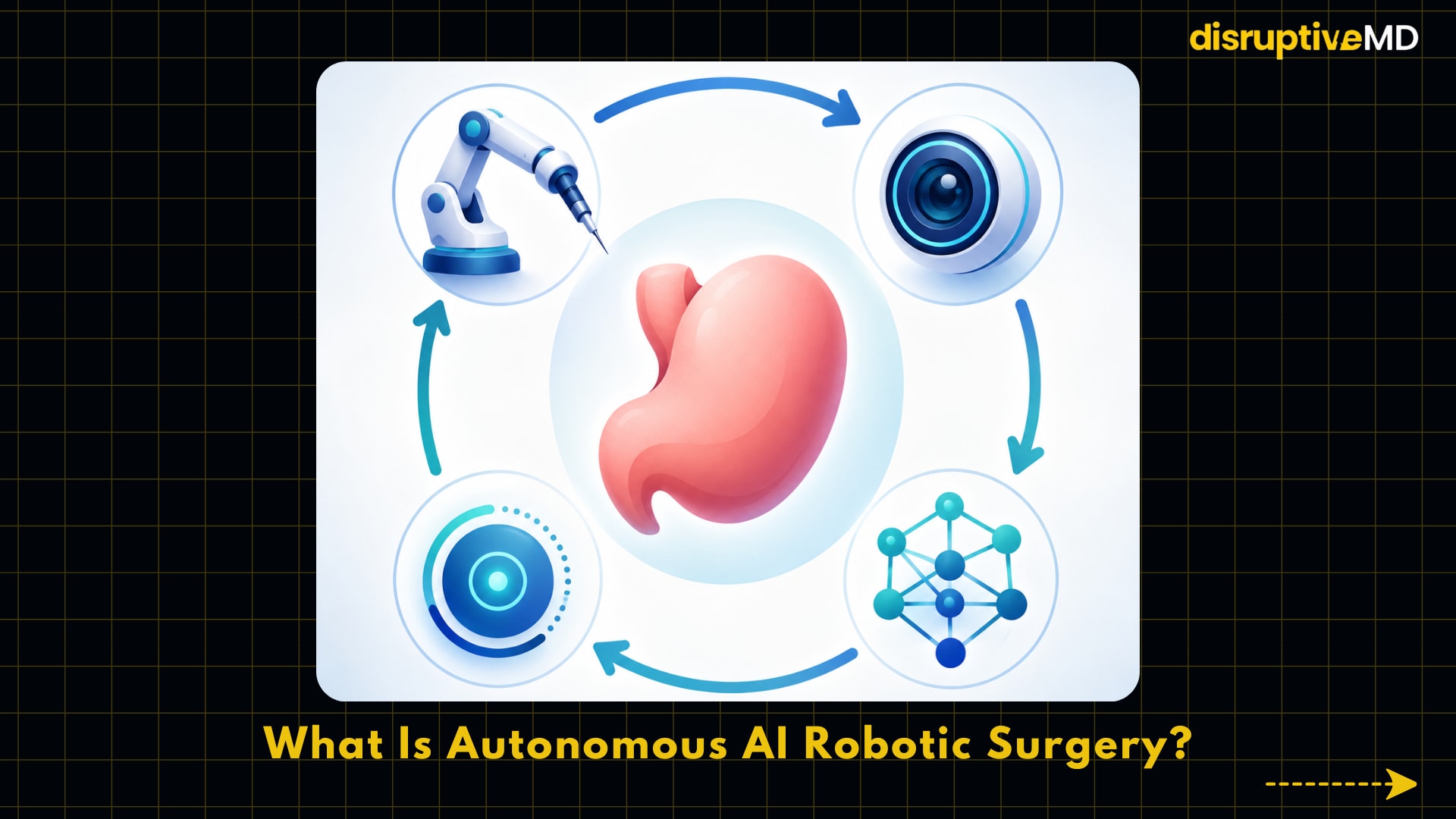
Autonomous AI robotic surgery integrates observation, planning, and execution into a single closed-loop system. “Perception” refers to the robot’s ability to understand the surgical field using visual input from cameras, endoscopes, three-dimensional imaging, fluorescence imaging or other sensors. Planning is when software figures out the next safe step, whether that's where to put a stitch or how to follow a boundary of dissection. “Execution” means the robotic arms follow that strategy by controlling how the instruments move. “Closed-loop control” implies the system doesn’t merely follow a script, but measures what’s happening, updates its plan and moves differently if tissue shifts or the task changes. With surgical scenarios varying from patient to patient, the significance of machine learning is on the rise. Machine learning is the process by which software learns to be better at recognizing patterns by learning from examples, i.e. surgical movies, annotated anatomy or instrument-motion data. In autonomous surgery, this could assist a system in identifying tissue planes, tracking changing structures, estimating safe cut zones, or understanding when a task has become ambiguous. AI-enabled medical devices are complex and data-driven systems, and the FDA’s Good Machine Learning Practice advice underscores the need for safe development, real-world performance, and entire product life cycle monitoring. One of the most obvious research examples is the Smart Tissue Autonomous Robot, typically shortened to STAR. Here, “autonomous” does not suggest unsupervised clinical use; it means the research robot might perform a defined soft-tissue task after planning and tracking tissue. In 2016, Science Translational Medicine reported supervised autonomous soft-tissue surgery in three-dimensional and near-infrared imaging, including intestinal suturing and anastomosis (surgical reconnection of two ends of colon).What mattered was not that a robot was suitable for a hospital, but that it indicated that soft-tissue automation was achievable, in principle, if imaging, tissue tracking and robotic control were tightly linked.
Evidence and Real-World Meaning
The greatest data for autonomous AI robotic surgery is yet preclinical, i.e., mostly based on animal models, ex vivo tissue, and laboratory systems rather than regular human clinical trials. In 2022, a research in Science Robotics described autonomous laparoscopic small-bowel anastomosis using an improved STAR system. Laparoscopic surgery is performed through small incisions with a camera and lengthy equipment, and small-intestine anastomosis is a hard task since the bowel is fragile, flexible and sensitive to leaking if stitches are poorly placed. The approach was evaluated in 4 animal cases. The autonomous execution could be tried out in a more realistic minimally invasive context.
Newer research has evolved from solitary suturing to extended surgical steps. In 2025, researchers proposed a hierarchical surgical robot transformer structure for cholecystectomy (gallbladder removal). The system combined a high-level AI planner to sequence the phases of the task and a low-level controller to generate the robot trajectories, enabling the robot to translate surgical goals into instrument motion. The system was reported to be 100% successful in ex vivo experiments on eight unseen gallbladders, without human intervention, but “ex vivo” means the tissue was outside a living patient, so it did not fully replicate bleeding, breathing motion, inflammation or emergency decision-making in human surgery.
Therefore, the short-term value of autonomy is more likely to be realized in clinical practice through narrow task automation rather than complete robotic independence. Examples include automated camera control, patient-specific bone grinding, robotic biopsy targeting, surgical navigation, safety-zone enforcement, and AI-assisted measuring. A 2024 review of FDA-cleared surgical robots found that the most advanced cleared systems achieved Level 3 conditional autonomy, where the robot can generate or execute a surgeon-approved patient-specific plan, but the surgeon is responsible for selecting, monitoring, and intervening as needed. That matters, because the safest way may be a gradual one: automate repeated subtasks first, test them well, and keep humans in the loop at the core.
Regulatory data suggests autonomous surgery is not currently a mature clinical category. The FDA has approved the use of robotically assisted surgical devices by trained physicians in many areas of laparoscopic surgery including general surgery, cardiac, colorectal, gynecologic, thoracic, urologic and head and neck procedures but these are not autonomous surgeons. The FDA’s list of AI-enabled medical devices provides a catalogue of allowed AI-enabled devices and is supposed to enhance transparency, yet the majority of AI device authorizations are in the domains of imaging and decision support, not autonomous operative activity.
Limitations, Risks, and Unanswered Questions
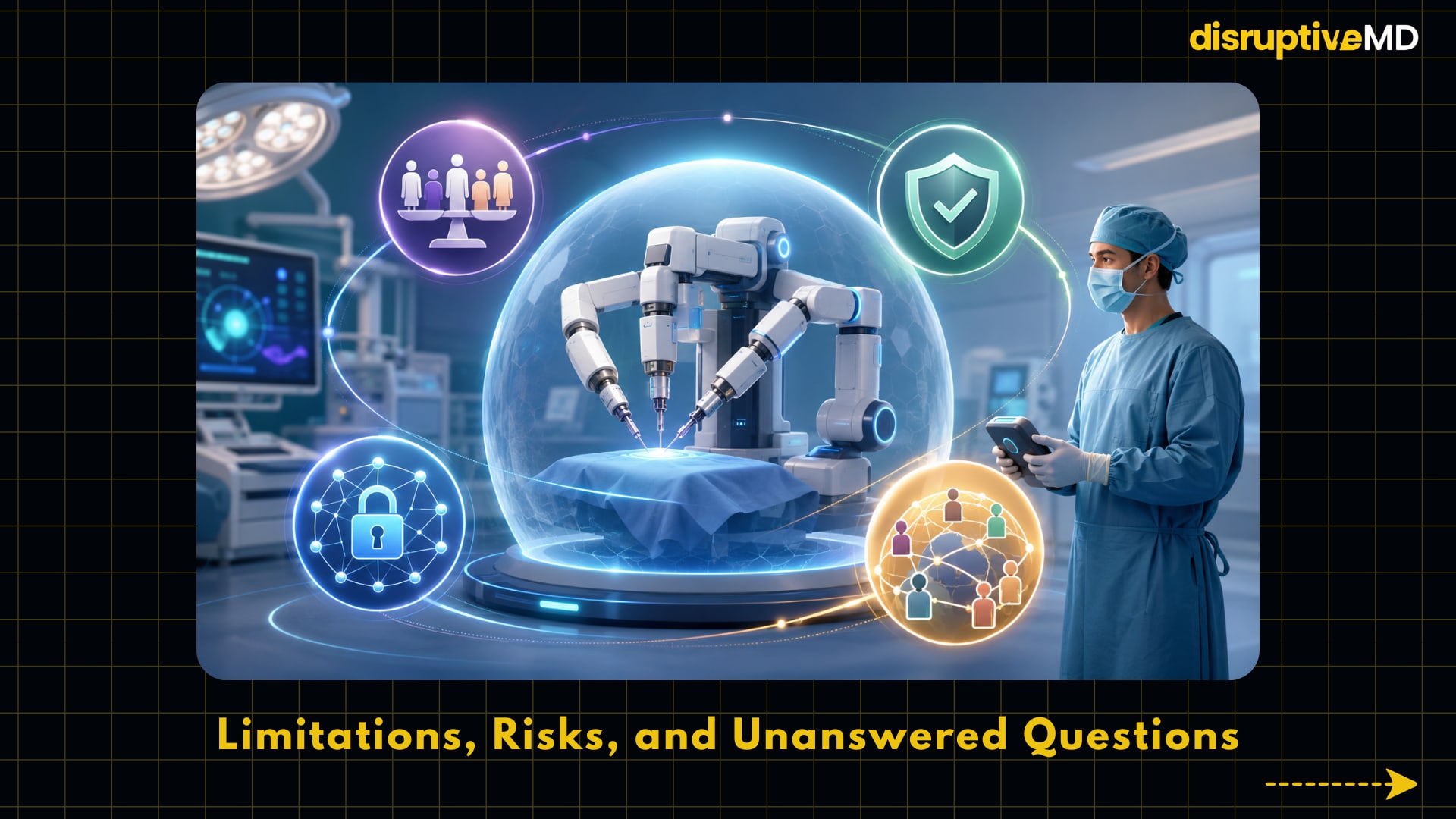
The main restriction is clinical validation. A robot that works well in the laboratory may not do so when tissue is inflamed, scarred, bleeding, anatomically abnormal or moving unpredictably. Thus, autonomous surgical systems require more than accuracy measurements. They require evidence of safety, dependability, failure recovery, surgeon override, patient outcomes, and performance across heterogeneous anatomy. With their complexity and impact on training, workflow, economics, ethics, and patient safety, the IDEAL Robotics framework published in Nature Medicine calls for structured evaluation in development, comparative studies, and long-term monitoring.
There are also big worries about AI bias and generalizability. Bias in surgery isn’t only about demographic unfairness; it can also mean that an algorithm trained on a small set of anatomy, tissue appearance, camera systems, physician styles, or hospital operations may fail in unexpected settings. The FDA, Health Canada and the UK MHRA have stressed the importance of transparency for machine-learning-enabled devices, including the unambiguous description of intended use, development data, performance, restrictions and, when available, the logic behind outputs. This is important because doctors cannot properly oversee an autonomous system if they do not know its confidence, bounds, and failure modes. Liability is not determined. If a robotic plan is approved by a surgeon and the device executes the plan , and an injury happens , liability may fall to the surgeon , hospital , manufacturer , software developer , training program , or maintenance procedure . Greater autonomy may also challenge current regulation, since future Level 4 or Level 5 systems may be able to make independent intraoperative decisions. The review in npj Digital Medicine in 2024 had mentioned that future high-autonomy surgical robots could need more strict regulatory procedures and new norms of professional practice as danger is not just a function of the robot’s software but also the individual procedure and clinical situation. Cost and access are also factors. Robotic surgery already has a high cost in technology, service contracts, trained teams, operating room time and institutional infrastructure. Autonomous characteristics could worsen inequalities if restricted to wealthier health systems, or help access if they ultimately standardize complicated jobs and enable remote or underserved locations. The outcome will be less about technical achievement and more about pricing, training, regulation, maintenance, cyber security and whether patient outcomes improve enough to warrant adoption.
Conclusion
Autonomous AI robotic surgery is among the most technically ambitious fields of health technology yet the current evidence base suggests cautious optimism rather than clinical assurance. The field has advanced from surgeon-controlled robotic instruments to systems capable of sensing tissue, planning actions and performing selected tasks in controlled circumstances. As the research in autonomous bowel suturing, laparoscopic anastomosis and ex vivo gallbladder surgery indicates, the concept is scientifically serious, yet the gulf between preclinical achievement and safe human surgery remains enormous. The future is likely to be a layered model of autonomy: surgeons are responsible for judgment, permission, strategy and rescue, and AI robotic systems do more and more refined subtasks after meticulous validation. For patients, the promise is more reliable surgeries and fewer technical mistakes. The trick for clinicians is to learn to manage machines without losing their surgical judgment. For health systems and regulators the priority is clear evidence, public reporting of performance and long term monitoring. Autonomous surgery will only matter if it can enhance results in actual patients, not just if the technology is cool.
Evidence Rating
Mixed or limited evidence. Autonomous AI robotic surgery provides promising preclinical and experimental evidence encompassing animal, ex vivo and simulator-based investigations, however there is not yet robust clinical trial evidence demonstrating that fully autonomous surgical systems improve human patient outcomes. The current FDA-cleared surgical robots are primarily surgeon-controlled or restricted to task and conditional autonomy, with no surgical robot systems of Level 4 or Level 5 discovered in the 2024 assessment of FDA-cleared surgical robots.
Educational Disclaimer
This information is for educational purposes only and does not replace professional medical advice, diagnosis, treatment or surgical consultation. Patients should consult their doctor, nurse or pharmacist before following any medical regimen to see if it is safe and effective for them.
References
- FDA. Computer-Assisted Surgical Systems. U.S. Food and Drug Administration.
- Lee, A., Baker, T.S., Bederson, J.B. et al. Levels of autonomy in FDA-cleared surgical robots: a systematic review. npj Digit. Med. 7, 103 (2024). https://doi.org/10.1038/s41746-024-01102-y.
- Shademan A, Decker RS, Opfermann JD, Leonard S, Krieger A, Kim PC. Supervised autonomous robotic soft tissue surgery. Sci Transl Med. 2016 May 4;8(337):337ra64. doi: 10.1126/scitranslmed.aad9398. PMID: 27147588.
- Saeidi H, Opfermann JD, Kam M, Wei S, Leonard S, Hsieh MH, Kang JU, Krieger A. Autonomous robotic laparoscopic surgery for intestinal anastomosis. Sci Robot. 2022 Jan 26;7(62):eabj2908. doi: 10.1126/scirobotics.abj2908. Epub 2022 Jan 26. PMID: 35080901; PMCID: PMC8992572.
- Kim J.W. et al. SRT-H: A Hierarchical Framework for Autonomous Surgery via Language Conditioned Imitation Learning. arXiv / Science Robotics record, 2025.
- Marcus, H.J., Ramirez, P.T., Khan, D.Z. et al. The IDEAL framework for surgical robotics: development, comparative evaluation and long-term monitoring. Nat Med 30, 61–75 (2024). https://doi.org/10.1038/s41591-023-02732-7.
- FDA. Artificial Intelligence-Enabled Medical Devices. U.S. Food and Drug Administration.
- FDA, Health Canada, MHRA. Transparency for Machine Learning-Enabled Medical Devices: Guiding Principles.
- FDA. Good Machine Learning Practice for Medical Device Development: Guiding Principles.