
What if rehabilitation was not only something you attended, but something you wore?
Imagine someone recovering from a stroke walking across their kitchen. A lightweight textile device gives their weaker ankle a small, carefully timed assist. Later, a soft glove helps them practise opening their hand around a cup. Sensors record the movements, creating a picture of what they can do between appointments.
This is the future soft exosuits are trying to build.
These wearable robotic systems use flexible materials to deliver movement assistance through clothing-like interfaces. Their most interesting possibility is to bring useful, repeated practice into daily life, with support matched to the person wearing them.
Parts of that vision have already been demonstrated. Other parts, including reliable autonomous rehabilitation throughout the day, remain a research ambition.
The goal is to help people practise useful movements more often, while keeping expert rehabilitation at the centre.
- A soft exosuit delivers forces through flexible interfaces such as textile straps, sleeves or gloves.
- In a cable-driven design, a motor pulls a cable attached to a garment, adding assistance around a joint at a selected moment.
- Soft does not automatically mean weightless or easy to wear.
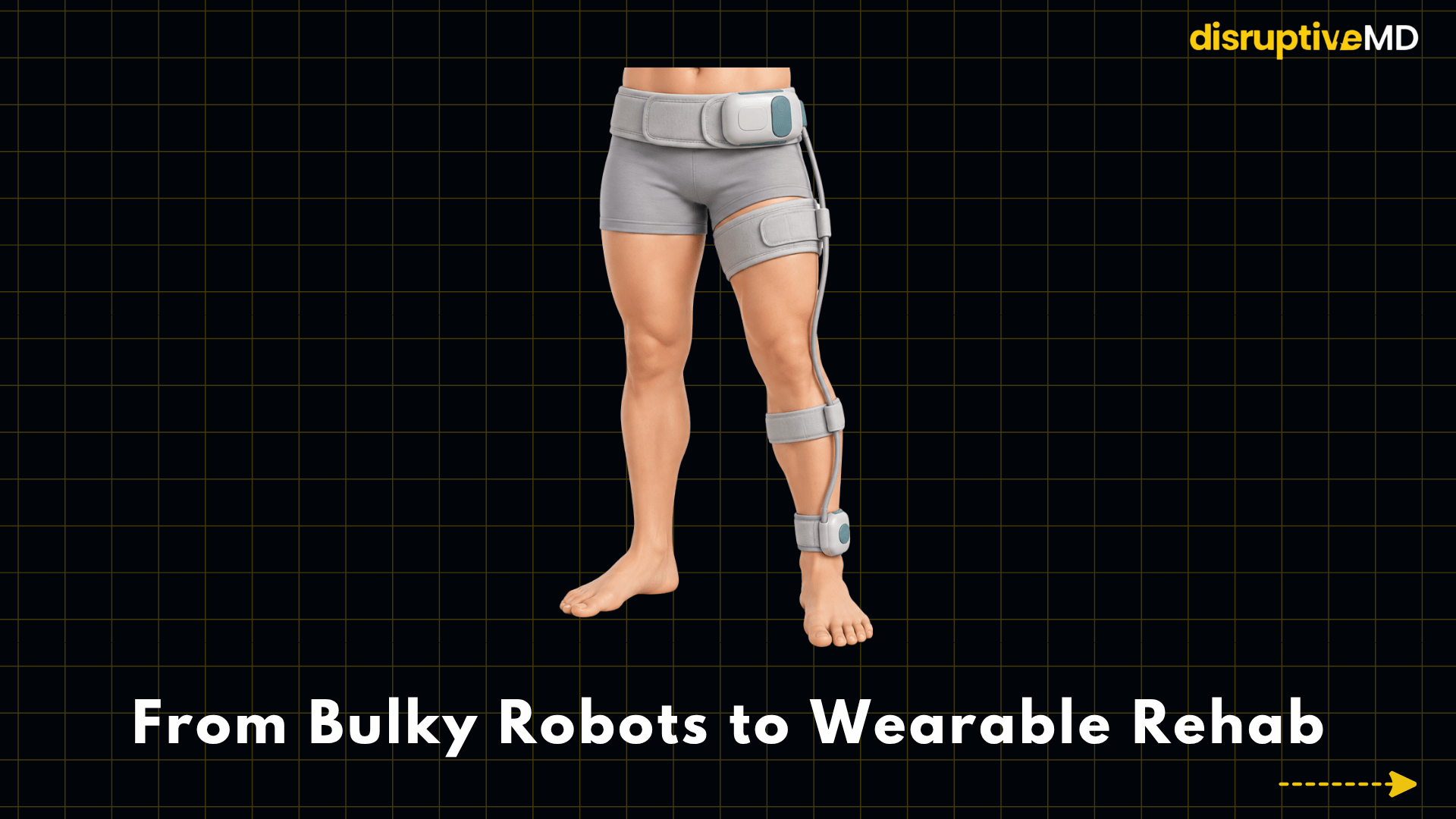
From Bulky Robots to Wearable Rehab
A traditional robotic exoskeleton often uses rigid links and powered joints positioned alongside the body. A soft exosuit delivers forces through flexible interfaces such as textile straps, sleeves or gloves.
In a cable-driven design, a motor pulls a cable attached to a garment, adding assistance around a joint at a selected moment. Pneumatic systems use air pressure to inflate soft actuators, the components that generate movement. Smart materials that change shape or stiffness offer additional possibilities, although these approaches are at different stages of development.
The result may look more like a belt and leg straps, an assisted sleeve or a glove than a full robotic suit. The flexible interface can leave more freedom for natural movement, but motors, batteries, pumps and control units still take up space. Soft does not automatically mean weightless or easy to wear.
The type of support also matters. Many exosuits augment movement that the wearer can already produce. A flexible garment providing ankle assistance does not necessarily provide the structural support or body-weight support required by someone with profound weakness. Device choice depends on the movement problem and the person's remaining abilities.
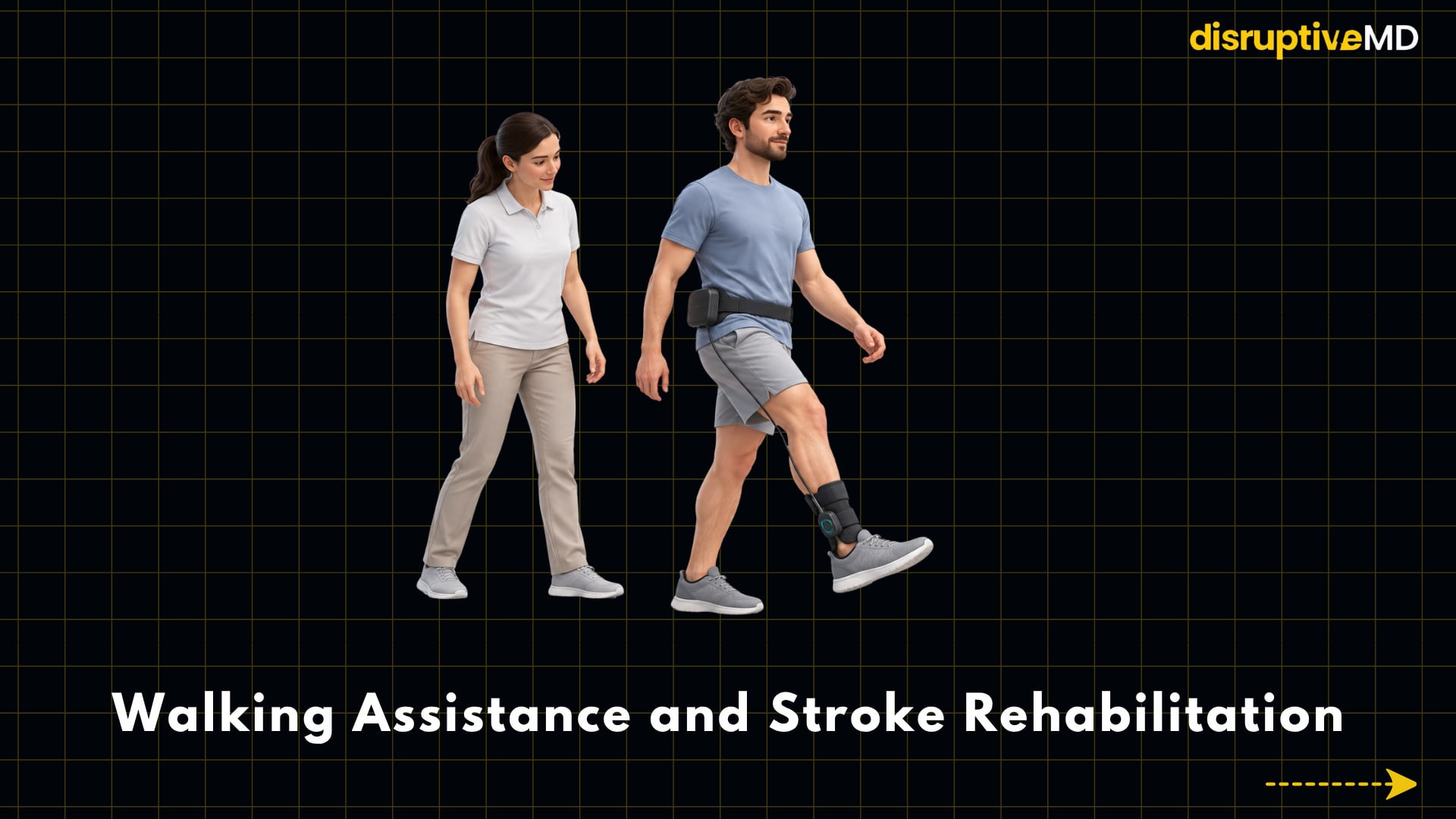
Walking Assistance and Stroke Rehabilitation
Walking requires each joint to contribute at the right time. The ankle helps clear the foot during the swing phase and contributes to forward propulsion as the body moves into the next step.
After stroke, weakness can disrupt both tasks. The foot may catch the ground, push-off may be reduced, and walking may become asymmetric and tiring. An ankle exosuit can assist lifting the foot and pushing off, using sensors to synchronise support with the walking cycle. Other designs target the hip or knee.
Early research in ambulatory stroke survivors demonstrated immediate improvements in foot clearance, propulsion and walking efficiency with soft robotic assistance. These findings show that targeted help can change how a person walks while the device is active.
The rehabilitation question goes further: can practising with that assistance improve walking after the device is removed? Small training studies have reported encouraging gains, but establishing the added benefit over equally intensive expert therapy requires controlled comparisons.
Movement problems also differ between conditions. A 2024 proof-of-concept study used hip assistance to avert freezing of gait, an involuntary interruption of walking, in one person with Parkinson's disease. That striking result needs confirmation in larger groups. It cannot be treated as a universal solution.
Spinal cord injury and cerebral palsy are also potential areas of application, but findings from stroke or a single Parkinson's case cannot establish effectiveness for them. The severity of impairment, balance and support requirements must be considered separately.
Assistance Without Replacing Effort
For rehabilitation, making a movement easier is only part of the task. The patient also needs opportunities to participate and practise.
This is the logic behind assist-as-needed rehabilitation: the device provides enough help to make the task achievable while preserving useful voluntary effort. A patient might initiate a step or finger movement, then receive assistance to complete it.
Support can be adjusted as ability changes. Yet less assistance is not automatically better, and more assistance is not automatically safer. The appropriate amount depends on the task, impairment and treatment goal. Passive movement may have a role when voluntary movement is very limited; it should not be confused with active practice.
The central distinction is between assistance and recovery. A suit can compensate for weakness without curing its cause. To demonstrate rehabilitation benefit, researchers need to measure what patients retain without the device and whether those gains improve everyday function.
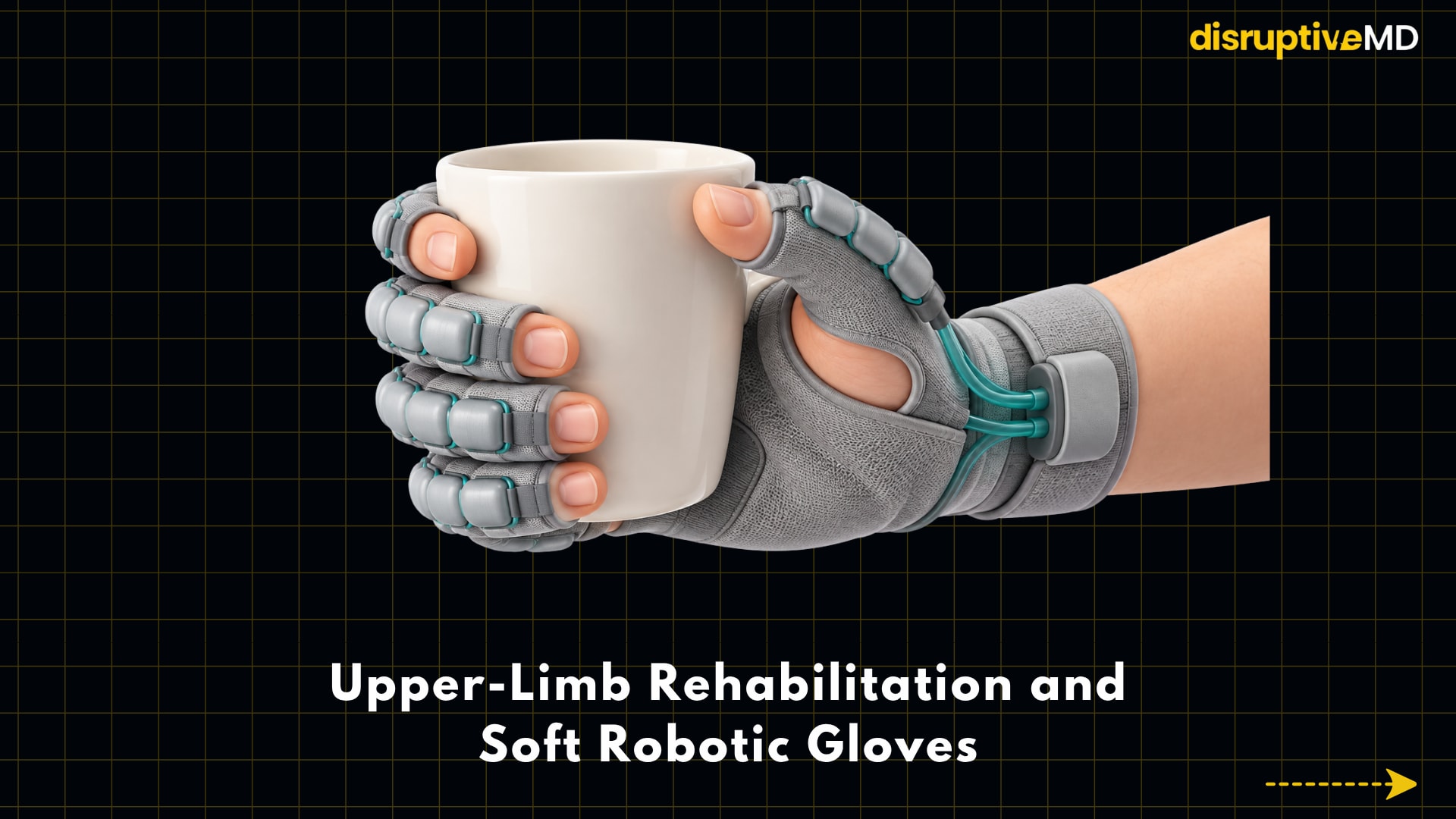
Upper-Limb Rehabilitation and Soft Robotic Gloves
The upper limb presents a different challenge. Reaching, turning the wrist and grasping an object require coordinated movements across several joints.
Soft wearable systems can assist selected components of these tasks. An inflatable shoulder wearable studied in ten people with amyotrophic lateral sclerosis (ALS) improved active arm movement and supported functional activities. This demonstrated assistance for weakness; it did not show that the device reversed the disease.
A soft robotic glove brings the same idea to the fingers. Depending on its design, it can assist opening, closing or pinching through pneumatic actuators or cable-driven mechanisms. This creates opportunities to practise handling real objects rather than repeating isolated movements alone.
Stroke is a major clinical research area for these gloves. Hand weakness after spinal cord injury, nerve injury or arthritis may also motivate development, but each condition needs its own evaluation. Helping a finger bend does not establish that a device treats spasticity, joint inflammation or nerve damage.
Clinical results remain mixed. A randomised trial published in September 2026 found that a sensor-assisted soft robotic glove did not demonstrate superior overall upper-limb recovery compared with a supervised repetitive arm programme. The study enrolled fewer participants than planned, reducing its ability to detect a meaningful difference.
That finding sharpens the research question: which patients benefit, for which tasks, and with what amount of training?
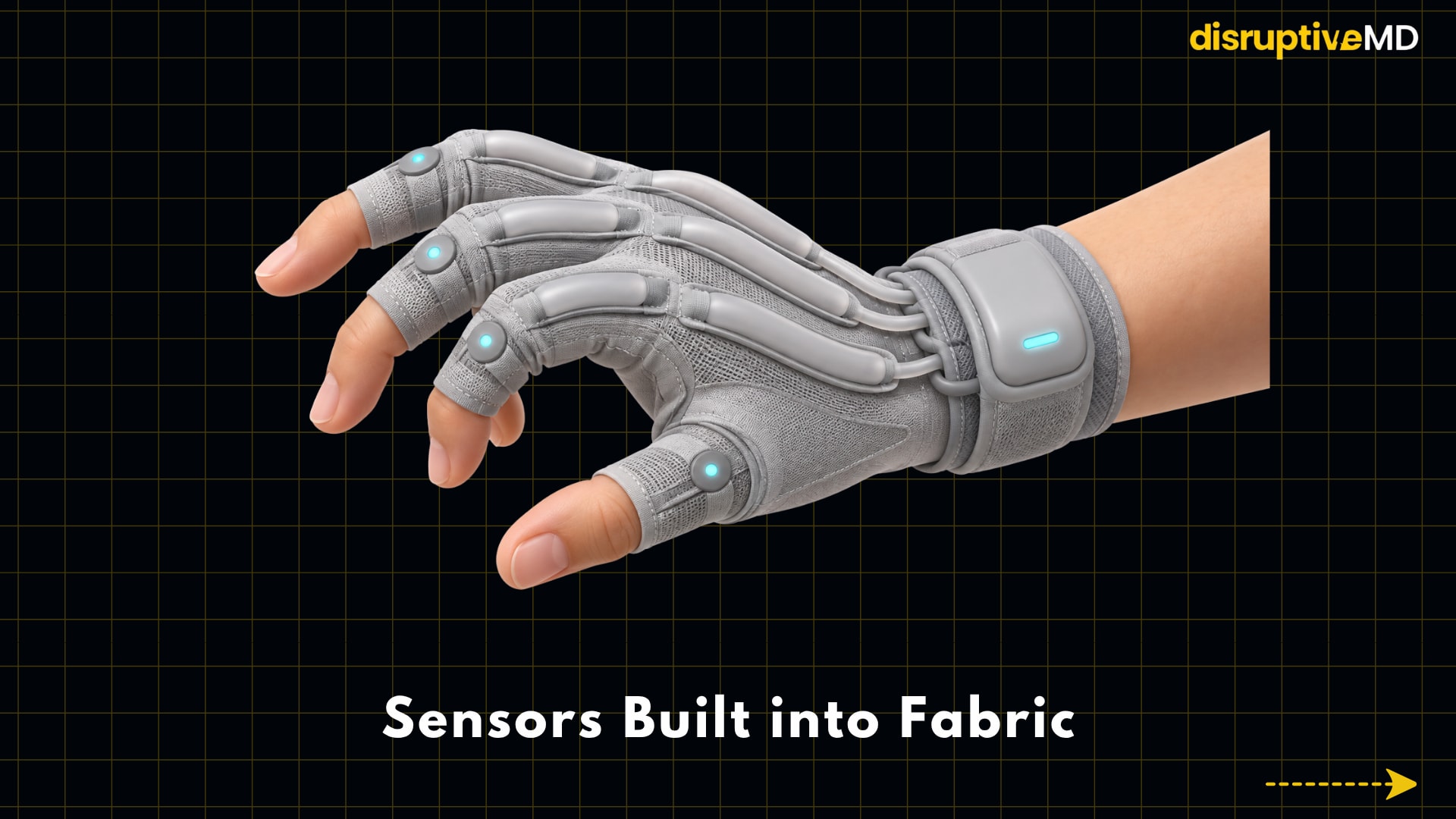
Sensors Built into Fabric
An exosuit can also become a measurement system. Sensors may be embedded in its textiles, attached to the garment or connected through other wearables.
Depending on the design, they can record joint movement, step timing, walking speed, assistance force, hand pressure or range of motion. Electromyography, usually shortened to EMG, measures electrical activity associated with muscle activation. These signals may help identify an attempt to move.
The value comes from linking measurement to action. A controller detects a movement event, delivers assistance, then measures the next movement. This feedback cycle is called closed-loop control. It allows support to respond to what is happening rather than follow a fixed schedule.
More ambitious systems could estimate fatigue, movement quality, posture or balance from combinations of signals. These are interpretations that require validation. A sensor cannot directly know why someone slowed down, whether a movement hurts, or whether a healing tendon is ready for more load.
AI-Controlled Assistance and Human-Machine Interfaces
The hardest moment for a wearable robot may be deciding when to help.
A person can change speed, hesitate, turn or start a different task. The human-machine interface is the system that translates these movements or signals into commands for the device.
Possible inputs include muscle activity, pressure, residual finger movement and patterns detected by motion sensors. Experimental brain-computer interfaces use brain signals associated with attempted or imagined movement to trigger assistance. A small 2025 stroke trial combined this approach with a soft robotic glove and found greater short-term gains on some arm-function measures than glove training alone. Longer-term daily-life benefit remains uncertain.
AI could help personalise support by learning relationships between signals and movement. A 2025 engineering study demonstrated reinforcement learning, an approach that adjusts a control strategy using feedback, for soft exosuit walking assistance in five participants. This was an engineering demonstration, rather than proof of improved clinical recovery.
The future possibility is assistance that changes with performance: less support when the patient can complete a task, a revised setting when fatigue develops, and an alert when a validated safety limit is crossed. These decisions require clinical boundaries and dependable measurements. Learning a movement pattern is different from understanding the patient's medical condition.
Home-Based Rehabilitation
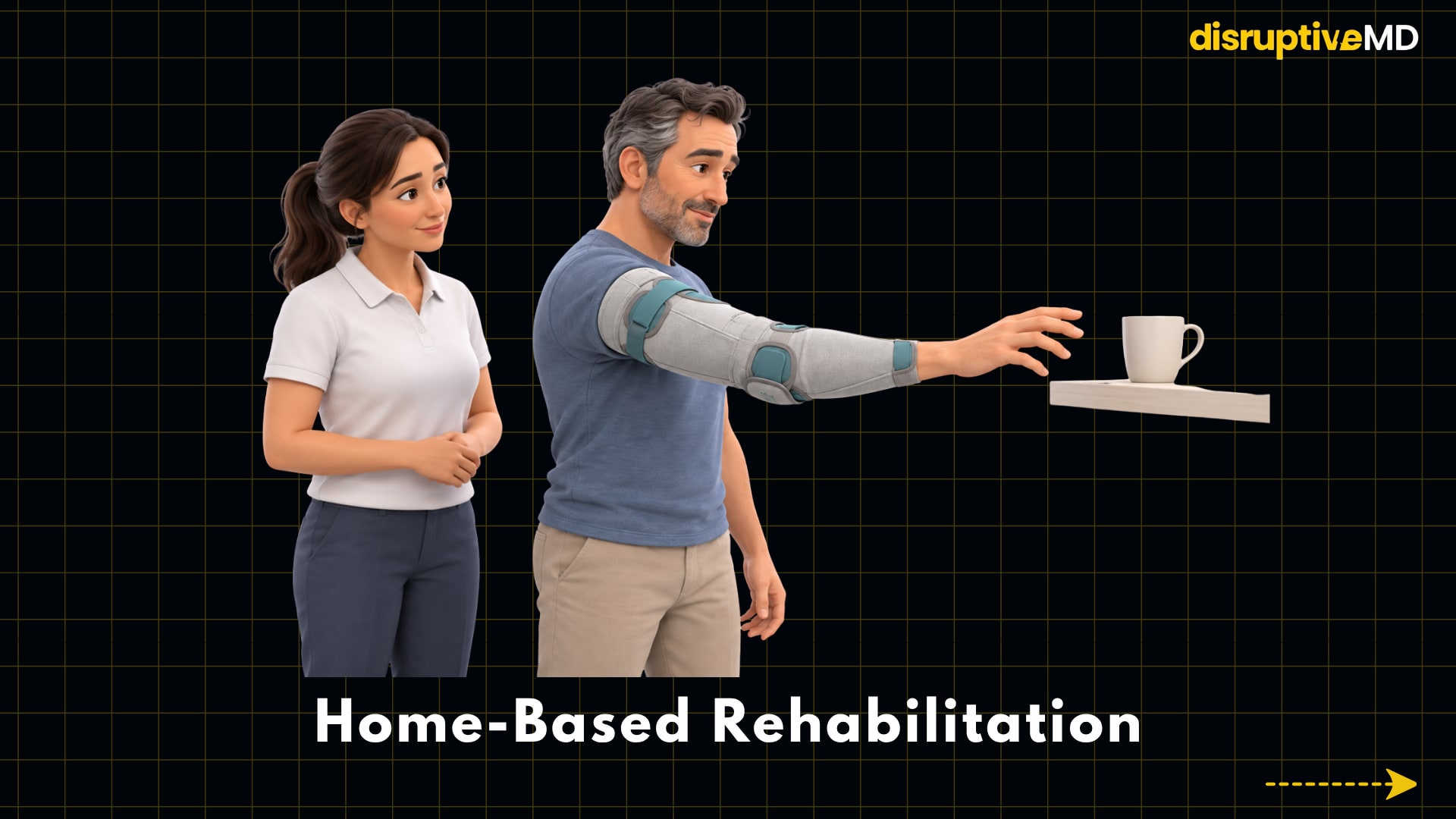
Home use is one of the most appealing directions because daily life contains the tasks patients want to recover.
Walking between rooms, reaching for a shelf or handling a cup could become opportunities for prescribed practice. A suitable wearable might help a person complete more of those movements and record their progress for review.
Early glove feasibility research has explored systems intended to combine daily assistance with exercises at home. Small studies identified user interest alongside practical limitations in task performance and ease of use. Feasibility is an early step; it does not establish the safety or effectiveness of unsupervised rehabilitation.
The likely path involves assessment, fitting, familiarisation and prescribed periods of use, with follow-up by a physiotherapist or occupational therapist. Remote review of movement data could extend that support where the system permits it.
Throughout-the-day availability should not be mistaken for continuous treatment. Practice still needs an appropriate dose, rest and progression.
Rehab for Ageing and Frailty
For an older adult, standing from a chair or walking with less effort can be a meaningful achievement.
Soft exosuits are being studied for these practical goals. A 2026 feasibility study in ten older adults with reduced lower-limb function tested a hip exosuit during standing and walking. Assistance improved performance on a repeated sit-to-stand task and reduced the energy cost of walking under the tested conditions.
These results support further study of mobility assistance. They do not establish prevention of falls, reversal of frailty or lasting independence after the suit is removed.
The connection with healthspan is practical: wearable support might help people remain active and manage daily tasks. Whether it produces durable health benefits still needs to be tested.
Sports and Orthopaedic Rehab
Recovery after anterior cruciate ligament (ACL) reconstruction, Achilles tendon injury, hip surgery, knee replacement or shoulder surgery could eventually provide further applications. Nerve injury, muscle weakness and prolonged immobilisation also raise questions about targeted assistance.
The proposed role would be controlled support during an appropriate movement, with the amount and timing of help matched to the stage of recovery. These are candidate applications, rather than established indications for a single suit.
A crucial difference from mobility assistance is tissue loading. Making a movement feel easier does not prove that a healing graft, tendon or joint can safely tolerate it. Wearable support would need to fit the prescribed rehabilitation programme and respect its loading limits.
Trials would need to show benefits such as better function or recovery, rather than simply demonstrating that the device can move the limb.
Exosuits Plus Neuromuscular Stimulation
Wearable mechanical assistance could be combined with systems that help patients activate their own muscles.
Functional electrical stimulation, or FES, uses electrical pulses to evoke muscle contractions for a movement task. An exosuit can contribute external force alongside that contraction. The idea is to coordinate biological and robotic assistance, rather than rely entirely on either one.
A hybrid arm-exosuit controller has already been tested with FES in six healthy participants. This supports the feasibility of combining the technologies, but does not establish effectiveness in patients recovering from stroke or injury.
Other proposed combinations include EMG biofeedback, which shows patients information about muscle activation, smart insoles, force sensors, gait analysis and virtual coaching. Together, these tools could make practice more measurable and responsive. Each additional component must improve the rehabilitation task enough to justify its complexity.
Comfort and Usability
A device that works in a laboratory must also work for the person who puts it on each morning.
Weight, breathability, noise, battery life and fit can determine whether a wearable is useful outside research sessions. Someone with hand weakness must be able to manage straps and fasteners, or have practical help. Textile components need cleaning, while electronics require protection and maintenance.
The soft interface must also transmit force effectively. A garment that shifts or fits poorly can alter assistance or concentrate pressure on the skin. Reliable support depends on both good engineering and appropriate fitting.
Affordability includes the device, training, servicing and clinical follow-up. These practical demands will influence whether wearable rehabilitation reaches everyday care.
What Is Real Today
- Soft exosuits have demonstrated targeted walking assistance in selected stroke survivors, and small studies have explored their use during gait training.
- Soft robotic gloves have reached clinical trials, with results that depend on the device, comparator, patient group and training programme.
- Shoulder assistance and mobility support for older adults have been demonstrated in small clinical or feasibility studies.
- Movement sensing, adaptive control and experimental brain-computer interfaces are already part of research systems.
- Home-oriented devices have undergone early feasibility testing, while reliable everyday deployment remains a development challenge.
What Is Not Fully Real Yet
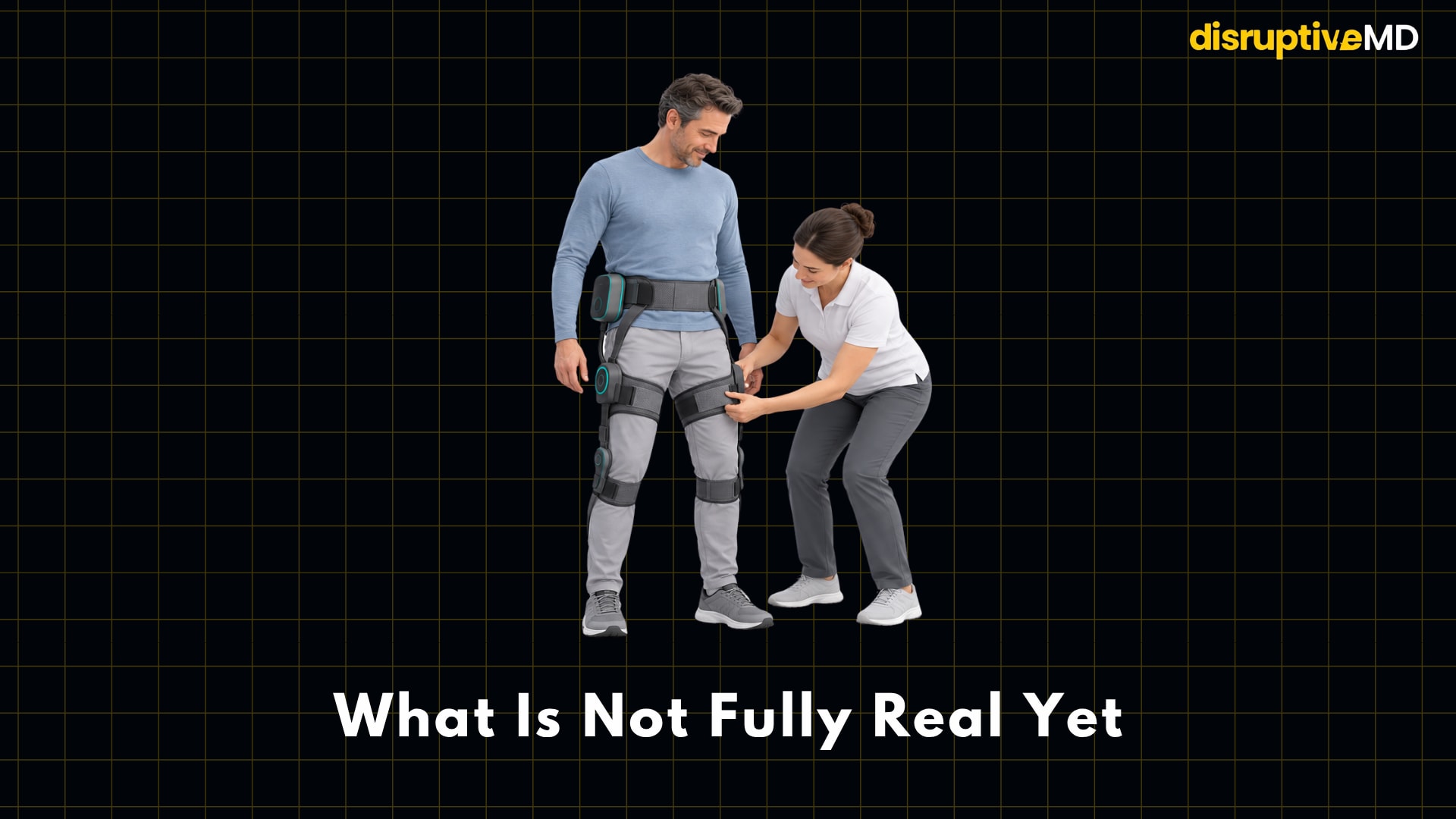
The field has not established a single comfortable, affordable suit that provides effective rehabilitation for every neurological condition or injury.
Fully autonomous home therapy, perfect interpretation of fatigue and movement intent, universal fall prevention, and consistently better long-term outcomes than expert rehabilitation remain unproven.
The next advances must show who benefits, how much assistance they need, and whether improvements persist. A compelling demonstration should lead to that testing.
Key Takeaway
Soft exosuits could make rehabilitation more present in everyday life by helping patients practise movements that weakness currently makes difficult. Their value will depend on matching assistance to a clinical goal and showing that it improves function in ways that matter to the wearer.
The most credible future combines expert rehabilitation with wearable support that helps people move and practise between appointments.
The next generation of rehabilitation may not only happen in the clinic. It may be worn, measured, and adapted throughout daily life.
Fact Base
- Immediate walking assistance is demonstrated. A 2017 stroke study reported improved ankle movement and propulsion, with an approximately 10% reduction in walking energy cost during assisted walking. This was an immediate device effect, not proof of lasting recovery.
- Training benefits remain under investigation. A 2022 uncontrolled pilot enrolled five stroke survivors for 18 assisted gait-training sessions and reported gains measured without the suit. Its design could not isolate the exosuit's contribution from the training itself.
- Glove superiority is not established across settings. A September 2026 trial randomised 61 participants with subacute stroke. Both groups improved; glove training did not demonstrate overall superiority over supervised repetitive arm training. Recruitment ended early, leaving the trial underpowered.
- Intention-linked rehabilitation is promising. A 2025 trial randomised 40 stroke patients to brain-computer-interface-controlled glove training or glove training alone. Some arm-function gains favoured the interface group after four weeks, without a significant between-group benefit on a daily-activity measure or long-term follow-up.
- Assistance beyond stroke is preliminary. Shoulder support was studied in ten people with ALS. A Parkinson's proof-of-concept trial involved one person. These findings support further research and should not be generalised to everyone with those conditions.
- Older-adult mobility results are encouraging. A July 2026 study in ten older adults reported better repeated sit-to-stand performance and a 13.6% reduction in walking metabolic cost with assistance. Durable rehabilitation and fall-prevention benefits were not established.
- AI and hybrid systems have reached experimental testing. Reinforcement-learning exosuit control was demonstrated in five participants, while a hybrid FES and arm-exosuit controller was tested in six healthy participants. Neither demonstration establishes broad clinical effectiveness.
References
- Kim J, Lee G, Heimgartner R, et al. Reducing the metabolic rate of walking and running with a versatile, portable exosuit. Science. 2019;365(6454):668-672. DOI.
- Awad LN, Bae J, O'Donnell K, et al. A soft robotic exosuit improves walking in patients after stroke. Science Translational Medicine. 2017;9(400):eaai9084. DOI.
- Shin SY, Hohl K, Giffhorn M, et al. Soft robotic exosuit augmented high intensity gait training on stroke survivors: a pilot study. Journal of NeuroEngineering and Rehabilitation. 2022;19:51. DOI.
- Yap HK, Lim JH, Nasrallah F, Yeow CH. Design and Preliminary Feasibility Study of a Soft Robotic Glove for Hand Function Assistance in Stroke Survivors. Frontiers in Neuroscience. 2017;11:547. DOI.
- Kim J, Porciuncula F, Yang HD, et al. Soft robotic apparel to avert freezing of gait in Parkinson's disease. Nature Medicine. 2024;30:177-185. DOI.
- Tay KWE, Tam PK, Xie Q, et al. Efficacy of a soft robotic exoskeleton for upper-limb rehabilitation in subacute stroke inpatient rehabilitation: a randomised controlled trial. Journal of NeuroEngineering and Rehabilitation. 2026;23:275. DOI.
- Proietti T, O'Neill C, Gerez L, et al. Restoring arm function with a soft robotic wearable for individuals with amyotrophic lateral sclerosis. Science Translational Medicine. 2023;15(681):eadd1504. DOI.
- Ji X, Lu X, Xu Y, et al. Effects and neural mechanisms of a brain-computer interface-controlled soft robotic glove on upper limb function in patients with subacute stroke: a randomized controlled fNIRS study. Journal of NeuroEngineering and Rehabilitation. 2025;22:171. DOI.
- Zhong J, Yumbla EQ, Soltanian SY, et al. Reinforcement Learning Control of a Physical Robot Device for Assisted Human Walking without a Simulator. Proceedings of Machine Learning Research. 2025;267:78575-78601. Article.
- Radder B, Prange-Lasonder GB, Kottink AIR, et al. Feasibility of a wearable soft-robotic glove to support impaired hand function in stroke patients. Journal of Rehabilitation Medicine. 2018;50:598-606. DOI.
- Zhang X, Tricomi E, Stefanakis M, et al. Enhancing sit-to-stand transitions and walking efficiency in older adults with a soft robotic suit. Nature Communications. 2026;17:6540. DOI.
- Burchielli D, Lotti N, Missiroli F, et al. Adaptive Hybrid FES-Force Controller for Arm Exosuit. International Conference on Rehabilitation Robotics. 2022:1-6. DOI.