
What if your stitches could warn you that a wound was getting infected before it looked dangerous from the outside?
For centuries, the job of a suture has been remarkably simple:
Hold tissue together long enough for the body to heal.
Once the wound is closed, the stitch mostly becomes a passive passenger in the healing process.
But researchers are beginning to imagine something very different.
A suture that can sense temperature.
A suture that changes colour when wound chemistry shifts.
A suture that measures how much force is pulling across a repair.
A suture that detects biochemical changes associated with inflammation or bacterial activity.
Perhaps eventually, even a suture that detects trouble and responds by delivering treatment.
This emerging field of smart sutures combines ordinary surgical threads with conductive fibres, sensing materials, flexible electronics, responsive coatings, microfluidic concepts and drug-delivery systems.
The goal is not simply to make a more sophisticated stitch.
It is to transform the suture from a passive wound-closure material into an active healing monitor.
And because a suture already sits exactly where many postoperative problems begin, it may offer something an external wearable cannot: information from inside the wound itself.
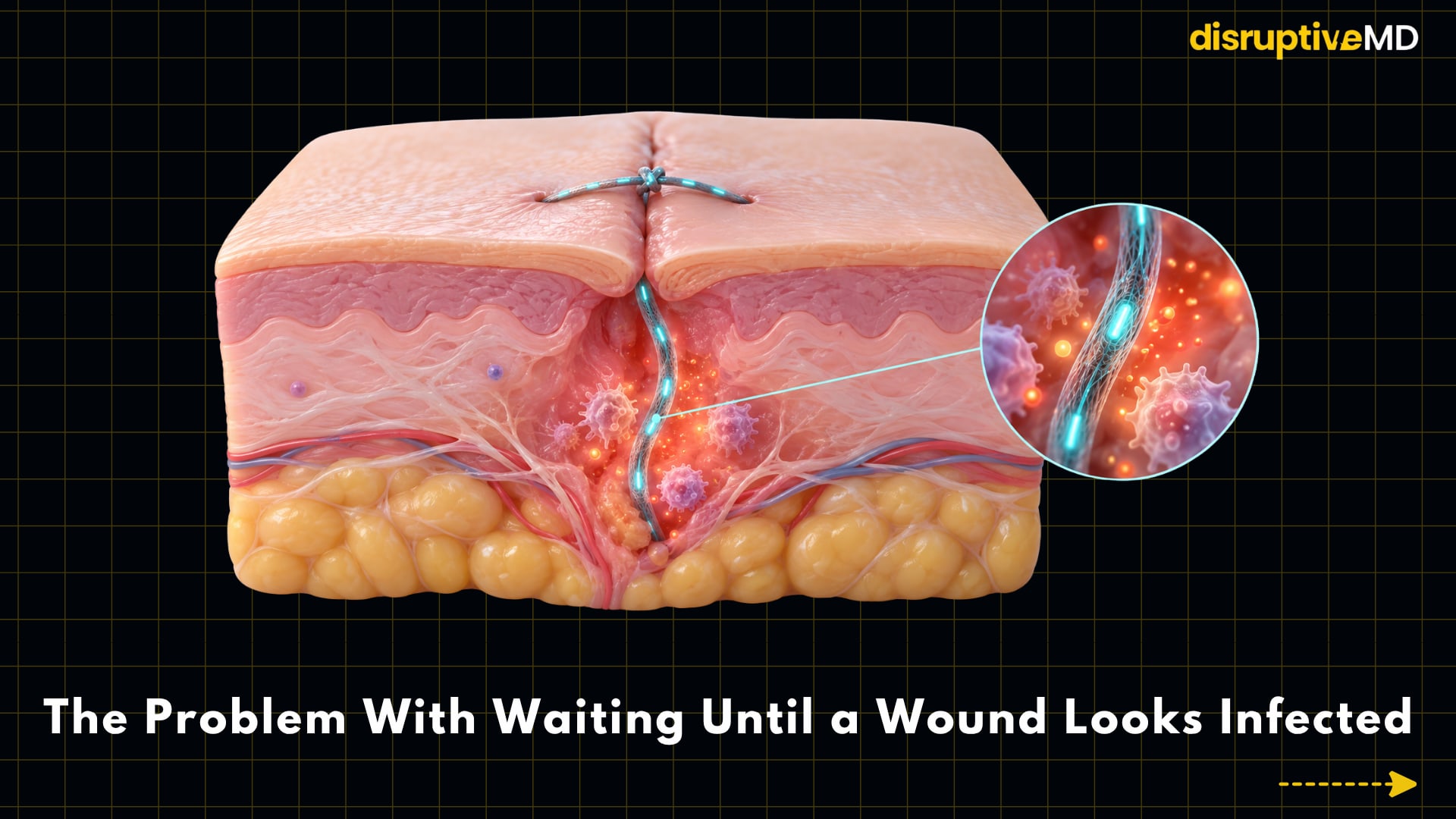
- Doctors already monitor surgical wounds for redness, swelling, warmth, increasing pain, discharge, fever and wound breakdown.
- The problem is that biology may begin changing before some of those changes become obvious from the surface.
- Instead of waiting for the wound to communicate through obvious symptoms, researchers are trying to measure the wound microenvironment directly.
The Problem With Waiting Until a Wound Looks Infected
Doctors already monitor surgical wounds for redness, swelling, warmth, increasing pain, discharge, fever and wound breakdown.
These signs are clinically important.
The problem is that biology may begin changing before some of those changes become obvious from the surface.
Local temperature can change. Wound chemistry can shift. Reactive molecules associated with inflammation can fluctuate. Bacterial metabolism may generate detectable chemical signals. Mechanical loading across a healing repair can also change before the wound actually separates.
That creates an intriguing opportunity.
Instead of waiting for the wound to communicate through obvious symptoms, researchers are trying to measure the wound microenvironment directly.
A smart suture could theoretically sit inside that environment and continuously ask:
Is this wound behaving normally, or is something beginning to change?
Recent experimental platforms have already demonstrated sensing of variables including temperature, pH-related changes, hydrogen peroxide, glucose, bacterial metabolic products and mechanical strain. These remain research technologies rather than routine infection-diagnosing stitches.
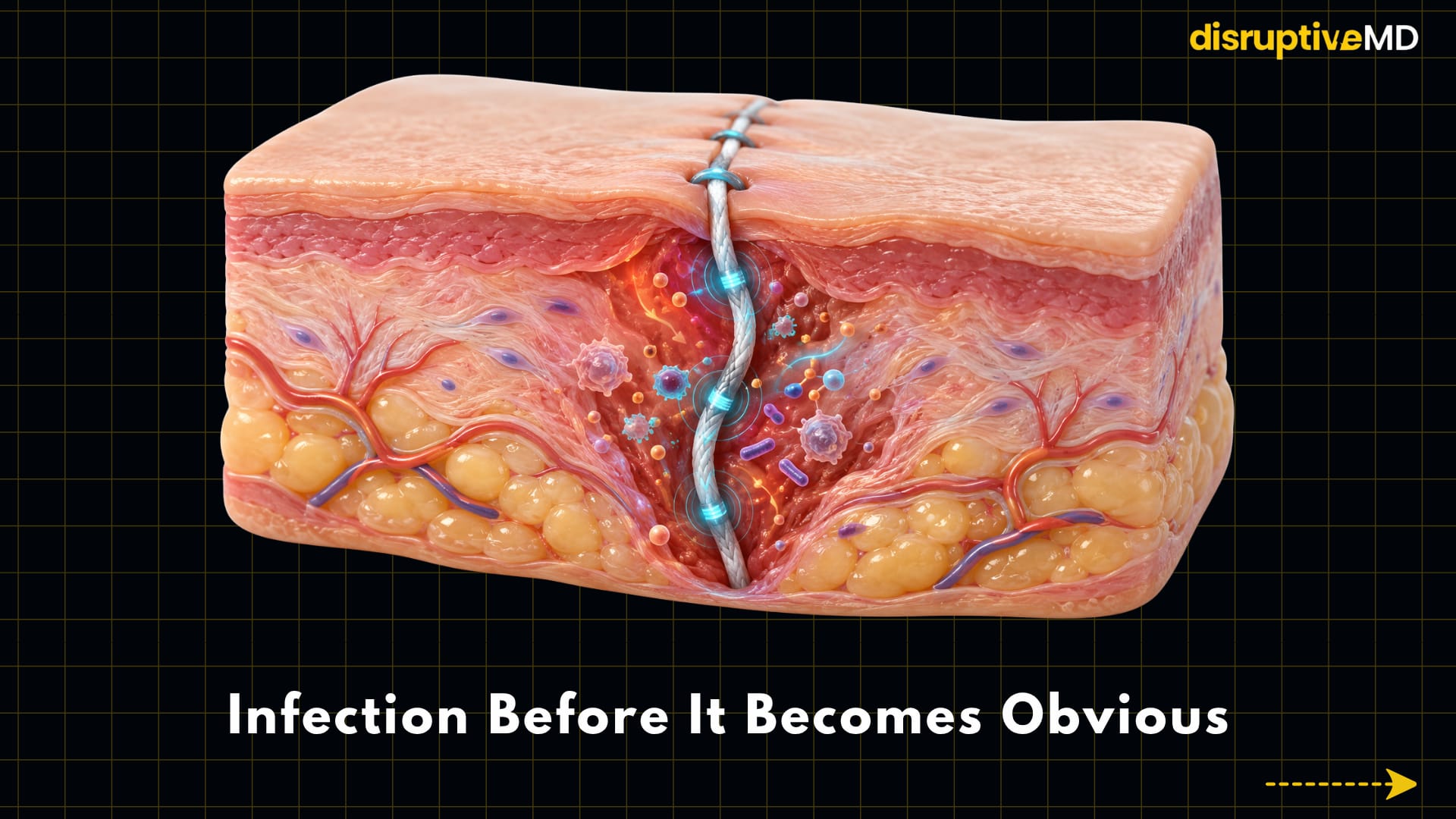
1. Infection Before It Becomes Obvious
This is perhaps the most compelling idea behind smart sutures.
An infection changes the biological environment of a wound.
But there is unlikely to be one perfect molecule that simply changes from “healthy” to “infected.”
Temperature can rise because of inflammation. pH can change during different stages of wound healing and infection. Reactive oxygen species and other biochemical molecules can fluctuate. Bacteria themselves release metabolic products.
A useful smart suture therefore may not need to diagnose infection in the way a microbiology laboratory does.
Instead, its first job could be to recognise that:
Something about this wound is moving away from its expected healing pattern.
That could prompt earlier inspection, testing or intervention.
A 2026 experimental multimodal suture took this concept further by measuring both temperature and hydrogen peroxide, then combining the signals using machine-learning-assisted analysis. In animal wound models, the system was able to distinguish different inflammation-related states, illustrating how multiple biological signals could potentially become more informative than relying on a single measurement.
The important distinction is that this is an experimental monitoring system - not yet a clinically validated autonomous infection diagnosis.
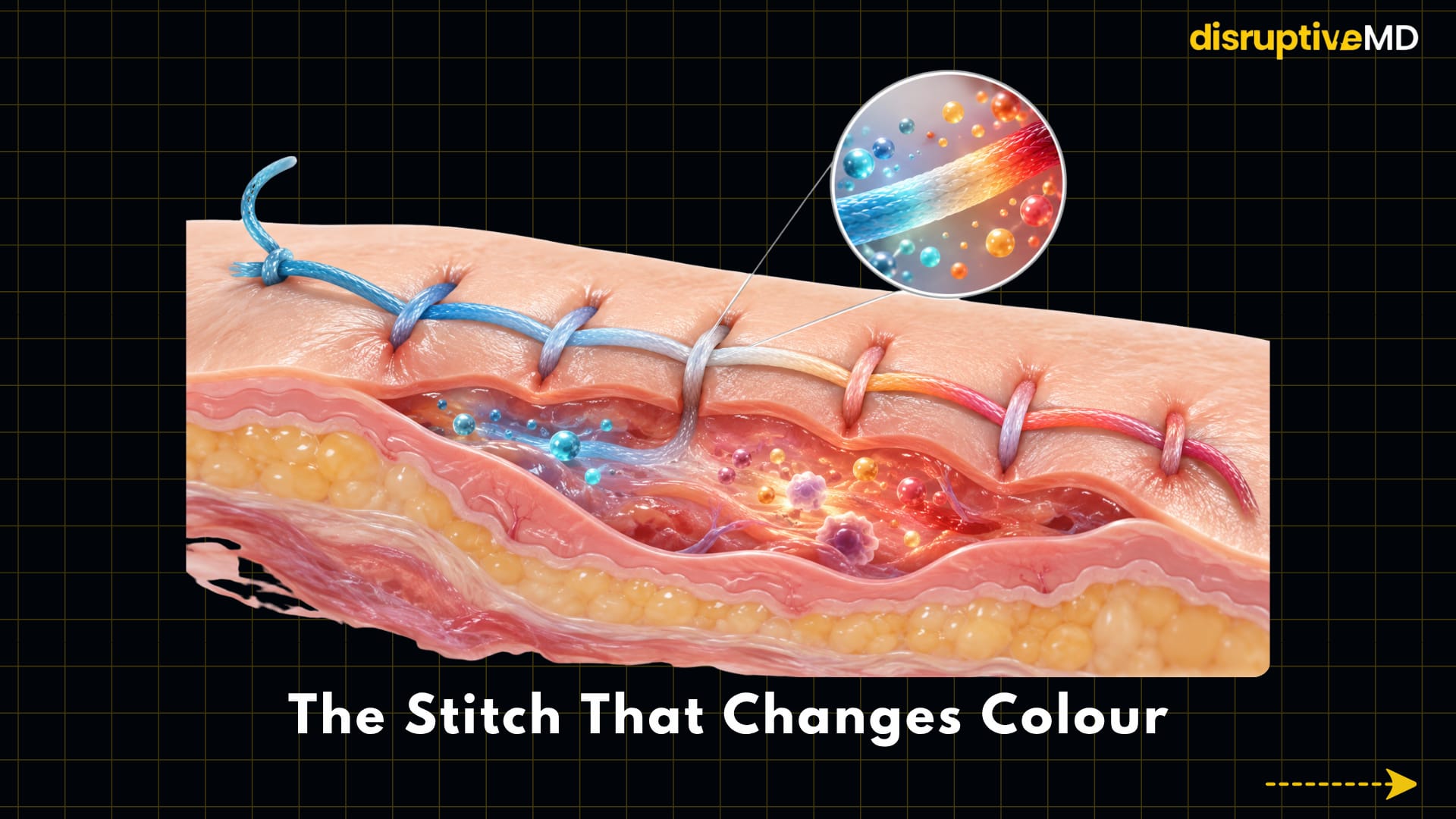
2. The Stitch That Changes Colour
Not every smart suture needs electronics.
One of the most visually interesting approaches is remarkably simple:
Make the suture itself change colour when its chemical environment changes.
pH-responsive materials can be incorporated into or coated onto suture fibres. As the acidity or alkalinity surrounding the wound changes, the optical properties of the material change with it.
In a 2025 study, researchers developed a silk-based multifunctional suture incorporating materials that produced visible colour changes across different pH environments. A smartphone-based system could then analyse the colour to estimate pH.
The attraction is obvious.
Instead of a sensor requiring complex electronics, a clinician might one day inspect the stitch, or photograph it, and receive additional information about what is happening locally.
But pH is not an infection test by itself.
Blood, wound fluid, inflammation, healing stage and other biological factors can influence the local environment. Even the researchers developing colourimetric systems have reported practical limitations such as interference from blood staining.
So the futuristic concept is not:
“The stitch changes colour, therefore the wound is infected.”
It is more realistically:
“The stitch has detected a chemical change worth investigating.”
3. Electronic Sutures: Turning Thread Into a Sensor
The next step is to make the suture electrically active.
Traditional surgical threads can be modified with conductive polymers, metallic components, carbon-based materials or flexible fibre sensors.
Once the thread becomes conductive, stretching, bending or chemical interactions can alter its electrical properties.
That means the suture can become a tiny sensor embedded directly within healing tissue.
One research direction uses conducting coatings to detect molecules produced during bacterial metabolism. Experimental sensor-coated sutures have demonstrated real-time detection of bacterial growth-related signals, including studies performed in sutured ex-vivo tissue.
Others focus not on infection, but on something equally important:
Mechanics.
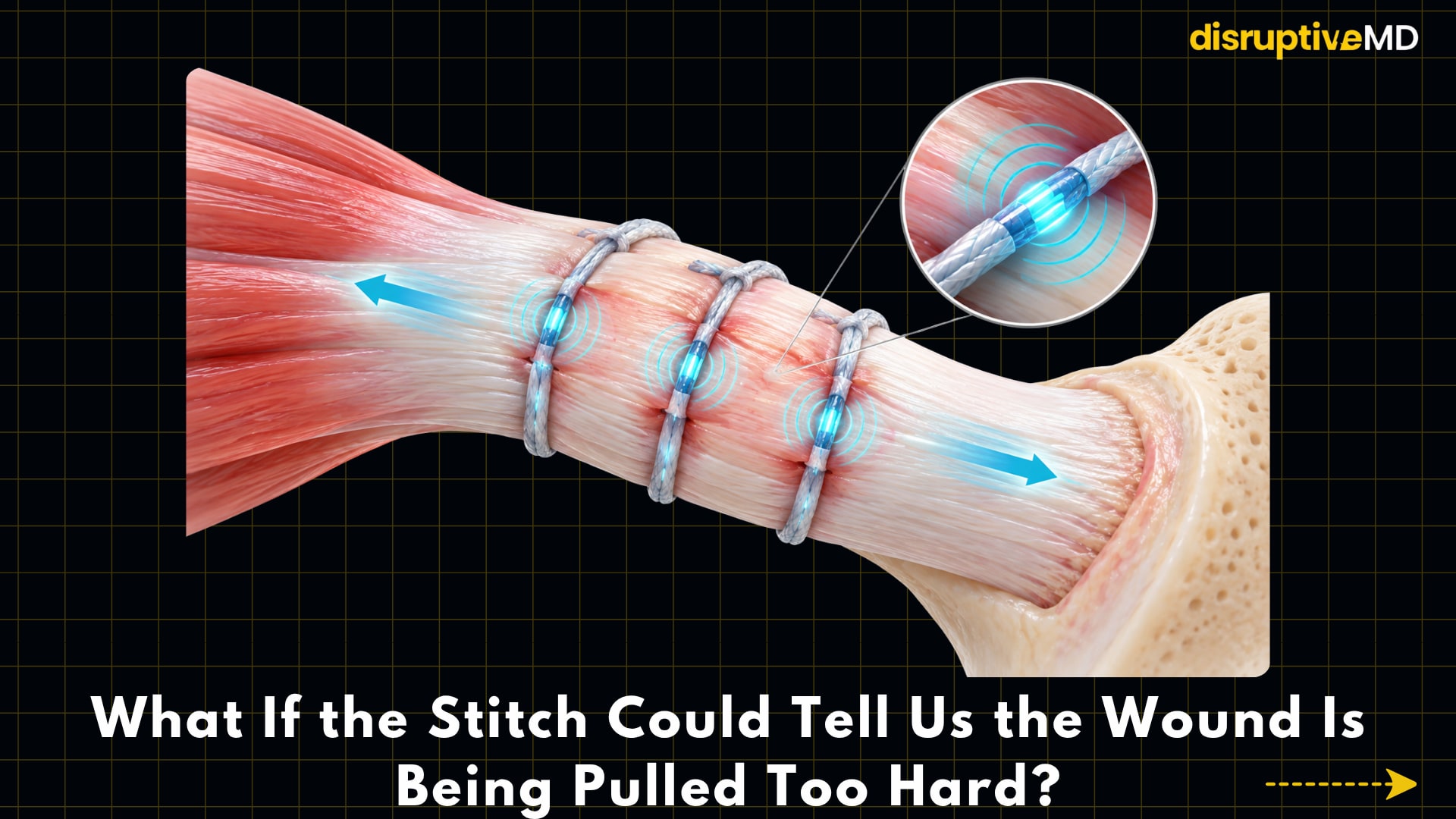
4. What If the Stitch Could Tell Us the Wound Is Being Pulled Too Hard?
Every wound experiences force.
Movement stretches skin. Muscles contract. Tendons transmit enormous loads. Swelling alters tissue tension. Rehabilitation progressively increases stress through a repair.
The problem is that clinicians cannot normally see those forces directly.
Too much loading across a healing repair could contribute to pain, impaired healing or mechanical failure.
A strain-sensing suture could potentially measure that load from inside the repair.
In 2024, researchers demonstrated a wireless, chip-less strain-sensing suture designed to monitor mechanical changes after Achilles tendon reconstruction. The system combined a standard suturing thread with a fibre strain sensor and wireless readout mechanism and was evaluated in a porcine model, where it could monitor strain responses during healing.
That opens a fascinating possibility for orthopaedics and sports medicine.
Instead of rehabilitation being guided only by time, symptoms, imaging and functional assessment, future clinicians could potentially obtain information directly from the healing construct:
How much load is actually reaching the repair?
Is mechanical stiffness changing?
Is the tissue tolerating rehabilitation?
The suture would no longer simply hold the tendon.
It could become part of the postoperative measurement system.
5. Monitoring Wounds Doctors Cannot See
Surface wounds are comparatively easy to inspect.
Deep surgical wounds are different.
An abdominal repair, internal anastomosis, tendon reconstruction or other buried surgical site may be hidden beneath layers of tissue.
Doctors often have to infer what is happening internally from symptoms, blood tests, imaging or physiological changes.
Smart sutures could place the sensor directly where the problem may begin.
One influential bioelectronic suture system used conductive surgical threads combined with wireless, battery-free sensing. In animal experiments, the sutures were able to monitor wound integrity, gastric leakage and tissue micromotions from deep surgical sites.
That changes the role of a stitch considerably.
Imagine an internal surgical repair that does not simply remain hidden after the operation.
Instead, it quietly produces information about whether the tissues remain intact.
The biggest advantage of a smart suture may therefore not be that it replaces a wound inspection.
It may be that it gives clinicians access to wounds they cannot inspect directly at all.
6. Monitoring the Chemistry of Healing
Mechanical strain is only one part of wound healing.
The wound is also a constantly changing biochemical environment.
Researchers are investigating sutures capable of monitoring variables such as:
- Temperature
- pH
- Hydrogen peroxide
- Glucose
- Bacterial metabolic activity
- Mechanical strain
- Tissue micromotion
- Tension across the repair
A 2024 self-powered biosensing suture, for example, used a fibre-based biofuel-cell approach to monitor glucose at a wound site.
More recently, multimodal experimental sutures have begun combining biochemical and physical measurements rather than relying on a single sensor.
This may be important because wound healing is not controlled by one variable.
Temperature alone may be nonspecific.
pH alone may be nonspecific.
A biochemical marker alone may fluctuate.
But several signals changing together over time could potentially tell a much richer story.
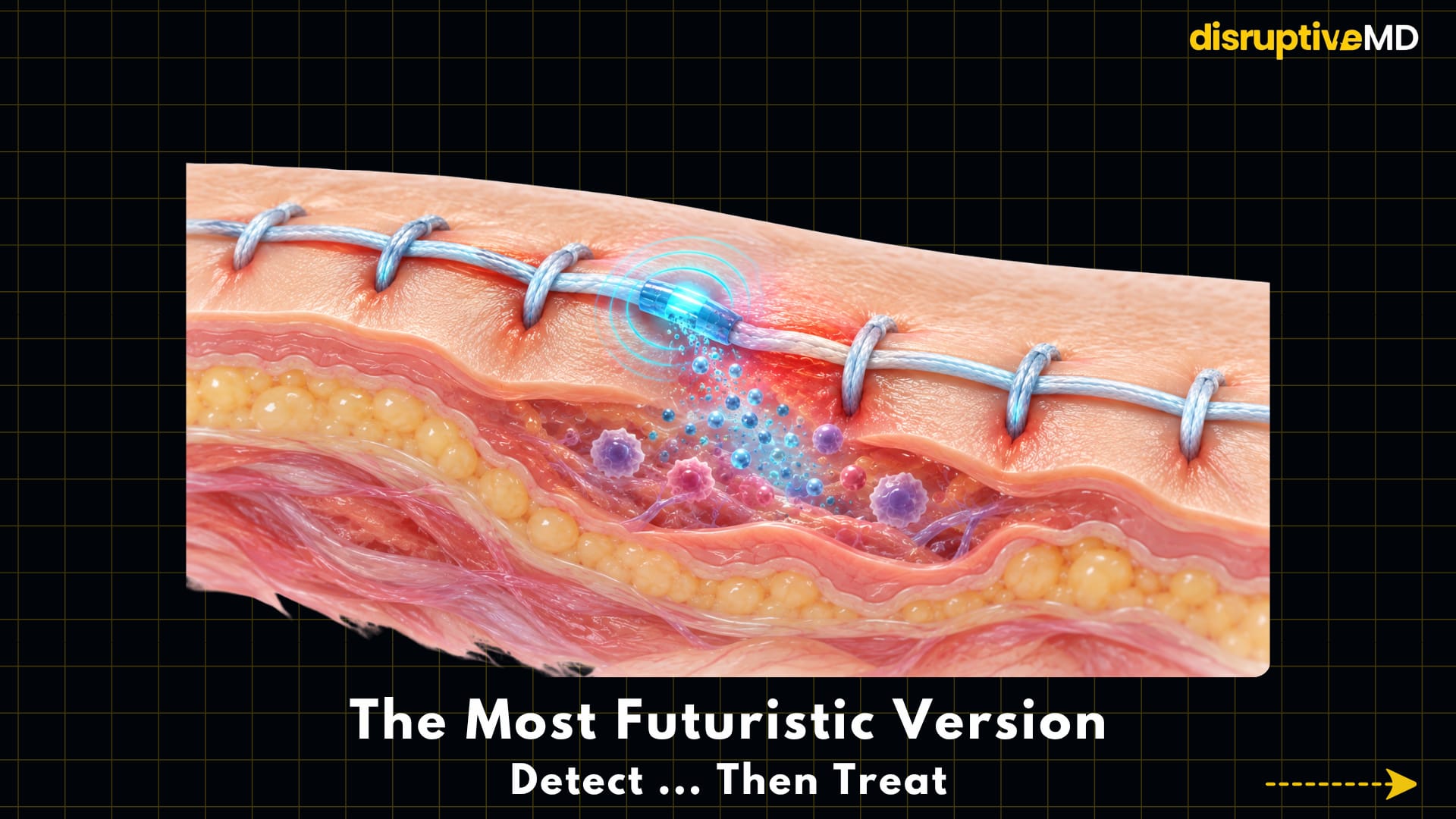
7. The Most Futuristic Version: Detect ... Then Treat
Monitoring is only the first step.
The more ambitious idea is a suture that can also respond.
Imagine a material engineered to release antimicrobial substances only when triggered by a specific wound environment.
Or a suture that can be externally activated when infection is suspected.
Research is already moving in this direction.
Experimental pH-responsive suture fibres have been designed to alter drug release according to their surrounding chemical environment.
A separate 2026 study developed an experimental ultrasound-responsive antibacterial suture. Rather than releasing a conventional antibiotic, the material generated reactive oxygen species when activated by ultrasound and produced antibacterial effects in laboratory testing and a rat wound model.
These systems are very early.
But they introduce an important conceptual change:
The suture becomes both a surgical material and a therapeutic platform.
8. Closed-Loop Wound Care
Combine sensing and treatment and the ultimate vision becomes a closed-loop system:
Detect abnormal signal → recognise concerning pattern → alert clinician → trigger local treatment → continue monitoring the response.
That would be very different from conventional wound management.
Instead of treating every wound the same way and checking it intermittently, care could become increasingly responsive to the biology of that particular wound.
In its most sophisticated form, the future smart suture might distinguish normal postoperative inflammation from a progressively abnormal pattern, communicate that change wirelessly and help guide a targeted intervention.
The concept resembles a tiny implanted monitoring network woven directly through the healing tissue.
But fully autonomous detect-diagnose-treat-monitor sutures are still an aspiration rather than standard clinical technology.
9. Smart Sutures vs Smart Dressings
Smart wound dressings are developing alongside smart sutures.
The technologies overlap, but they occupy different places.
A dressing sits primarily on the surface of a wound.
A suture passes through the wound margins or deeper tissue being repaired.
That difference matters.
Smart dressings may be ideal for analysing wound exudate, temperature and surface healing.
Smart sutures may eventually provide access to mechanical strain, deeper biochemical changes or internal repairs that a dressing cannot reach.
The future may therefore not be smart sutures versus smart dressings.
It could be both.
A surface dressing could monitor the wound externally while sutures collect information from deeper tissue.
Together, they could create a much more complete picture of healing.
10. AI Could Make the Data More Useful
A smart stitch that constantly generates numbers is not automatically useful.
The real challenge is interpreting them.
What temperature change is normal after surgery?
How much strain should an Achilles repair experience on day 10 compared with week six?
How much fluctuation in a chemical signal represents normal inflammation?
When does a collection of small abnormalities become clinically important?
This is where artificial intelligence and machine-learning systems may eventually become valuable.
Rather than responding to one threshold, algorithms could analyse combinations and trends:
Temperature + Biochemical signals + Strain + Time since surgery + Previous measurements.
A 2026 experimental system has already demonstrated the principle of combining multiple suture-derived signals with machine-learning-assisted classification of postoperative inflammatory states in animal models.
Eventually, such information could potentially be transmitted to a smartphone or clinical dashboard.
The value would not simply be continuous data.
It would be identifying which change actually deserves attention.
11. Where Could Smart Sutures Matter Most?
The technology could eventually be relevant anywhere wound failure, infection or mechanical overload has significant consequences.
That could include orthopaedic reconstruction, joint replacement, tendon repair, abdominal surgery, plastic and reconstructive surgery, trauma repair, vascular procedures and other operations involving important buried tissue repairs.
Chronic wounds and complex wound-care environments could also inspire related fibre-based sensing technologies.
In orthopaedics especially, there is another intriguing application.
A smart suture may eventually monitor not only whether tissue remains closed, but how the repaired structure is mechanically recovering.
That could make the suture useful long after the operation itself is finished.
12. The Engineering Problem Nobody Can Ignore
There is one rule every smart suture has to obey:
It must still be a good suture.
That sounds obvious, but it creates an enormous engineering challenge.
A surgical thread must tolerate pulling, knotting, bending, friction and a wet biological environment while maintaining adequate mechanical integrity.
Now add conductive coatings, sensors, antennas, responsive materials, drug reservoirs or electronic components.
Every additional feature creates another possible failure point.
A coating could delaminate.
A sensor could lose calibration.
Electronics could alter flexibility.
A drug-containing material could change mechanical properties.
Foreign materials could alter tissue responses.
Body fluids could interfere with measurements.
Movement could create signal noise.
And if a sensor reports an abnormality when everything is fine, or misses one when something is wrong, the clinical consequences matter.
For that reason, some of the most important smart-suture research focuses not merely on sensing performance but also on mechanical stability, biocompatibility, resistance to biofouling and reliable operation after repeated deformation.
The stitch cannot become smarter by becoming worse at stitching.
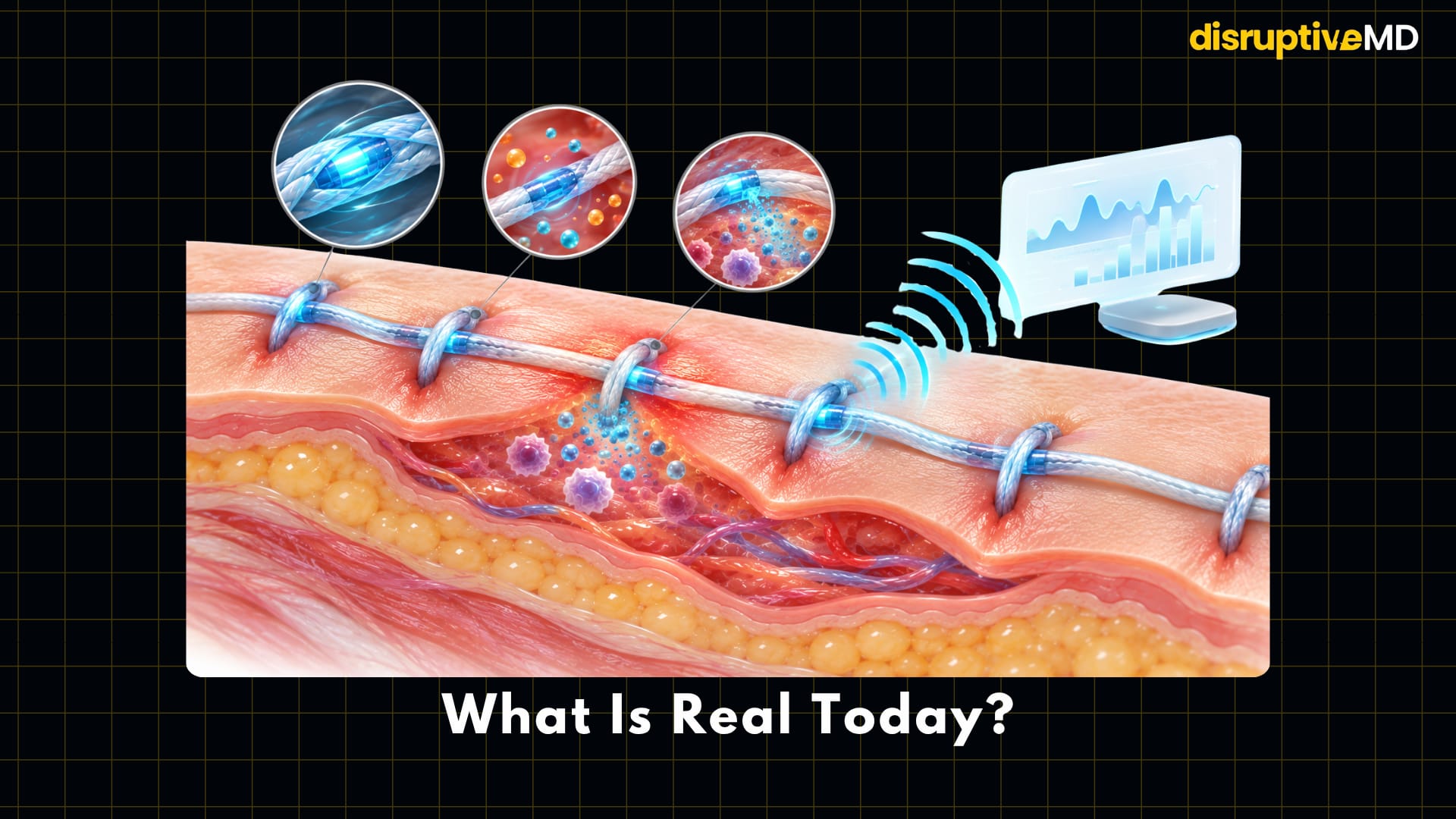
What Is Real Today?
Smart sutures are a genuine research field, not science fiction.
Experimental systems have demonstrated several important capabilities.
Researchers have created sutures capable of sensing mechanical strain and tissue motion. Wireless and battery-free approaches have been demonstrated. Deep implanted sutures have monitored tissue micromotion, wound integrity and leakage in animal models. Conductive coatings have detected bacterial metabolic activity. Other platforms have monitored temperature, hydrogen peroxide, glucose or pH-related changes. Colour-responsive sutures have been developed, and experimental therapeutic sutures can release or generate antibacterial treatment under specific triggers.
Perhaps most importantly, research is beginning to move beyond single-function sensors toward sutures capable of combining sensing, wireless communication, data interpretation and therapy.
That is where the field becomes particularly interesting.
What Is Not Fully Real Yet?
The futuristic vision needs an equally important reality check.
Routine surgical patients are not currently being sent home with stitches that independently diagnose infection.
A smart suture cannot yet reliably look at one signal and announce that a wound is infected.
There is no universal algorithm that can perfectly predict whether every wound will heal normally.
Autonomous antibiotic-releasing sutures are not standard postoperative care.
Smart stitches do not eliminate wound inspection, clinical examination, imaging, laboratory testing or professional judgement.
And no sensor is guaranteed to produce zero false alarms or zero missed complications.
Most of the sophisticated sensing systems described here remain at laboratory, ex-vivo or animal-model stages, meaning substantial validation, manufacturing, sterilisation, reliability and clinical testing challenges remain before widespread adoption.
The Future: From Passive Repair to Intelligent Healing Surveillance
For most of medical history, closing a wound and monitoring a wound have been separate tasks.
The surgeon closes it.
Then the healthcare team watches it heal.
Smart sutures could begin merging those two jobs.
The material performing the repair could also become part of the monitoring system.
One thread might measure tension.
Another might detect biochemical changes.
A responsive coating might visibly signal a changing wound environment.
Wireless technology could allow buried tissue to communicate with devices outside the body.
Algorithms could look for patterns that humans would struggle to recognise from isolated measurements.
And eventually, some systems may respond therapeutically when predetermined biological conditions appear.
That would represent a profound shift in wound care:
From fixing tissue and waiting to see what happens…
To fixing tissue while continuously listening to how it heals.
The smartest part of the technology may therefore not be the electronics.
It is the location.
The sensor is already sitting exactly where the biology matters.
Fact Base
Established
Conventional sutures primarily provide mechanical tissue approximation during healing.
Demonstrated experimentally
Smart-suture platforms have been developed that can measure temperature, biochemical signals, pH-related changes, glucose, strain, tissue movement and bacterial metabolic activity.
Wireless and battery-free suture-based sensing systems have been demonstrated in preclinical models.
Deep implanted bioelectronic sutures have experimentally monitored wound integrity, gastric leakage and tissue micromotions.
Colour-responsive sutures capable of reporting changes in local pH have been demonstrated experimentally.
Multimodal experimental sutures can combine more than one biological measurement, and machine-learning-assisted analysis has been investigated for interpreting those signals.
Experimental sutures with responsive or externally activated antibacterial functions are also being developed.
Not established
Smart sutures cannot currently diagnose infection with perfect accuracy from a single biological signal.
They are not a substitute for clinical wound assessment.
Fully autonomous closed-loop systems that reliably detect infection, choose treatment, deliver therapy and confirm recovery are not routine clinical technology.
Large-scale human validation will be required before many of these technologies can become everyday surgical tools.
References
- Xiao Y, Gao X, Sun T, et al. Multimodal smart suture for dynamic postoperative wound monitoring. Bioactive Materials. 2026;66:1186–1201. DOI: 10.1016/j.bioactmat.2026.07.044.
- Song Y, Li J, Li X, et al. Dual In Situ Integration for Braided Silk Fibers Enabling Multifunctional Bioactive Sutures. Interdisciplinary Materials. 2025;4(6):927–940. DOI: 10.1002/idm2.70025.
- Fontana-Escartín A, et al. Smart Design of Sensor-Coated Surgical Sutures for Bacterial Infection Monitoring. Macromolecular Bioscience. 2023. DOI: 10.1002/mabi.202300024.
- Lee M, Lee Y, Choi JH, et al. Postoperative Long-Term Monitoring of Mechanical Characteristics in Reconstructed Soft Tissues Using Biocompatible, Immune-Tolerant, and Wireless Electronic Sutures. ACS Nano. 2024;18(19):12210–12224. DOI: 10.1021/acsnano.4c00396.
- Wirelessly operated bioelectronic sutures for the monitoring of deep surgical wounds. Nature Biomedical Engineering. 2021. DOI: 10.1038/s41551-021-00802-0.
- Self-powered biosensing sutures for real-time wound monitoring. Biosensors and Bioelectronics. 2024;259:116365. DOI: 10.1016/j.bios.2024.116365.
- Electrospun Drug-Eluting pH-Responsive Nanofiber Yarns as Surgical Sutures for Wound Healing. ACS Applied Polymer Materials. 2026. DOI: 10.1021/acsapm.6c00702.
- Yang J, Guo Y, Hu X, et al. Drug-Free Ultrasound-Responsive Mechanoluminescent Suture Enables On-Demand Antibacterial Therapy and Enhanced Healing of Infected Wounds. Advanced Healthcare Materials. 2026. DOI: 10.1002/adhm.202505833.
The next generation of stitches may not just hold wounds together — they may help tell us when healing is going wrong.