
What if the next diagnostic device was not worn on the wrist, but swallowed like a pill?
Most medical information is collected from outside the body.
Doctors use blood tests, scans, scopes, wearables and clinical examinations to understand what is happening inside a patient. But ingestible sensors reverse that direction.
Instead of observing the body only from the outside, these tiny electronic capsules travel directly through the gastrointestinal tract - collecting images, measuring physiological signals, sampling the internal environment and transmitting information wirelessly.
The long-term goal is ambitious: To diagnose, monitor and personalise treatment from inside the patient, and without major procedures.
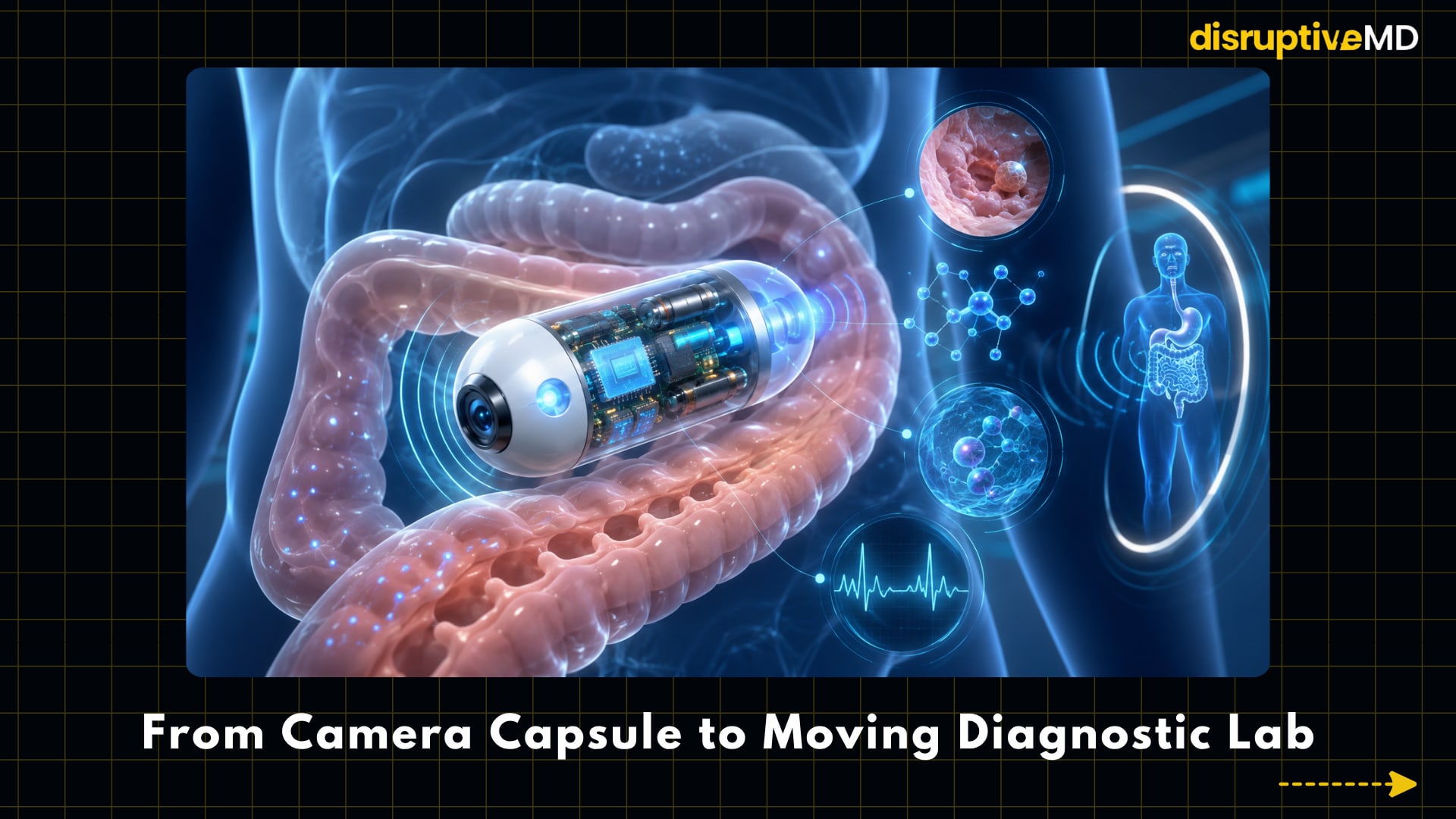
- An ingestible sensor is a swallowable capsule containing miniature components such as cameras, chemical sensors, processors, batteries, wireless transmitters or drug-release mechanisms.
- Some capsules simply pass through the digestive tract.
- The most advanced research is transforming the capsule from a passive camera into a moving diagnostic laboratory.
FROM CAMERA CAPSULE TO MOVING DIAGNOSTIC LAB
An ingestible sensor is a swallowable capsule containing miniature components such as cameras, chemical sensors, processors, batteries, wireless transmitters or drug-release mechanisms.
Some capsules simply pass through the digestive tract. Others are being designed to remain temporarily in one location, respond to specific conditions or interact directly with the gut wall.
The most advanced research is transforming the capsule from a passive camera into a moving diagnostic laboratory capable of measuring the gut while digestion, inflammation and microbial activity are actually happening.
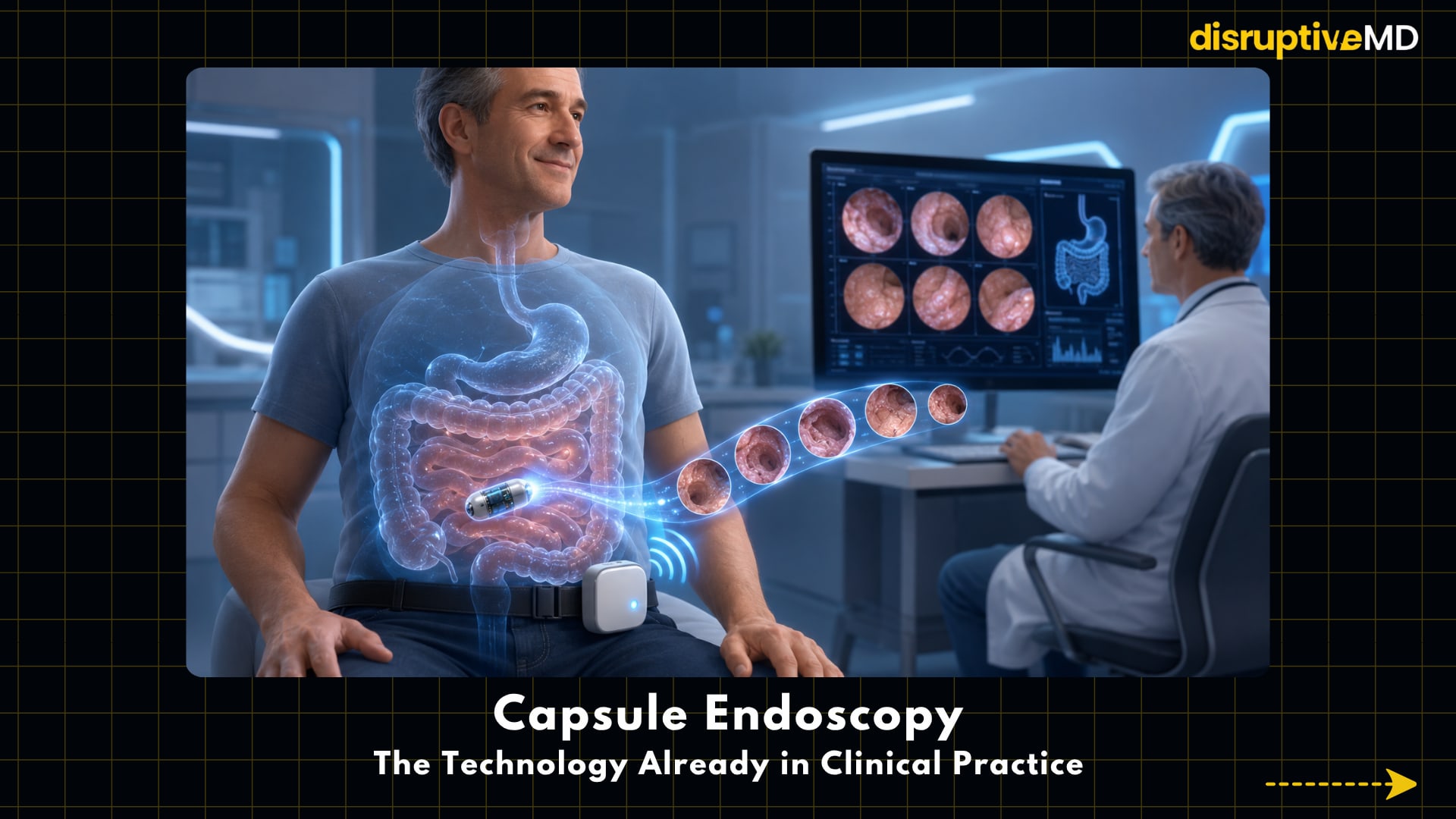
CAPSULE ENDOSCOPY: THE TECHNOLOGY ALREADY IN CLINICAL PRACTICE
The most established ingestible diagnostic device is capsule endoscopy.
The patient swallows a capsule containing a camera, light source, battery and transmitter. As it moves naturally through the digestive tract, it captures thousands of images that are stored on an external recorder.
Capsule endoscopy is particularly valuable for examining the small intestine—an area that can be difficult to assess completely with conventional upper endoscopy or colonoscopy. It is used in selected patients with suspected small-bowel bleeding, Crohn’s disease, inflammatory lesions, vascular abnormalities and small-intestinal tumours.
However, the capsule is primarily diagnostic. Unlike conventional endoscopy, most current capsules cannot take a biopsy, stop bleeding or remove a lesion.
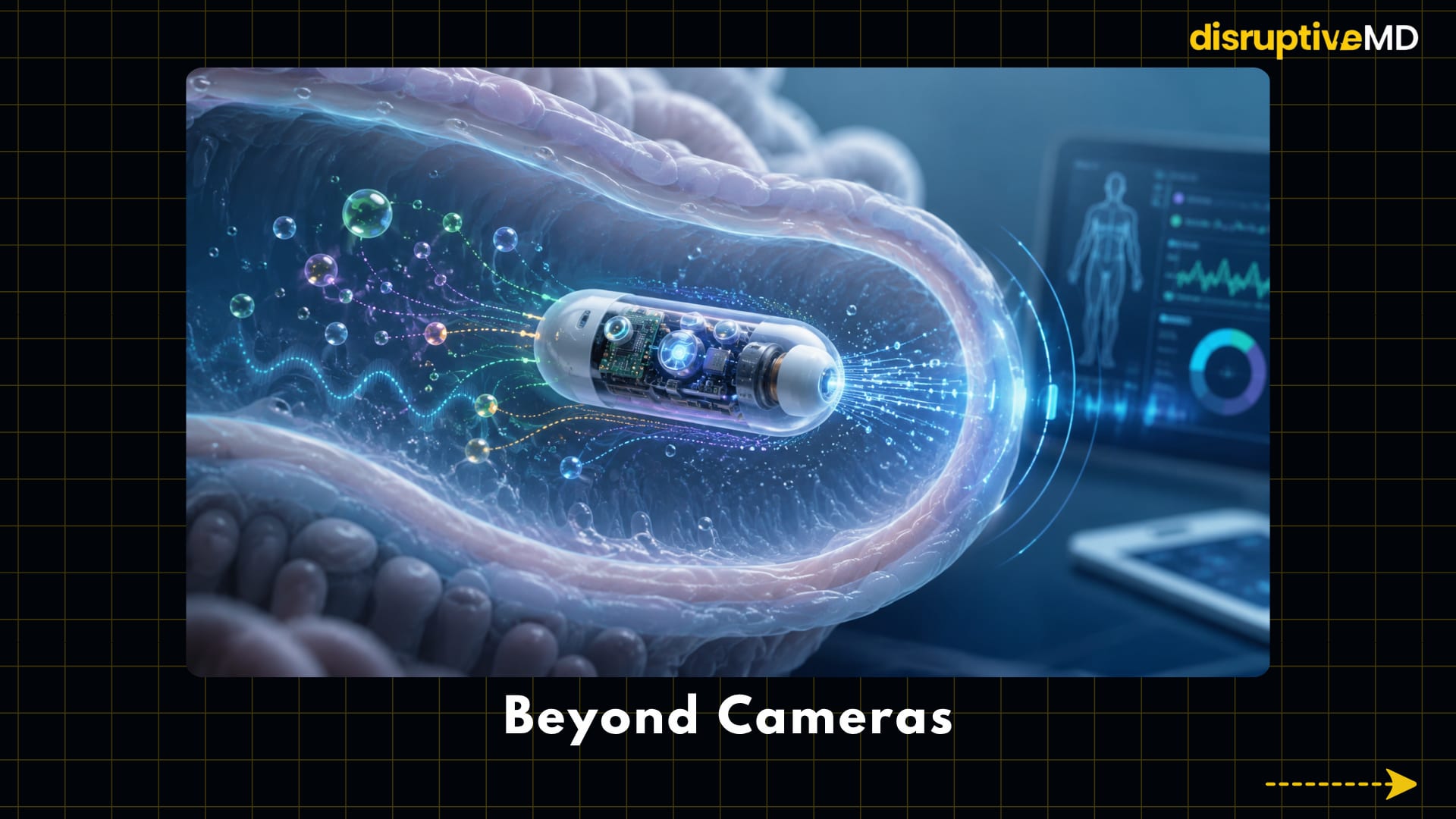
BEYOND CAMERAS
The next generation of ingestible sensors is designed to measure much more than images. Experimental capsules have been developed to monitor:
- pH
- Temperature
- Pressure
- Gastrointestinal movement
- Oxygen, hydrogen and carbon dioxide
- Glucose and other metabolites
- Electrolytes and ionic strength
- Hormones and neurotransmitters
- Oxidation–reduction balance
- Intestinal barrier properties
- Medication ingestion
A human pilot study has already demonstrated swallowable capsules capable of measuring gases within the gut. Other systems have monitored metabolites in the small intestine or collected biochemical information continuously as they moved through animal models.
This changes the capsule’s role. It is no longer simply taking pictures. It is beginning to measure the chemistry and physiology of the gut itself.
TRACKING GUT MOTILITY FROM THE INSIDE
Digestive symptoms are often influenced by how quickly material moves through the stomach, small intestine and colon.
Wireless motility capsules have used changes in pH, pressure and temperature to estimate gastric emptying and intestinal transit. Newer experimental devices are attempting to locate themselves more precisely using external magnetic fields.
A location-aware ingestible sensor reported in 2023 could be tracked as it travelled through the gastrointestinal tract in large-animal testing. The approach may eventually help evaluate disorders such as gastroparesis and slow-transit constipation without radiation-based tracking. Human clinical validation is still required.
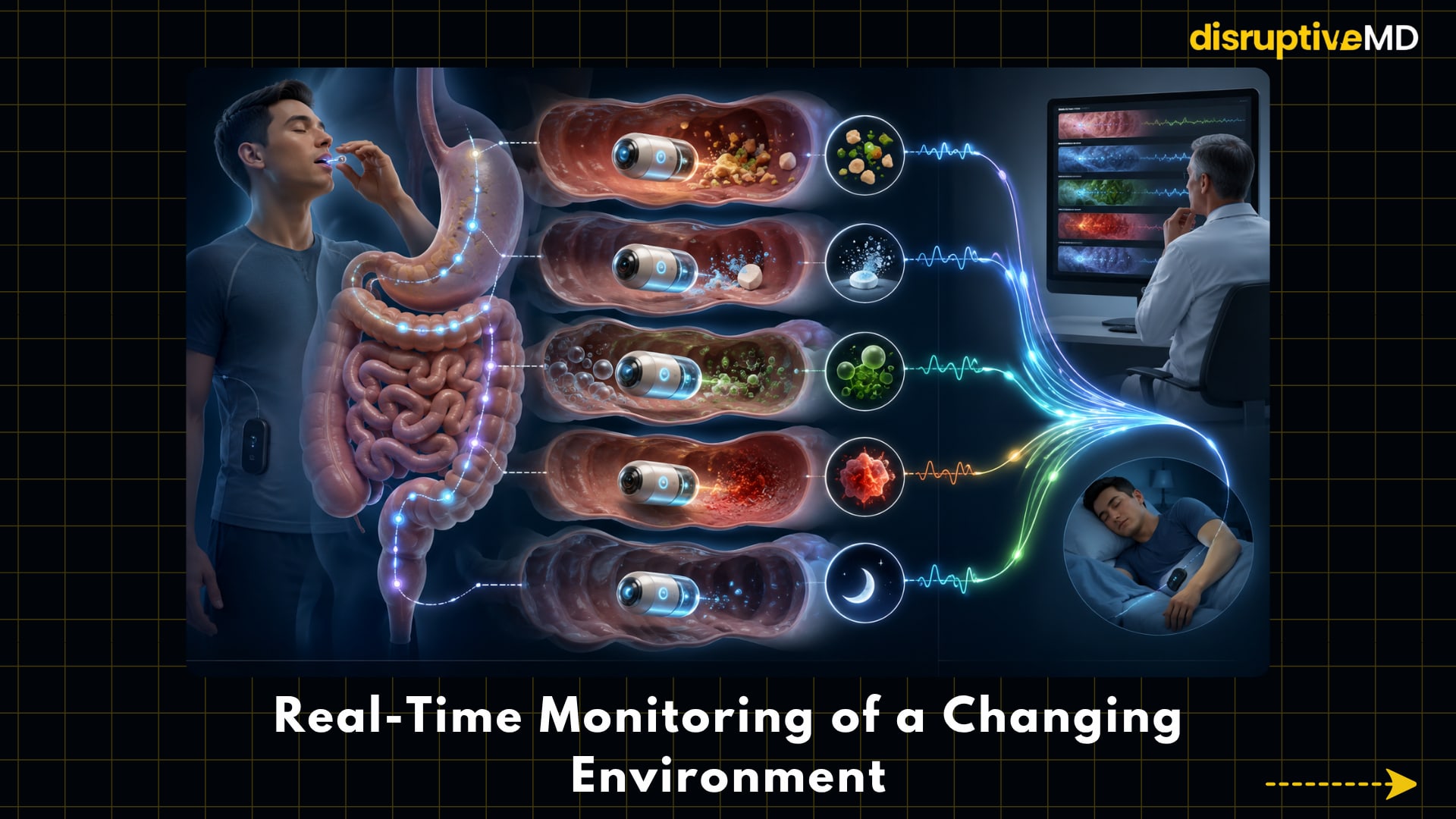
REAL-TIME MONITORING OF A CHANGING ENVIRONMENT
A blood test or stool sample provides information from a particular moment. The gastrointestinal environment, however, changes continuously with food, medication, microbial fermentation, sleep and disease activity.
A travelling sensor could reveal when and where those changes occur.
The 2025 PillTrek research platform combined multiple electrochemical sensing techniques inside a capsule measuring only 7 millimetres in diameter. In animal models, it monitored signals including glucose, serotonin, pH, temperature and ionic strength for more than 20 hours. It remains an experimental platform rather than a routine clinical test.
The bigger opportunity is not simply collecting more data. It is connecting a biological change to its exact location and timing inside the digestive tract.
AI-ASSISTED CAPSULE READING
Capsule endoscopy can generate hours of video and tens of thousands of images. Reviewing every frame can be slow and mentally demanding.
Artificial intelligence can act as a screening layer by identifying frames that may contain bleeding, ulcers, inflammation, vascular lesions, polyps or protruding abnormalities.
In a large multicentre study, a deep-learning system analysed capsule examinations substantially faster than conventional manual review while showing high sensitivity for abnormal images. However, performance from individual studies does not guarantee identical results across every device, hospital or patient population. Clinical oversight and external validation remain essential.
The most realistic role for AI is not to replace the gastroenterologist. It is to reduce image overload and help clinicians focus their attention on the frames most likely to matter.
SAMPLING THE GUT BEFORE IT BECOMES STOOL
Stool testing is useful, but it does not perfectly represent every region of the digestive tract.
The small intestine contains distinct microbial communities, metabolites, digestive products and host proteins that may change before material reaches the colon.
Researchers have therefore developed capsules capable of collecting intestinal fluid from specific locations. In a human study involving 15 healthy participants, ingestible devices collected 240 intestinal samples for multi-omics analysis. The samples revealed important differences between the intestinal environment and stool.
Future capsules may collect:
- Microbiome samples
- Intestinal fluid
- Host proteins
- Metabolites
- Inflammatory signals
- Cells or small tissue samples
This could make it possible to study the gut region by region rather than treating it as one uniform environment.
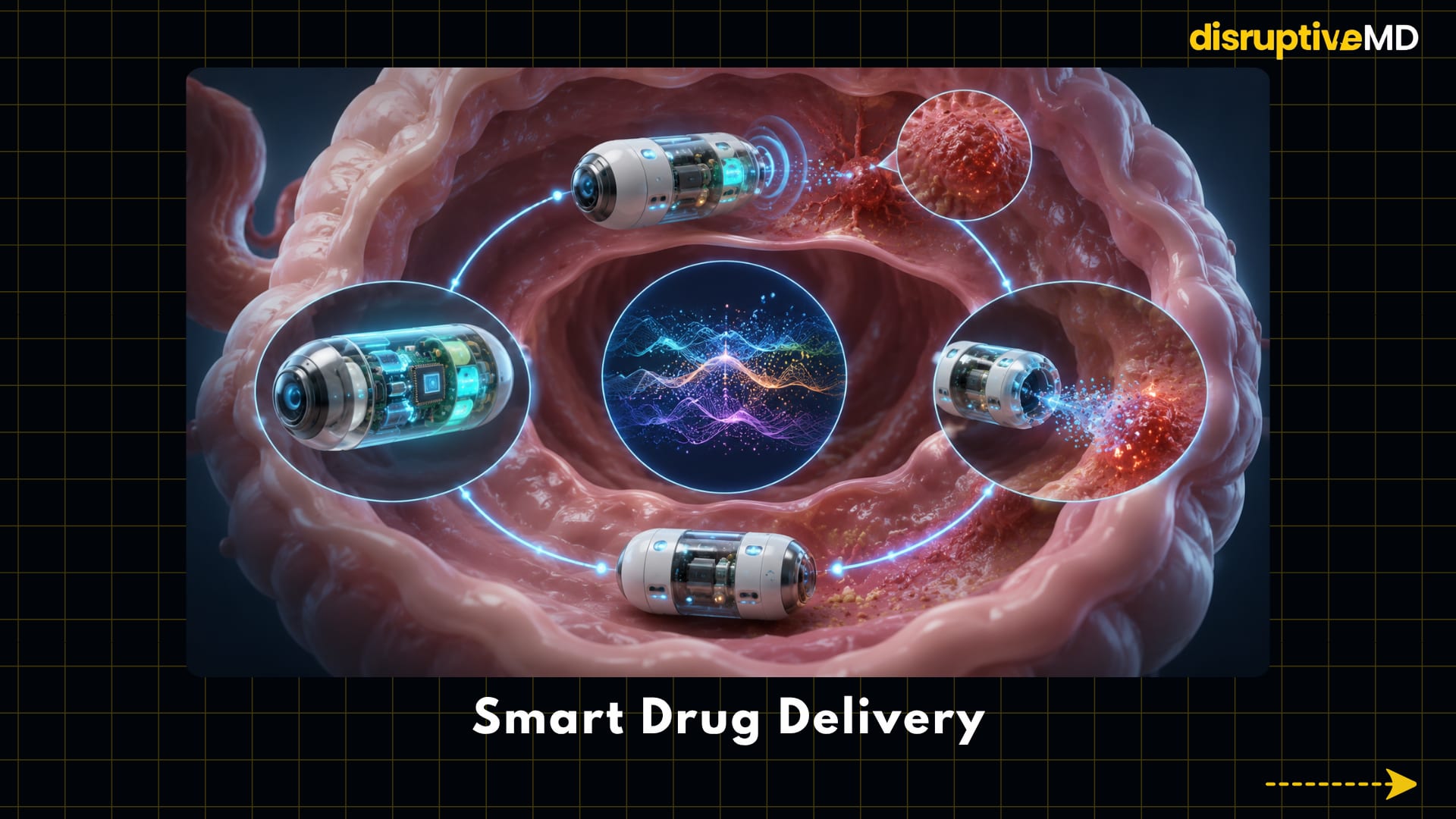
SMART DRUG DELIVERY
The future ingestible device may not only detect a problem. It may respond to it.
Researchers are developing capsules that release medication at a specific gastrointestinal location, clear mucus before drug delivery, inject large biological molecules through the gut lining or activate only when a target condition is detected.
One experimental robotic capsule, RoboCap, rotated against the intestinal surface to clear mucus and improve local drug contact in preclinical models. Other self-orienting systems have been designed to deliver medication directly through gastrointestinal tissue.
The eventual goal is a closed-loop pill: Sense a biological change, analyse it and deliver treatment at the correct location.
That level of autonomous treatment is not yet part of routine clinical care.
ROBOTIC AND STEERABLE CAPSULES
Most capsule endoscopes move passively, carried forward by natural intestinal contractions. This means clinicians cannot always stop the capsule, turn it towards a suspicious area or return to a missed lesion.
Robotic capsule research is exploring magnetic steering, miniature legs, propellers, tissue-anchoring mechanisms and self-propelling designs.
Future systems may be able to:
- Pause at a suspicious region
- Rotate for a clearer view
- Maintain contact with the gut wall
- Collect a sample
- Deliver a drug
- Apply electrical stimulation
- Perform a small intervention
Current reviews make clear that reliable navigation, power, localisation and safe tissue interaction remain major barriers to fully autonomous capsule robots.
DIGITAL PILLS FOR MEDICATION TRACKING
Ingestible event markers can confirm that a pill has reached the stomach. The sensor produces a signal that is detected by a wearable receiver and recorded digitally.
This may help document medication ingestion in clinical trials or selected treatment programmes. However, detecting that a pill was swallowed does not prove that the medication was absorbed correctly, produced the expected biological effect or improved the patient’s long-term adherence.
Even for an approved prescription drug–sensor system, its ability to improve medication compliance has not been established, and ingestion detection may occasionally be delayed or absent.
Technology can record an ingestion event. It cannot explain why a person missed treatment or solve barriers such as side effects, cost, fear, limited access or lack of trust.
THE PRIVACY PROBLEM
A device transmitting information from inside the body creates unusually sensitive data. Questions immediately arise: Who owns the information?
Who is allowed to access it?
Can consent be withdrawn?
Could an insurer, employer, institution or caregiver pressure someone to use the technology?
Could adherence data be misunderstood or used as evidence of disobedience?
Ethical analyses of digital pills have highlighted concerns involving privacy, autonomy, coercion, data security and the possibility of turning clinical support into surveillance.
Ingestible monitoring should therefore remain voluntary, transparent and clinically justified. Patients must understand exactly what is measured, where the information is stored and who can see it.
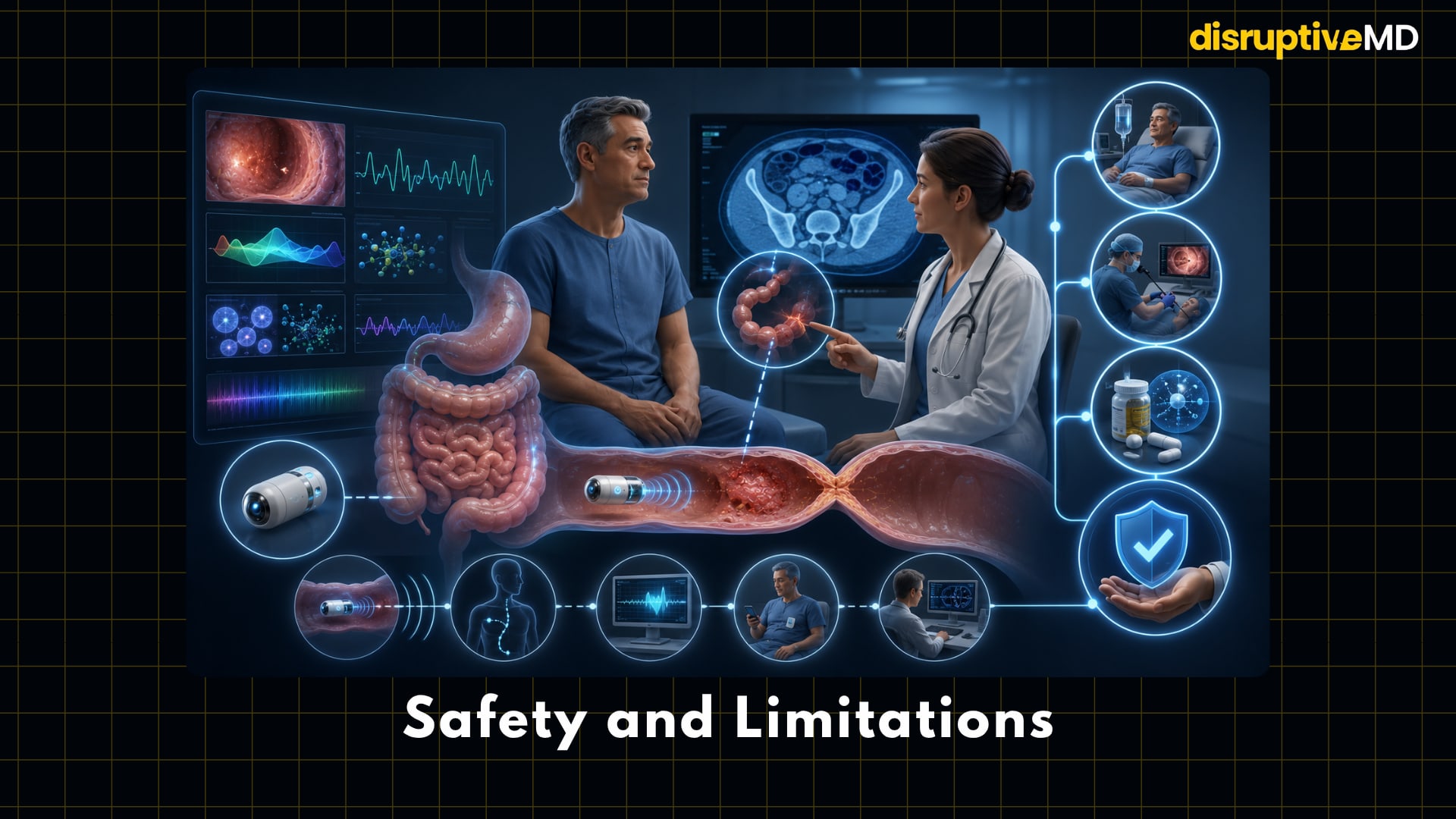
SAFETY AND LIMITATIONS
Ingestible sensors are minimally invasive, but they are not risk-free.
The most recognised complication of capsule endoscopy is capsule retention, particularly when a patient has a narrowing, tumour or intestinal obstruction. In patients with established Crohn’s disease, guidelines recommend assessing intestinal patency before capsule endoscopy when retention is a concern.
Other challenges include:
- Difficulty swallowing the capsule
- Incomplete gastrointestinal transit
- Missed lesions or obscured images
- Limited battery life
- Sensor degradation in the digestive environment
- Inaccurate localisation
- Interrupted wireless transmission
- False-positive findings
- Large quantities of difficult-to-interpret data
- Cost and regulatory complexity
- Lack of proof that a measurement improves patient outcomes
The central clinical question is not whether a capsule can measure something. It is whether that measurement leads to a safer, faster or more effective medical decision.
FACT BASE
The scientific foundation for ingestible sensors is real, but the maturity of each application varies considerably.
Capsule endoscopy is supported by clinical experience and professional guidelines for selected gastrointestinal indications. Gas-sensing capsules and biochemical sensors have entered human pilot testing or advanced preclinical research. Ingestible sampling devices have recovered region-specific intestinal material from healthy participants. AI systems have shown the ability to accelerate capsule-image review, while robotic delivery and tissue-interfacing capsules remain predominantly experimental.
The field has therefore moved beyond theoretical engineering.
But it has not yet produced one universal pill that can diagnose, sample, treat and predict disease independently.
WHAT IS POSSIBLE TODAY
- Capsule endoscopy is already used clinically.
- Ingestible devices can capture gastrointestinal images.
- Some capsule technologies can measure pH, pressure, temperature, transit or core physiological signals.
- Ingestible event markers can document medication ingestion.
- AI can help prioritise suspicious capsule images.
- Human studies have tested intestinal gas sensing and region-specific sample collection.
- Biochemical, robotic and drug-delivery capsules are active areas of research and early clinical translation.
WHAT IS NOT FULLY REAL YET
- One pill capable of diagnosing every gastrointestinal disease
- Routine laboratory-quality biochemical testing throughout the entire gut
- Fully autonomous lesion detection without clinician review
- Robotic capsules routinely performing biopsies or treatment
- Universal targeted drug delivery triggered by real-time sensing
- Perfect prediction of inflammation, infection or metabolic disease
- Ingestible sensors replacing doctors, imaging or conventional endoscopy
KEY TAKEAWAY
Ingestible sensors represent a shift from wearable health tracking to internal health tracking.
Their greatest value may not come from replacing existing tests. It may come from capturing biological events that conventional tests miss—inside the correct organ, at the correct location and at the moment they occur.
The future smart pill could combine imaging, chemical sensing, sampling, artificial intelligence and targeted treatment in a single swallowable platform.
But the technology will only become transformative when its measurements are accurate, clinically useful, secure and trusted by patients.
The future of diagnostics may be swallowed.
REFERENCES
- Pennazio M, et al. Small-bowel capsule endoscopy and device-assisted enteroscopy for diagnosis and treatment of small-bowel disorders: ESGE Guideline—Update 2022. Endoscopy. 2023. DOI: 10.1055/a-1973-3796.
- Ding Z, et al. Gastroenterologist-Level Identification of Small-Bowel Diseases and Normal Variants by Capsule Endoscopy Using a Deep-Learning Model. Gastroenterology. 2019. DOI: 10.1053/j.gastro.2019.06.025.
- Kalantar-Zadeh K, et al. A human pilot trial of ingestible electronic capsules capable of sensing different gases in the gut. Nature Electronics. 2018. DOI: 10.1038/s41928-017-0004-x.
- De la Paz E, et al. A self-powered ingestible wireless biosensing system for real-time in situ monitoring of gastrointestinal tract metabolites. Nature Communications. 2022. DOI: 10.1038/s41467-022-35074-y.
- Min J, et al. Continuous biochemical profiling of the gastrointestinal tract using an integrated smart capsule. Nature Electronics. 2025. DOI: 10.1038/s41928-025-01407-0.
- Sharma S, et al. Location-aware ingestible microdevices for wireless monitoring of gastrointestinal dynamics. Nature Electronics. 2023. DOI: 10.1038/s41928-023-00916-0.
- Shalon D, et al. Profiling the human intestinal environment under physiological conditions. Nature. 2023. DOI: 10.1038/s41586-023-05989-7.
- Mimee M, et al. An ingestible bacterial-electronic system to monitor gastrointestinal health. Science. 2018. DOI: 10.1126/science.aas9315.
- Srinivasan SS, et al. RoboCap: Robotic mucus-clearing capsule for enhanced drug delivery in the gastrointestinal tract. Science Robotics. 2022. DOI: 10.1126/scirobotics.abp9066.
- Cao Q, et al. Robotic wireless capsule endoscopy: recent advances and future trends. Nature Communications. 2024. DOI: 10.1038/s41467-024-49019-0.
- Steiger C, et al. Ingestible electronics for diagnostics and therapy. Nature Reviews Materials. 2019. DOI: 10.1038/s41578-018-0070-3.
- Martani A, et al. Digital pills: a scoping review of the empirical literature and analysis of the ethical aspects. BMC Medical Ethics. 2020. DOI: 10.1186/s12910-019-0443-1.