
What if the movement after tendon repair could generate tiny electrical signals that help guide healing?
A torn tendon is usually treated as a mechanical problem.
Bring the tissue back together. Fix it strongly. Protect the repair. Gradually reload it. Then give biology enough time to rebuild what was damaged.
For an Achilles rupture, that may mean sutures. For a rotator cuff tear, anchors secure tendon back to bone. A distal biceps rupture requires reattachment. Patellar, quadriceps and other major tendon injuries follow the same broad principle.
Modern fixation techniques can be remarkably sophisticated. But the material doing the fixing is usually still expected to perform one main task:
Hold the tissue together while the body heals it.
Now regenerative medicine is beginning to imagine something very different.
What if the material implanted during tendon repair did not simply sit there?
What if stretching, walking, rehabilitation or even externally applied mechanical energy could deform that material and create tiny electrical signals?
And what if those signals could influence the cells rebuilding the tendon?
That is the idea behind self-powered bioelectric tendon repair. The tendon would not literally manufacture a pharmaceutical drug.
Instead, the repair could generate part of its own therapeutic signal.
Movement becomes energy.
Energy becomes electricity.
Electricity becomes a biological cue.
And the repair site begins to change from a passive stitch line into an active regenerative interface.
- A tendon is living tissue populated by cells that constantly experience tension, strain and changes in their extracellular environment.
- Mechanical loading can influence cell behaviour, collagen organisation, extracellular-matrix turnover and tissue remodelling.
- Mechanical forces can become information that cells use while reorganising the tissue.
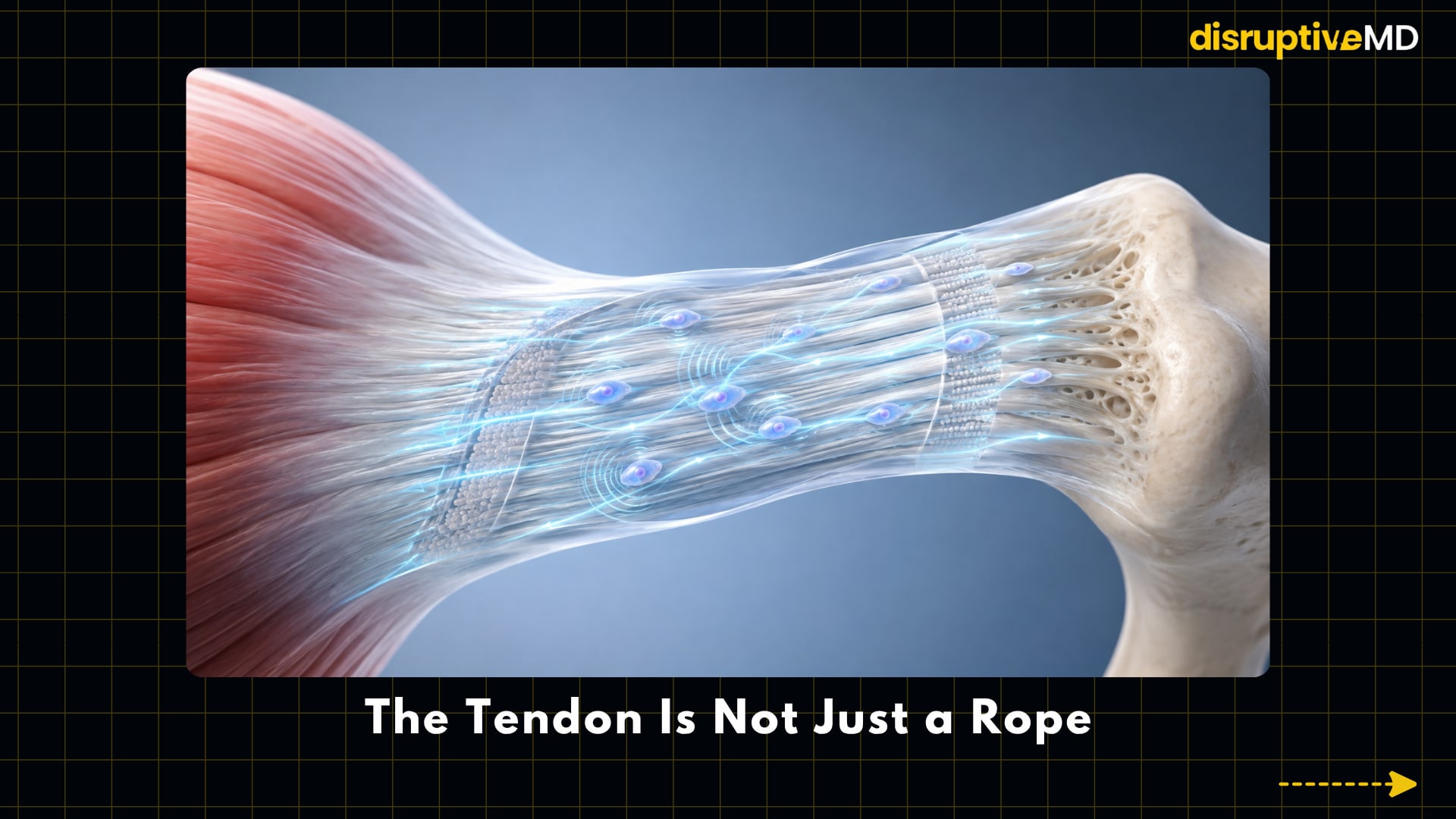
THE TENDON IS NOT JUST A ROPE
Tendons are often described like biological cables connecting muscle to bone.
Mechanically, that comparison makes sense.
But biologically, it is incomplete.
A tendon is living tissue populated by cells that constantly experience tension, strain and changes in their extracellular environment. Mechanical loading can influence cell behaviour, collagen organisation, extracellular-matrix turnover and tissue remodelling.
In other words:
A tendon can sense the forces placed upon it.
This process is part of mechanotransduction - the conversion of mechanical information into cellular and molecular signals.
That matters enormously during rehabilitation.
Loading a healing tendon is not simply a question of making it stronger. Mechanical forces can become information that cells use while reorganising the tissue.
Bioelectric tendon repair adds another layer.
Could some of that mechanical energy also be transformed into electrical information?
Research suggests that this is possible.
THE ELECTRICAL SIDE OF TENDON BIOLOGY
Collagen-rich tissues possess electromechanical properties.
When certain biological structures or engineered materials are mechanically deformed, changes in electrical charge can occur. Researchers are increasingly trying to reproduce or amplify this phenomenon using electroactive biomaterials designed for tissue regeneration.
Recent work specifically in tendon regeneration has explored piezoelectric materials capable of generating local electrical stimulation when mechanically activated.
This creates a fascinating shift in how an implant can be designed.
Instead of asking only:
Is this scaffold strong enough?
Researchers can also ask:
What electrical and biological environment does this scaffold create when it moves?
That is a much more ambitious version of tendon repair.
FROM PASSIVE FIXATION TO ACTIVE REPAIR
The traditional repair construct is largely passive.
A suture holds.
An anchor fixes.
A scaffold supports.
A graft bridges.
The future repair could potentially perform several functions simultaneously:
- stabilise the tendon mechanically
- guide organised tissue growth
- influence collagen remodelling
- interact with the inflammatory environment
- generate local electrical stimulation
- carry biological molecules
- support tendon-to-bone healing
- detect mechanical strain
- monitor rehabilitation loading
- gradually disappear after its job is complete
This is part of a larger movement in regenerative medicine toward multifunctional biomaterials.
The implant stops being simply a structural object.
It becomes something closer to a temporary biological machine.
ELECTROCEUTICAL ORTHOPAEDICS
Medicines traditionally influence biology through molecules.
Electroceuticals attempt to influence biology using electrical signals.
The concept is particularly interesting in orthopaedics because the musculoskeletal system constantly produces mechanical energy.
Every step creates force.
Every muscle contraction creates tension.
Every tendon stretch creates deformation.
Instead of allowing that mechanical energy to disappear, a self-powered implant could potentially harvest a small fraction of it.
The resulting electrical stimulation could then be delivered directly to the healing environment.
The concept becomes:
The body provides the movement.
The implant converts the movement.
The tissue receives the signal.
No conventional implanted battery would necessarily be required.
That is what makes piezoelectric and triboelectric technologies especially interesting.
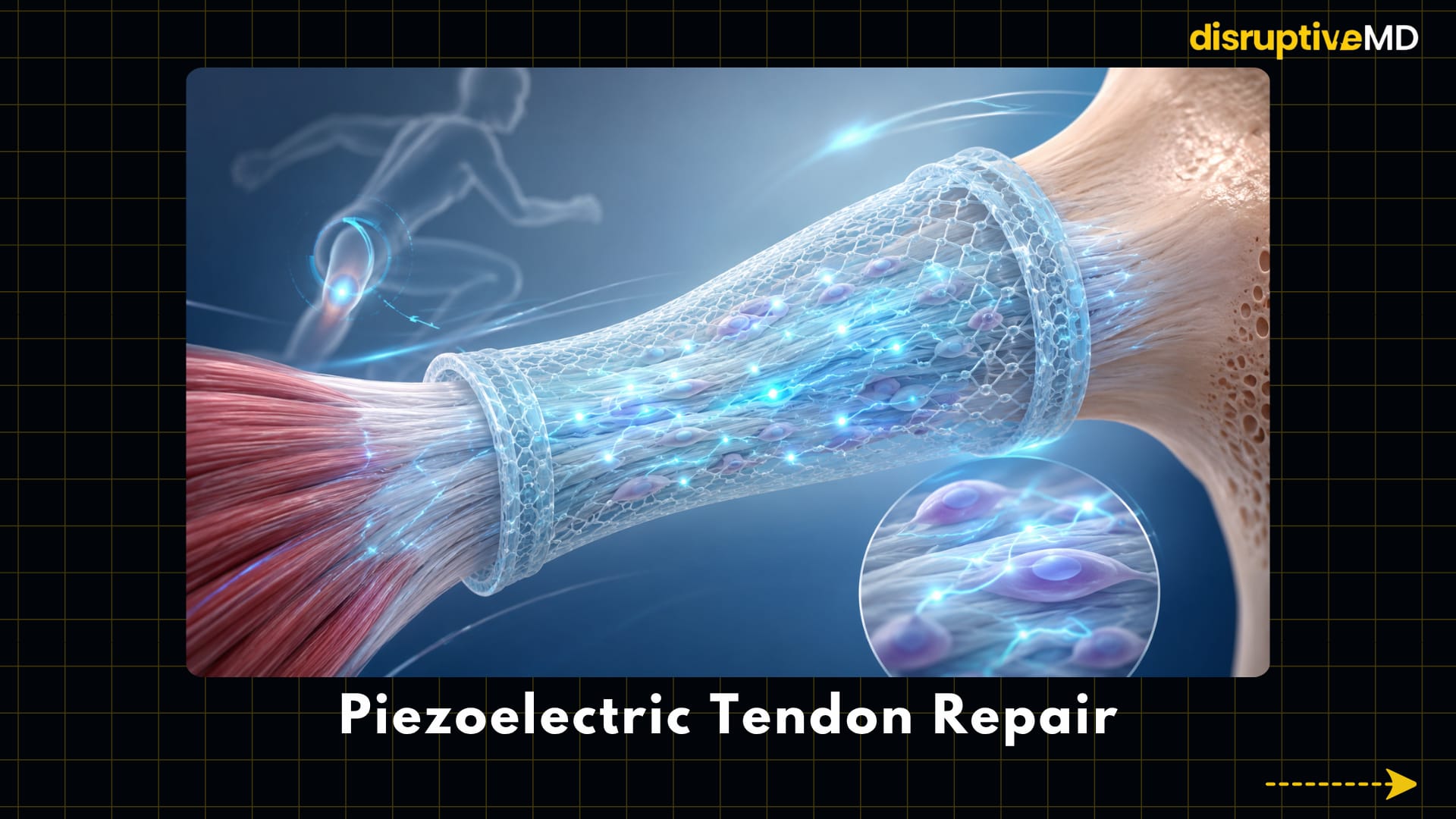
PIEZOELECTRIC TENDON REPAIR
Piezoelectric materials can generate electrical charge when they are mechanically deformed.
Imagine a piezoelectric scaffold surrounding a healing Achilles tendon.
During controlled rehabilitation, the tendon experiences strain.
The scaffold bends or stretches.
That mechanical deformation produces a small electrical signal.
The surrounding cells are then exposed to an altered bioelectric environment.
The sequence could become:
Loading → deformation → electricity → cellular signalling → remodelling
This is not merely theoretical.
Preclinical tendon research has demonstrated self-powered piezo-bioelectric devices capable of converting mechanical loading into electromechanical stimulation and influencing signalling involved in tendon repair.
More recent work has continued moving toward increasingly tendon-specific piezoelectric structures, including three-dimensional printed scaffolds designed around both tendon architecture and its dynamic mechanical environment.
The possibility is powerful because the therapy can become connected to the activity that already defines tendon rehabilitation:
Movement.
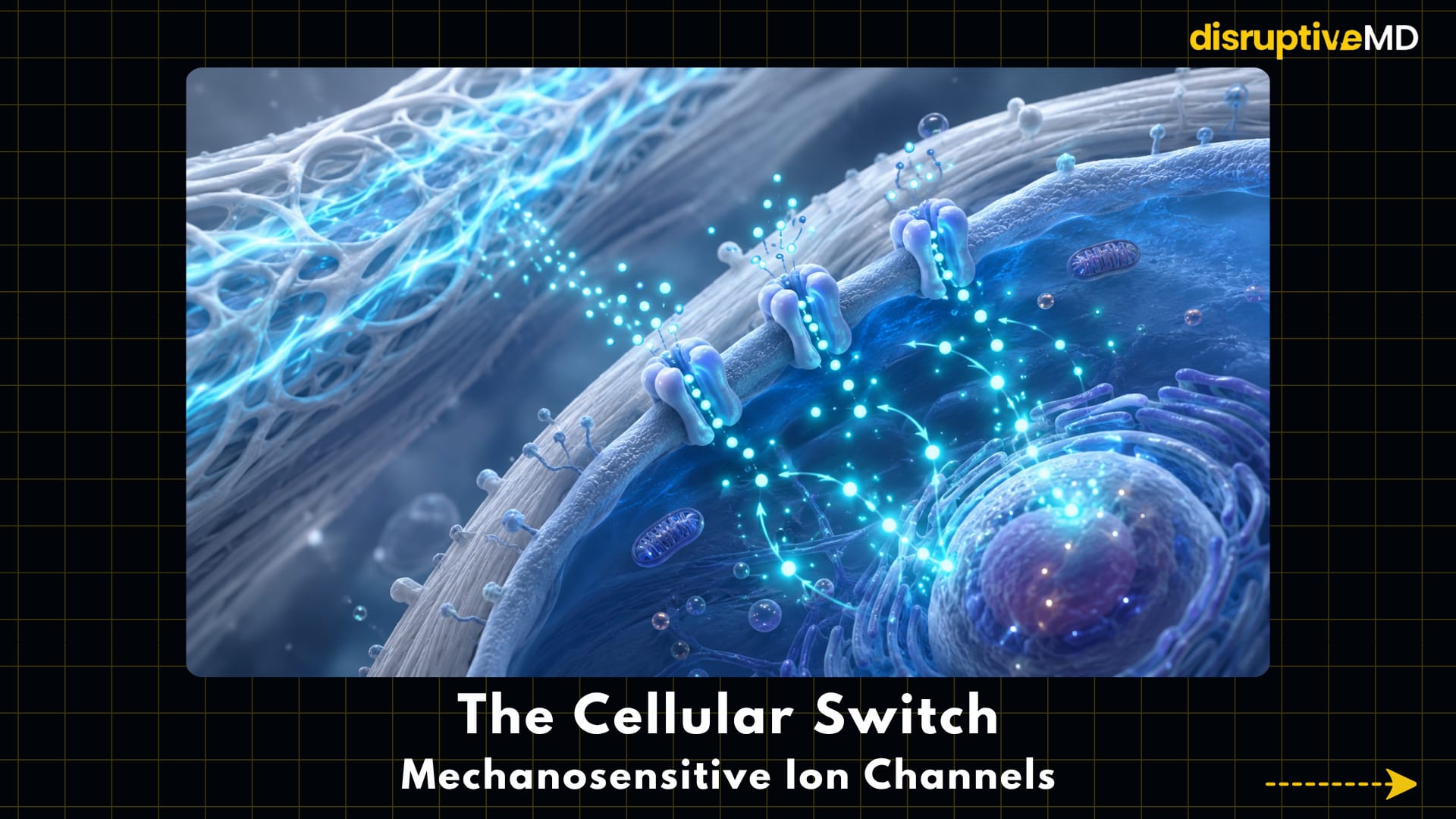
THE CELLULAR SWITCH: MECHANOSENSITIVE ION CHANNELS
How could a tiny mechanically generated electrical signal change healing?
One answer may lie in the way cells detect physical force.
Cell membranes contain proteins capable of responding to mechanical changes. Among them are mechanosensitive ion channels.
When the mechanical environment changes, these channels can alter the movement of ions across cell membranes.
That can affect signalling pathways inside the cell.
Self-powered tendon research has shown that piezo-bioelectric stimulation can influence repair-associated signalling through modulation of mechanosensitive ion channels.
This provides an important biological explanation for the technology.
A tendon does not simply experience force.
Its cells can translate force into biology.
A piezoelectric implant potentially inserts itself into that conversation.
Mechanical loading affects the material.
The material generates an electrical signal.
Cells detect changes within the electromechanical environment.
Those signals may influence the repair process.
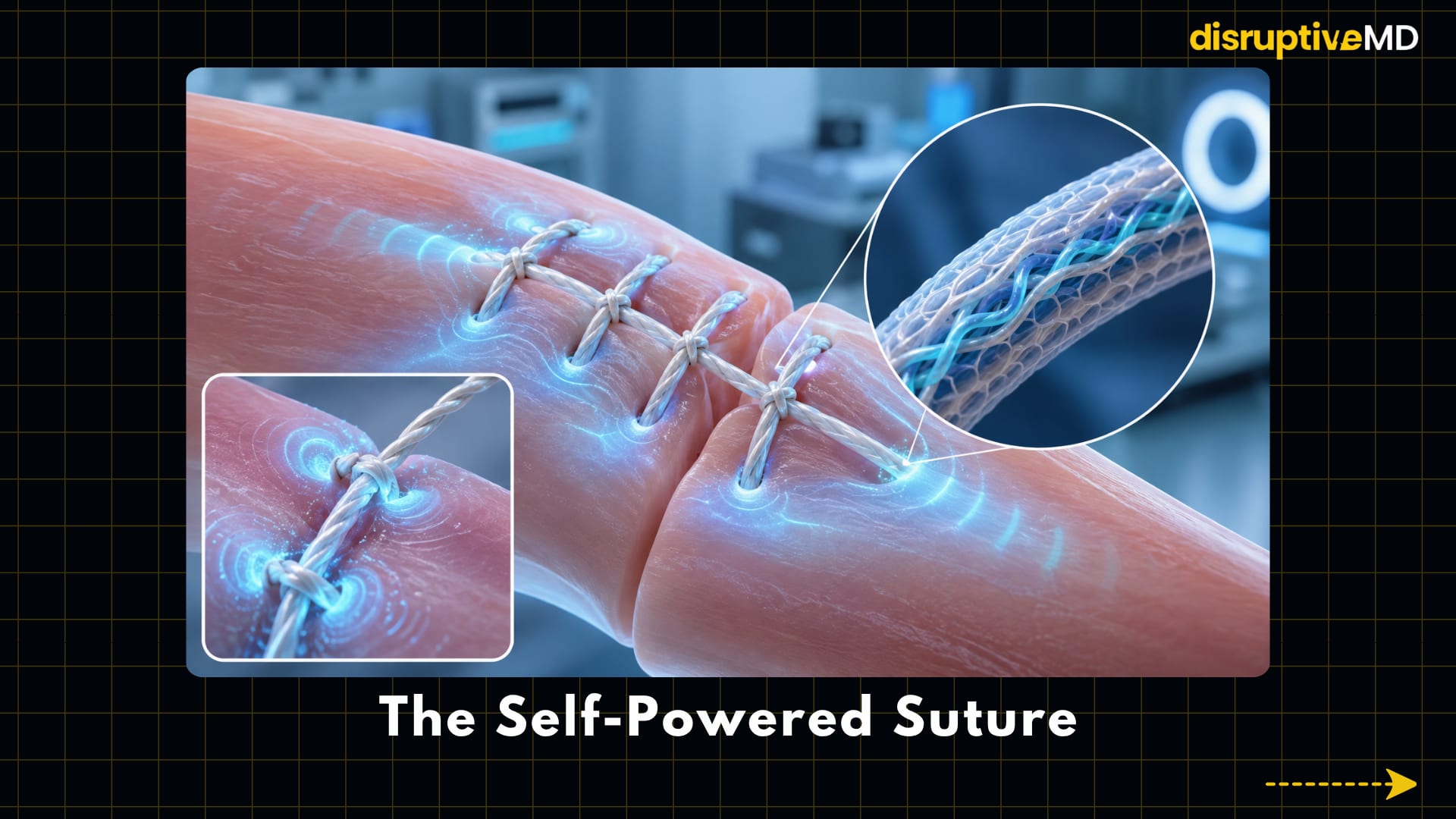
THE SELF-POWERED SUTURE
Now take one of the simplest surgical tools imaginable:
the suture.
Its traditional job is mechanical.
Pass it through tissue.
Tie it.
Hold the repair.
But researchers have demonstrated biodegradable mechanoelectric fibres that can act as both sutures and electrical-stimulation devices.
A 2024 experimental system used natural tissue movement to generate electrical fields while simultaneously performing mechanical suturing. In experimental wound models, the system promoted processes associated with tissue regeneration, extracellular-matrix deposition and vascularisation.
This was not a clinical Achilles or rotator cuff tendon repair system.
That distinction is essential.
But the engineering principle is highly relevant.
A future surgical fibre could potentially combine:
Fixation + energy harvesting + electrical stimulation
within one material.
A suture would no longer simply hold tissue together.
It could become part of the therapy.
WHY THE ACHILLES TENDON IS SUCH AN INTERESTING TARGET
Few structures illustrate movement-powered repair better than the Achilles tendon.
Walking repeatedly loads it.
Calf raises load it.
Running loads it.
Jumping loads it.
Progressive rehabilitation intentionally exposes it to increasing mechanical forces.
That creates an obvious opportunity.
Could some of the energy generated during appropriate rehabilitation be converted into therapeutic electrical stimulation?
Experimental Achilles tendon systems are already moving in this direction.
Piezoelectric injectable hydrogels have been investigated as mechanically responsive materials around injured tendons. One recent experimental approach incorporated piezoelectric short fibres into an injectable hydrogel intended both to reduce adhesion and promote endogenous tendon healing under mechanical or ultrasound-related stimulation.
Another preclinical system combined a piezoelectric hydrogel with extracellular vesicles in an Achilles tendon rupture model.
This takes the concept beyond simple electrical stimulation.
The material can potentially become both:
An electromechanical interface
and
A carrier for biological therapy.
ROTATOR CUFF REPAIR: SOLVING THE TENDON-TO-BONE PROBLEM
The rotator cuff introduces another major challenge.
The problem is not simply reconnecting two torn tendon ends.
The tendon must reintegrate with bone.
The normal attachment is a highly organised transition from tendon through fibrocartilage toward bone. Standard surgical repair can mechanically restore contact, but reproducing the native biological interface remains difficult.
This is one reason tendon-to-bone healing has become such an important target for advanced biomaterials.
In 2025, researchers reported an injectable piezoelectric hydrogel designed to improve tendon-to-bone healing by reshaping the local electrophysiological environment.
In preclinical experiments, the material was associated with changes in inflammatory-cell behaviour, extracellular-matrix organisation, collagen alignment and biomechanical repair.
Other piezoelectric adhesive systems have also been investigated for tendon-to-bone regeneration, including approaches targeting inflammation, vascularisation, fibrocartilage formation and enthesis strength.
The long-term goal is much more ambitious than simply creating a stronger anchor.
It is to biologically engineer the environment between the tendon and the bone.
DISTAL BICEPS, PATELLAR TENDON AND OTHER SPORTS REPAIRS
The same concept could eventually extend to many high-load tendon repairs:
Distal biceps.
Patellar tendon.
Quadriceps tendon.
Hamstring tendon.
Other major tendon and ligament reconstructions.
These injuries still require excellent mechanical repair.
Bioelectric technology does not eliminate that requirement.
Instead, the future strategy could be:
Strong fixation first. Active regeneration layered on top.
A future construct might maintain mechanical strength while generating local stimulation as controlled loading begins.
That could be particularly interesting in athletic populations, where restoration of both tissue quality and high-load function matters.
But this must remain clearly framed as a future direction.
Self-powered bioelectric repair is not currently routine treatment for these injuries.
ELECTRICITY + BIOLOGICS
Perhaps the most interesting future will not involve electricity alone.
Bioelectric stimulation could be combined with biological therapies inside the same repair system.
Possible research directions include combinations with:
- extracellular vesicles
- hydrogels
- growth factors
- collagen scaffolds
- cell-derived signals
- locally delivered anti-inflammatory molecules
- gene-delivery systems
- tendon-to-bone interface materials
- regenerative biological cargo
One recent Achilles tendon model has already combined a piezoelectric hydrogel with extracellular vesicles derived from bone-marrow mesenchymal stromal cells.
That suggests a much larger possibility.
A future scaffold might not merely create electricity.
It could potentially use changes in the local environment to coordinate multiple forms of therapy.
Imagine a material that provides mechanical support, generates electrical stimulation and carries regenerative molecules at the same time.
The distinction between implant and medicine begins to blur.
COULD MOVEMENT ACTUALLY RELEASE MEDICINE?
This is where the title becomes even more interesting.
Today, saying that a repaired tendon can “generate its own medicine” is intentionally provocative.
The tendon is not manufacturing a pharmaceutical compound.
But future materials could move closer to that idea.
Researchers across regenerative biomaterials are developing systems in which environmental signals such as mechanical force, inflammation, reactive molecules, temperature, ultrasound or electricity can trigger changes in a material or release therapeutic cargo.
Tendon-to-bone research has already demonstrated responsive hydrogels capable of releasing therapeutic molecules according to characteristics of the local inflammatory environment. Combine that principle with self-powered piezoelectricity and a future system becomes imaginable:
Movement generates electricity.
Electricity changes the material.
The material releases or activates therapy.
That would move the concept much closer to a true mechanically powered drug-delivery interface.
It is not established clinical tendon repair today.
But the building blocks are emerging.
THE REPAIR THAT MONITORS ITSELF
Electrical materials can have another important capability:
sensing.
If deformation changes the electrical behaviour of a material, the same general class of technologies that generates signals may also provide information about movement and strain.
That raises a completely different possibility.
What if a repaired Achilles tendon could report how much load it was receiving?
What if an implanted patch could identify unexpectedly high strain?
What if rehabilitation could distinguish between:
Too little load,
Appropriate load,
and
Potentially excessive load?
Current rehabilitation relies heavily on time after surgery, symptoms, clinical examination, strength, function and external measurements.
Future smart tendon systems could potentially add information directly from the mechanical environment around the repair.
The implant would no longer only treat.
It could observe.
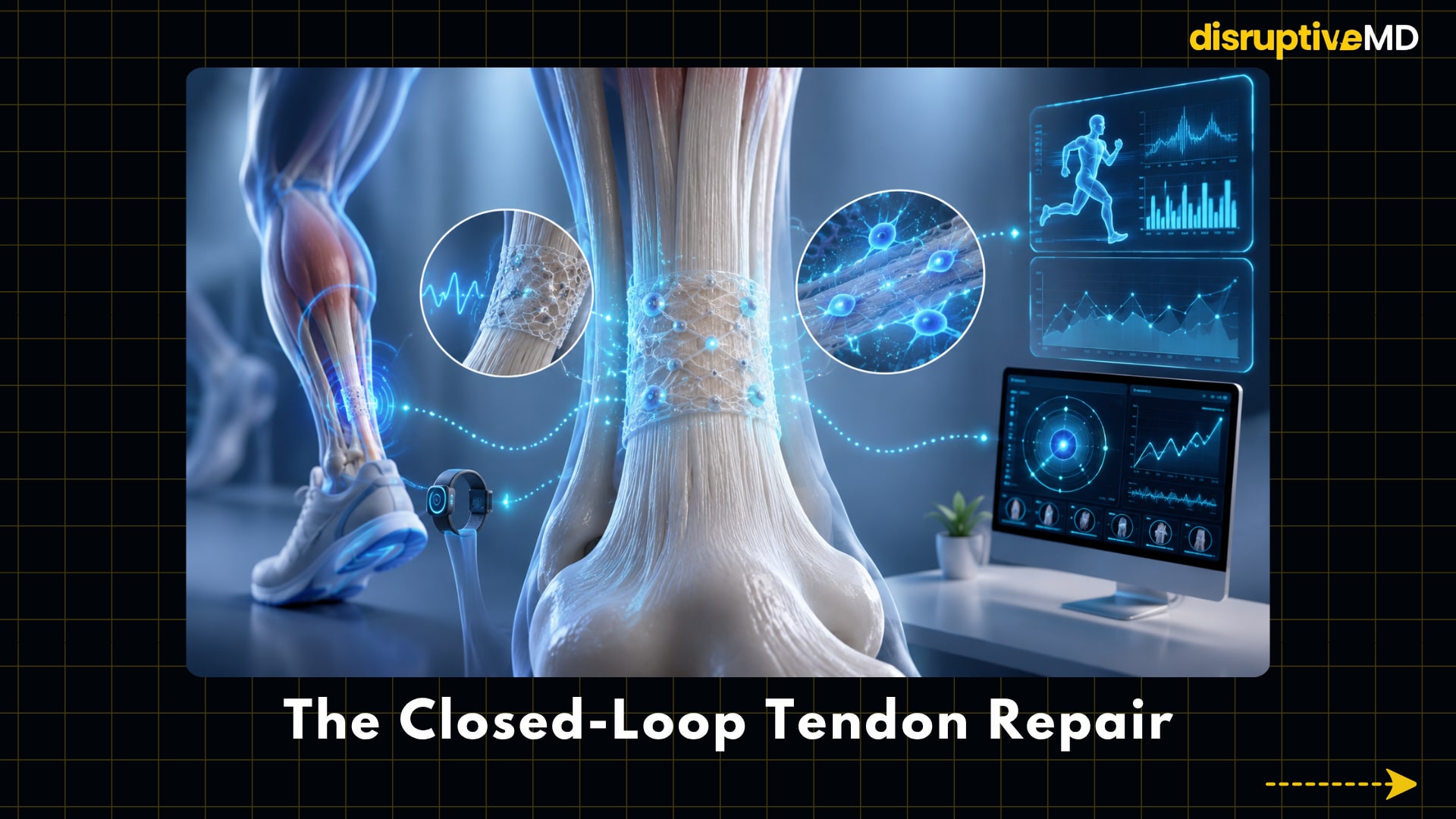
THE CLOSED-LOOP TENDON REPAIR
Now combine stimulation and sensing.
The future system begins to resemble a closed loop:
Repair → sense → stimulate → measure → adapt
A smart scaffold or implant records mechanical loading.
Wearables contribute movement data.
The repair generates bioelectric signals during appropriate loading.
Clinical software analyses recovery trends.
Rehabilitation progresses according to the patient’s actual biological and mechanical response rather than following time alone.
This is where AI could eventually become relevant.
AI would not regenerate the tendon.
Its potential role would be to interpret large streams of biomechanical information and help identify useful patterns:
Is tendon loading increasing too quickly?
Is the patient underloading the limb?
Is movement becoming more symmetrical?
Is rehabilitation progressing as expected?
Could the next stage safely begin?
This remains a future-facing concept rather than an established clinical pathway.
But it illustrates where intelligent orthopaedic implants could eventually go.
ULTRASOUND COULD BECOME PART OF THE POWER SOURCE
Movement from rehabilitation is not necessarily the only way to activate piezoelectric materials.
Some experimental materials can be mechanically stimulated using ultrasound.
That creates another intriguing strategy.
Instead of relying exclusively on patient movement, clinicians could potentially deliver mechanical energy non-invasively from outside the body.
Ultrasound passes through tissue.
The implanted piezoelectric material responds.
Local electrical stimulation is generated around the repair.
A 2025 experimental piezoelectric injectable anti-adhesive hydrogel used piezoelectric fibres whose activity could be stimulated using ultrasound, promoting tendon-cell responses in the experimental system.
This suggests that future treatment might involve both:
Movement-powered stimulation during rehabilitation
and
Externally controlled stimulation when required.
THE BIGGEST CHALLENGE: HOW MUCH ELECTRICITY?
Generating electricity is only part of the problem.
Biology depends on dose.
A therapeutic system would need to determine:
How strong should the electrical signal be?
How frequently should it occur?
How long should stimulation last?
Should the signal change during different stages of tendon healing?
Does an early inflammatory tendon require a different electrical environment from a tendon undergoing late remodelling?
Could too much stimulation become ineffective or harmful?
And how do we ensure that a device generates useful electrical signals without requiring excessive tendon loading?
These questions are critical.
The goal is not simply to produce the largest electrical output.
The goal is to produce the right biological signal at the right stage of healing.
Recent reviews of tendon-specific piezoelectric biointerfaces identify optimisation of stimulation, mechanical properties, biodegradation, material design and clinical translation as major challenges that remain before widespread use.
THE IMPLANT MUST DISAPPEAR AT THE RIGHT TIME
Another challenge is permanence.
A regenerative tendon implant may only be needed temporarily.
Ideally, it would support healing during the critical period and then gradually degrade once its function was no longer required.
That creates a difficult engineering problem.
The material must be:
strong enough initially,
electrically active,
biocompatible,
predictably degradable,
and mechanically compatible with a tendon that is becoming stronger over time.
If it disappears too quickly, it may lose function before healing is complete.
If it persists too long, unnecessary foreign material remains.
Recent biodegradable electroactive sutures demonstrate that mechanical fixation, electrical stimulation and eventual material absorption can potentially be combined.
For tendon reconstruction, however, matching degradation to the much longer biological timeline of tendon healing remains an important translational challenge.
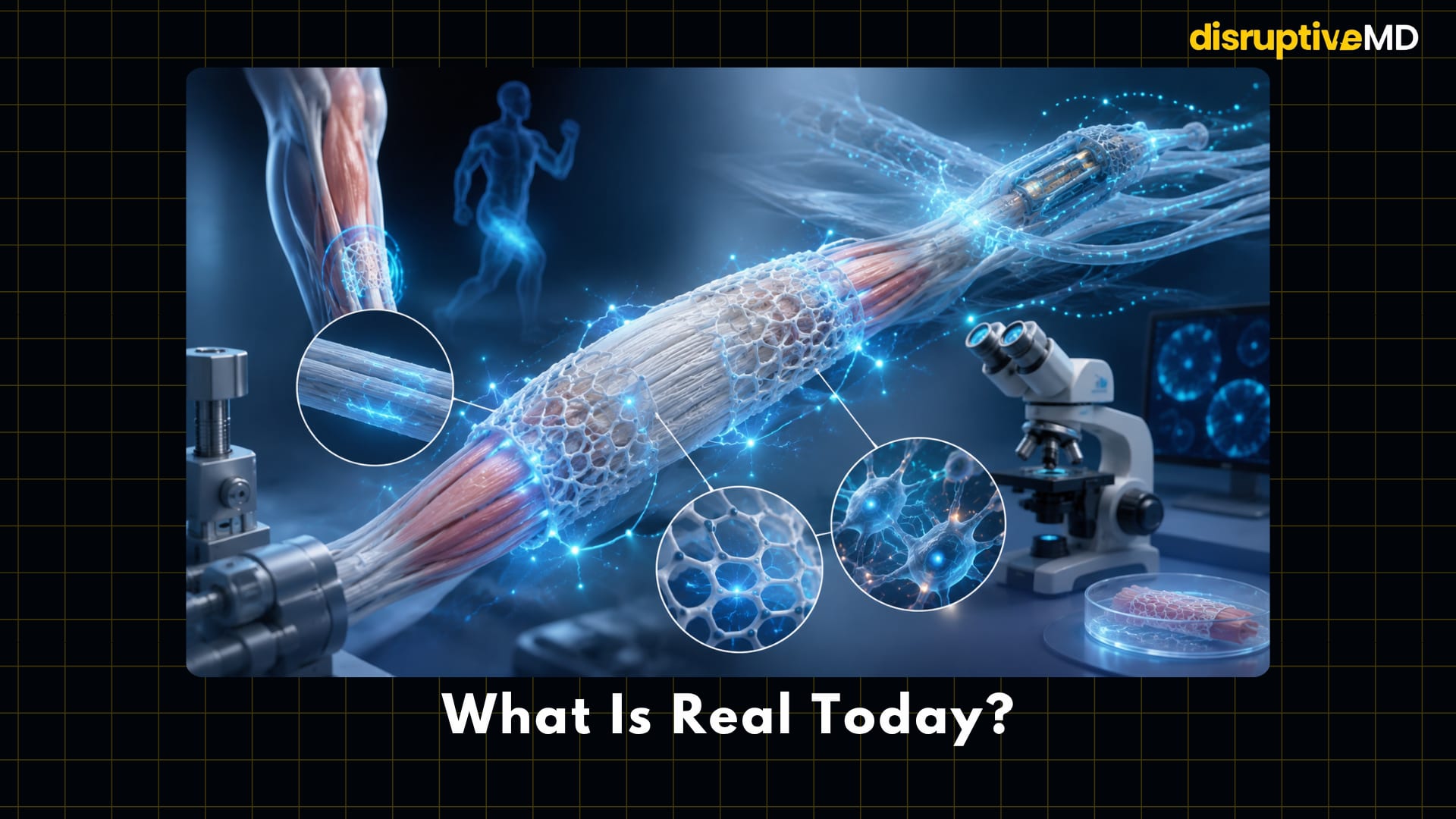
WHAT IS REAL TODAY?
Several parts of the concept are already scientifically real.
Tendons are mechanosensitive tissues.
Electrical stimulation is being investigated as a tool for musculoskeletal and tendon regeneration.
Piezoelectric biomaterials can transform mechanical deformation into electrical signals.
Self-powered piezo-bioelectric devices have influenced tendon-repair-associated cellular signalling in preclinical studies.
Piezoelectric hydrogels and adhesives have improved aspects of tendon or tendon-to-bone healing in experimental models.
Piezoelectric biomaterials have been investigated in Achilles tendon repair.
Piezoelectric hydrogel systems have been combined with extracellular vesicles.
Biodegradable movement-powered electrical sutures have been demonstrated experimentally.
And tendon-specific three-dimensional piezoelectric scaffolds continue to become more sophisticated.
The pieces of the technology are therefore real.
What does not yet exist is the complete clinical system implied by the futuristic vision.
WHAT IS NOT FULLY REAL YET?
There is currently no routine self-powered electroceutical tendon repair used as standard treatment after Achilles, rotator cuff, distal biceps or patellar tendon surgery.
We do not yet have strong long-term human clinical evidence demonstrating that these technologies reduce rerupture, improve return to sport or produce superior functional outcomes compared with modern surgical repair and rehabilitation.
The optimal electrical signal for human tendon healing has not been fully established.
There are also major questions involving material durability, degradation, manufacturing, sterilisation, biocompatibility and long-term safety.
Smart implants that simultaneously stimulate healing, measure strain, release biologics and automatically guide rehabilitation remain largely a future concept.
And these devices are not replacements for rehabilitation.
A poorly protected tendon cannot simply be loaded aggressively because the implant generates electricity.
Mechanical safety still comes first.
The purpose of self-powered technology would be to enhance biological healing within safe rehabilitation, not eliminate the need for it.
FROM A STITCH LINE TO A HEALING INTERFACE
The bigger shift is conceptual.
The history of tendon surgery has largely focused on better ways to reconnect tissue:
stronger sutures,
better anchors,
better fixation,
better grafts,
and better rehabilitation.
The next generation may focus on something else.
Making the repair biologically active.
The suture could become a stimulator.
The scaffold could become an energy harvester.
The hydrogel could become a biological reservoir.
The implant could become a sensor.
Controlled movement could become the power source.
And rehabilitation could become part of a continuous biological feedback system.
The tendon would still need time.
The surgeon would still need excellent fixation.
The patient would still need carefully progressed rehabilitation.
But the material placed during surgery would no longer simply wait for healing to happen.
It could participate in healing.
That changes the fundamental question from:
Can we hold this tendon together long enough for it to heal?
to:
Can we build a repair that actively helps instruct the tendon how to heal?
The next tendon repair may not just hold the tissue.
It may help instruct it how to heal.
FACT BASE
The idea of self-powered bioelectric tendon repair is scientifically plausible because several fields are beginning to converge: tendon mechanobiology, electrical stimulation, piezoelectric materials, regenerative biomaterials and smart sensing.
What the science currently supports
Tendon healing is mechanically sensitive.
Cells within tendon respond to loading and convert mechanical forces into biological signals. Appropriate mechanical loading therefore affects more than strength—it influences the environment in which tendon remodels.
Electrical cues can influence cellular behaviour.
Electrical stimulation is being investigated as a regenerative signal capable of affecting cell activity, extracellular-matrix formation, inflammatory responses and tissue repair.
Piezoelectric materials can turn movement into electrical stimulation.
Mechanical deformation of engineered piezoelectric materials can produce local electrical signals without requiring a conventional implanted battery.
This has already been demonstrated in tendon models.
Self-powered piezo-bioelectric systems have altered mechanosensitive-ion-channel activity and tendon-repair-associated signalling in preclinical experiments.
Tendon-to-bone healing is a major application.
Piezoelectric hydrogels and adhesive biomaterials have improved features of tendon-to-bone regeneration, collagen organisation, inflammatory regulation and biomechanical healing in experimental models.
Achilles tendon repair is becoming an important experimental target.
Piezoelectric injectable materials have been studied for promoting endogenous Achilles tendon healing, controlling adhesion and creating mechanically responsive regenerative environments.
Electrical stimulation can be combined with biological cargo.
Preclinical Achilles research has combined piezoelectric hydrogels with extracellular vesicles, demonstrating that bioelectric and biological regenerative approaches can exist within the same platform.
Sutures themselves can potentially become electroceutical devices.
Biodegradable mechanoelectric sutures capable of harvesting movement and producing electrical stimulation have been demonstrated experimentally, although not yet as routine tendon-repair implants.
The materials are becoming more tendon-specific.
Three-dimensional printed piezoelectric scaffolds with tendon-inspired structural gradients and dynamic properties were reported in 2026, showing how the field is progressing beyond generic electroactive materials toward specialised tendon-regeneration systems.
What remains unproven
Routine self-powered Achilles tendon repair.
Routine piezoelectric rotator cuff implants.
Electroactive distal biceps or patellar tendon sutures used in standard clinical practice.
Reliable long-term improvement in human rerupture rates or return-to-sport outcomes.
Precisely personalised electrical stimulation during each phase of tendon healing.
Fully implantable systems that combine sensing, stimulation, biologic delivery and automated feedback.
AI-controlled tendon rehabilitation based directly on implant-generated data.
A tendon literally manufacturing pharmaceutical medication from movement.
Where the field stands
The underlying science is real.
The biomaterials are becoming increasingly sophisticated.
The preclinical results are promising.
But the most advanced vision remains preclinical and early translational rather than established clinical orthopaedic practice. Recent tendon-specific reviews continue to highlight stimulation control, material design, degradation, mechanical durability and clinical translation as unresolved challenges.
The scientifically accurate interpretation is therefore:
A future repaired tendon may be able to use movement to help generate its own therapeutic bioelectric environment—not its own pharmaceutical drug.
REFERENCES
- A Self-Powered Piezo-Bioelectric Device Regulates Tendon Repair-Associated Signaling Pathways through Modulation of Mechanosensitive Ion Channels. Advanced Materials. 2021;33:e2008788. DOI: 10.1002/adma.202008788
- A Bioabsorbable Mechanoelectric Fiber as Electrical Stimulation Suture. Nature Communications. 2024;15:8462. DOI: 10.1038/s41467-024-52354-x
- Injectable Piezoelectric Hydrogel Promotes Tendon-Bone Healing via Reshaping the Electrophysiological Microenvironment and M2 Macrophage Polarization. ACS Applied Materials & Interfaces. 2025. DOI: 10.1021/acsami.4c21011
- Janus Piezoelectric Adhesives Regulate Macrophage TRPV1/Ca²⁺/cAMP Axis to Stimulate Tendon-to-Bone Healing by Multi-Omics Analysis. Bioactive Materials. 2025;50:134–151. DOI: 10.1016/j.bioactmat.2025.03.029
- Sodium Alginate Piezoelectric Hydrogel Loaded with Extracellular Vesicles Derived from Bone Marrow Mesenchymal Stem Cells Promotes Repair of Achilles Tendon Rupture. Journal of Nanobiotechnology. 2025;23:625. DOI: 10.1186/s12951-025-03606-5
- Piezoelectric Injectable Anti-Adhesive Hydrogel to Promote Endogenous Healing of Tendon Injuries. Advanced Materials. 2025;37:e2501306. DOI: 10.1002/adma.202501306
- Piezoelectric Biointerfaces for Tendon Regeneration: Mechanisms, Materials, and Therapeutic Strategies. Advanced Functional Materials. 2026;36. DOI: 10.1002/adfm.202516918
- A 3D-Printed Piezoelectric Scaffold With Bio-Inspired Gradient and Dynamic Adaptation for Tendon Regeneration. Advanced Materials. 2026;38(15):e17298. DOI: 10.1002/adma.202517298